
Knowledge
Cuprous Chloride: A Look Through History and Modern Use
Historical Development
Cuprous chloride, also known as copper(I) chloride, shows up in chemistry texts dating back to the early 1800s. Early chemists first isolated it while working with copper ores and hydrochloric acid. At that time, the chemical industry was expanding on two fronts: basic science curiosity and growing demand for materials in mining, textiles, and chemical manufacturing. Through those decades, cuprous chloride shifted from a curious white powder with strange green flashes—often mistaken for its cousin, cupric chloride—to a crucial material for refining and the birth of organometallic chemistry. Nowadays, it remains a familiar sight in both high school labs and advanced industrial processes.
Product Overview
Cuprous chloride usually presents itself as a white to off-white powder, although it sometimes picks up a hint of green after exposure to air due to partial oxidation. In my days working in the metallurgy lab, I found that the subtle color shift can signal accidental moisture or mismanaged storage. The material makes its way into industrial catalysis, electrolyte baths for copper plating, and even into specialty glass production. While the market isn’t as flooded with cuprous chloride as with sodium chloride, demand from the electronic, dye, and agrochemical sectors ensures steady interest. Many specialty chemical suppliers carry cuprous chloride as a standard catalog item, often packaging it under a clutch of alternate names.
Physical & Chemical Properties
Anyone who’s ever handled cuprous chloride knows it’s not your typical salt. It crystallizes in the cubic zinc blende structure, giving it that unmistakable dense, powdery texture. The melting point sits high at roughly 430°C, while its density lands near 4.14 g/cm³. It barely dissolves in water, which makes it less hazardous in simple spills, but it loves to dissolve in concentrated hydrochloric acid, forming complexes. In air, it oxidizes to cupric chloride, a transformation that’s hard to miss—watch the white fade to green over time. Its low solubility in water and high solubility in ammonia, cyanide, and other complexing agents proved invaluable in both qualitative analysis and industrial separations.
Technical Specifications & Labeling
Analyzing the chemical purity of cuprous chloride remains straightforward but unforgiving; most suppliers guarantee a minimum purity of 99%, with the lower grades used mainly for non-critical industrial applications. Labeling, based on globally harmonized systems, warns about the environmental and health hazards: harmful if swallowed, toxic to aquatic life. Packaging typically draws from composite sacks lined with polyethylene or glass jars for laboratory-scale use. Standard labeling includes the batch number, production date, safety pictograms, and recommended storage conditions—usually cool and dry, tucked away from oxidizers and moisture.
Preparation Method
I watched technicians prepare cuprous chloride in more than one way, but the classic route always seems to involve reducing copper(II) chloride with sulfur dioxide or copper metal in hydrochloric acid. In practice, this means stirring copper turnings into a bubbling green solution and waiting for the crystals to settle out. For those who need high purity, more careful methods like electrolytic reduction sometimes come into play. Across the board, manufacturers emphasize tight controls on temperature and acid concentration, since a misstep can lead easily to cupric chloride contamination or wasted batch.
Chemical Reactions & Modifications
Cuprous chloride stands out because it reacts so selectively with a handful of organic substrates. It’s famous for facilitating Sandmeyer reactions, where it takes diazonium salts and helps swap them for chloride—a step that underpins much of dye chemistry. In organic synthesis, it acts as a mild Lewis acid. Industrially, it lends itself to forming copper complexes, which then break down carbon monoxide or acetylene gas for various separations. Its reactivity toward oxidizing agents remains a constant nuisance in storage and handling; a cracked container cap leaves users with a batch of faded, clumpy mess that barely passes for the original.
Synonyms & Product Names
Through the years, cuprous chloride passed through a few aliases—cupreous chloride, copper monochloride, dicopper chloride—all traces of chemistry’s evolving naming conventions. The IUPAC name, copper(I) chloride, now leads the pack in academia and regulatory filings. On commercial shelves, the CAS number 7758-89-6 appears on every drum or bottle shipping internationally. Historical documents use terms like "cuprum chloratum" or even “white copper chloride,” a reminder of both linguistic drift and shifting chemical literacy.
Safety & Operational Standards
Working with cuprous chloride never calls for panic, but safety matters. It’s not wildly toxic but can irritate skin, eyes, and lungs. Chronic exposure treads into territory nobody wants to land in—heavy metal buildup, nausea, and headaches. Proper ventilation, gloves, and eye protection go a long way. Once, a spilled jar in a teaching lab drove home the importance of immediate cleanup and safe storage. For disposal, local regulations steer things toward hazardous waste channels; slinging it down the drain spells trouble for aquatic ecosystems. Regulations across North America, Europe, and Asia ask users to submit regular inventory updates, audit their waste streams, and keep proper hazard communication on all labels and safety data sheets.
Application Area
Looking at industrial use, cuprous chloride’s biggest claim comes from catalysis. It ramps up reaction rates in petroleum refining, helps strip out carbon monoxide from gas streams, and finds a home in a handful of polymerization reactions. I’ve seen dye labs use it to make complex pigments and ink, while older agricultural practices leaned on it for fungicide blends. Electronics manufacture calls for it in plating baths and specialty solders. A less-discussed area is analytical chemistry; here, researchers build on its distinct color and solubility patterns for trace metal detection.
Research & Development
Research on cuprous chloride covers both classic reaction chemistry and new materials science. In recent years, universities and corporate labs have targeted it for nanoparticle synthesis, superconductors, and as a starting material for new catalysts. During my graduate days, I found it valuable for making copper(I)-catalyzed azide-alkyne cycloadditions, a popular method for preparing triazoles in medicinal chemistry. Some scientists currently explore recycling methods to cut down on waste and limit copper leaching into the environment. The relentless march toward greener chemistry pushes researchers to keep testing new ligands and solvents that improve both selectivity and safety when handling cuprous chloride.
Toxicity Research
Studies show that cuprous chloride, like all copper compounds, demands respect for its potential toxicity. Acute exposure risks remain low unless someone gets careless with dust or ingestion. Chronic exposure sets off alarms with symptoms like anemia, liver stress, and possible nerve damage. Animal studies flagged bioaccumulation and disruption of reproductive systems at very high doses. In aquatic environments, copper chloride can devastate shellfish and fish—not a minor concern for communities near disposal sites or chemical plants. Regulators worldwide have responded by setting workplace exposure limits, maximum permissible concentrations in effluents, and regular environmental monitoring requirements.
Future Prospects
Looking forward, cuprous chloride stands at the crossroads of traditional industry and emerging green technology. The rise of precision catalysis, demand for new semiconductor materials, and continued push in organic synthesis all pull on the product’s legacy. At the same time, pressure to reduce heavy metal content in finished goods forces the chemical industry to rethink production cycles, recycling, and cradle-to-grave management. More sustainable preparation methods, enzyme-based alternatives, or even biogenic routes currently sit on the research agenda. In my view, cuprous chloride, with its deep roots in foundational chemistry, will keep evolving as both scientific curiosity and practical knowledge drive its next chapter.
Industrial Applications With Real Impact
Cuprous chloride, known to chemists as CuCl, plays a bigger part in industry than most people might guess. My early years in a chemical plant showed me how processes rely on a handful of key substances. Cuprous chloride strengthens its position by serving as a workhorse for refining, synthesis, and even electronics.
It grabs the spotlight in the world of copper mining. Smelters treat ores with various chemicals to extract the pure metal, and cuprous chloride steps in, helping separate unwanted materials. A few grams can swing the balance toward recovery instead of loss, especially in large operations. The output from these steps supports everything from construction to electrical wiring.
Silicone Manufacturing
Modern society uses silicone for gadgets, sealants, and cookware. Manufacturers run chemical reactions to create these materials, and cuprous chloride acts as a trusted catalyst. A catalyst can make a sluggish reaction zip along, reducing energy bills and waste. For years, chemists have turned to this copper compound to boost the yield in making organosilicon materials for products that often end up in our kitchens, bathrooms, and office desks.
Organic Chemistry and Pharmaceuticals
Cuprous chloride turns up on my research bench far more often than textbooks let on. Growing demand for medicines, dyes, and plastics pushes chemists to find reliable reagents. This pale green powder adds value in several steps—taking part in Sandmeyer reactions, for example. This process exchanges an amine group for a chlorine atom in aromatic rings, forming building blocks for allergy meds, imaging dyes, and advanced polymers. In my own work, skipping cuprous chloride meant extra effort and unpredictable results.
Removing Unwanted Gases and Purifying Chemicals
Industries produce streams of leftover gases, and environmental rules demand that companies treat what leaves the smokestack. Cuprous chloride works well at capturing carbon monoxide because it binds to CO better than many alternatives. Factories reuse it in a closed loop, cleaning up gas and putting the copper compound back to work. Compare that with carbon scrubbers or activated charcoal: cuprous chloride brings selective efficiency, especially for CO-heavy waste from steel or fertilizer plants.
Pigments and Coloring
Color touches everyday life, from paint on homes to plastics in toys and packaging. Cuprous chloride gives a stable green pigment for ceramics, glass, and textiles. On the pottery wheel or in glassblowing studios, each hue tells a story about the chemicals mixed in. Consistency and safety matter, especially with food-grade items, and cuprous chloride often does not leach or fade under sunlight the way some cheaper options will.
Electrical and Photographic Uses
A surprising use comes in the electronics world, where it finds a place in certain batteries and as an etchant for printed circuit boards. Copper chemistry underlies circuit manufacturing, connecting cuprous chloride to nearly every smartphone, TV, and computer. Photography relied heavily on silver halide technology; cuprous chloride joined the toolkit for processing films and making photo prints before digital cameras took over.
Looking Forward
For those of us concerned about health, it’s important to know that cuprous chloride demands respect in handling. Real experience—eye irritation, coughing—reminds me that good ventilation and protective gear stay non-negotiable. But its value to industry, science, and even art remains clear. Years of research and real-world track records show that copper’s chemistry does much more than make pennies or pipes shine.
Cuprous Chloride: What Makes It Distinct
Cuprous chloride, known in the lab as CuCl, is an example of the way basic chemistry shows up outside the classroom. The formula looks simple: one copper atom and one chlorine atom bound together. This 1:1 ratio means copper is in the +1 oxidation state, which gives the compound the name “cuprous.” You sometimes see it called copper(I) chloride. That’s about as complicated as the name gets, but the science beneath the surface tells another story.
If you’ve ever seen cuprous chloride in a chemistry set, you’ve probably noticed its pale color. Pure, dry CuCl appears as a white powder or even a faint greyish substance if left exposed to air for too long. Some people expect anything copper-based to show a blue-green color—the way old pennies turn or pipes collect blue stains as they age. That’s usually copper(II) compounds, where copper takes a +2 charge. Cuprous chloride, on the other hand, stays modest. The drab appearance speaks to copper’s different chemical personality here.
Seeing the Signs: Why Color and Formula Matter
Samples often turn light green once exposed to air for an extended period. That’s not a manufacturing mistake or a sign you got the wrong material. Moisture and oxygen slowly convert some of the cuprous chloride into copper(II) chloride, which gives that secondary color. Store it without tightly sealed containers, and the color shift happens faster. This property tells you how sensitive some copper compounds get, and it’s a good reminder to keep an eye on your chemicals if you want reliable results in the lab or plant.
Cuprous Chloride in the Wider World
Beyond the high school desk, cuprous chloride pops up in refining and electroplating. Factories depend on its ability to purify acetylene gas and as a catalyst in certain reactions. Farmers and plant scientists once tried using it as a fungicide, but its limited stability in moist environments turned that into an uphill battle. Cleaner, more lasting alternatives displaced it from that job. What never leaves the process, though, is the neat math behind its formula and the way its appearance gives away its identity every time.
Staying Accurate with Chemicals
Knowing the look and formula of a substance isn’t just trivia for chemists. Handling the right material, tracking color changes during storage, and knowing when a compound’s properties shift all feed back into lab safety, efficiency, and results. Simple blunders—grabbing an oxidized sample that’s gone green—can throw off even the best-run experiments or industrial processes. With regulatory oversight ramping up, accurate identification isn’t optional. The chemical formula CuCl might be as basic as it comes, but the story it tells about copper’s chemistry, and the clues it leaves behind in a dusty bottle, are anything but boring.
Getting Quality and Preventing Mix-Ups
Purchasers and lab workers can avoid costly mistakes with solid protocols. Track lot numbers, use airtight containers, and double-check against reference samples if the color starts to change. Rely on reliable suppliers, and don’t ignore chemistry’s small details. Getting to know your materials—right down to their chemical formulas and everyday appearance—keeps projects running smoother, cuts waste, and builds trust for the next experiment or batch. That’s where real expertise and experience start to show.
Cuprous Chloride in Daily Life
Cuprous chloride pops up across different industries. It plays a part in making pigments, processing plastics, and even scrubbing out certain gases from factories. The powder’s green-white color looks harmless at first glance, yet few recognize what can happen when the substance meets skin, lungs, or waterways. Safety labels often list it as a potential irritant, but that surface warning misses the bigger picture for public health and the environment.
Health Hazards from Contact and Inhalation
Many learn about copper’s importance for diets, but breathing in or touching dust from cuprous chloride isn’t comparable to eating a balanced meal. If you inhale its particles, problems can range from breathing discomfort to a persistent cough. Long-term exposure compounds these risks: studies show that copper salts (and their dusts) push lungs toward allergic reactions. Any cut or scrape covered with this compound risks irritation—a burning sensation or rash isn’t uncommon.
I remember meeting a worker in a pigment factory who’d been around powders like this for years. He described bouts of skin irritation that came and went, despite gloves and basic gear. There’s research supporting stories like his—NIOSH and OSHA recognize that copper salts, including this one, disrupt skin. Repeated, unprotected exposure increases the chance of dermatitis for both workers and the folks who clean up after them.
Beyond irritation, copper ions entering the bloodstream can build up far beyond what’s safe. Acute toxicity appears at high doses: headaches, nausea, and in rare cases, organ damage. Industrial hygiene demands respect for material safety data sheets. It’s not about paranoia, but about learning from people who’ve paid the price for shortcuts.
Environmental Concerns: Water and Wildlife
Waterways can’t break down this chemical easily. Copper compounds, especially in their dissolved forms, spell trouble for fish and aquatic insects. Studies show even small concentrations disrupt the delicate balance in streams—gill damage, slower growth rates, and lower survival for young fish. Farmers who use copper-based pesticides have learned to watch runoff. Past cases show higher copper levels downstream, with algae and amphibians showing visible signs of stress.
There’s also the fact that copper doesn’t vanish. It sinks into soil and sticks around season after season. Crops at the edge of treated fields sometimes take up excess copper, risking food chain contamination. I’ve talked with gardeners who found stunted plants and dying worms in beds they’d treated with copper products. It’s a small reminder that what might seem safe now can quietly pile up problems for years to come.
Practical Steps: Prevention and Responsibility
This isn’t a call to fear every green-white chemical. It’s about taking basic, proven steps. Factories investing in closed systems and air scrubbers don’t just shield their workers—they also protect local streams. Workers telling stories in the break room often push management to set up better training and supply real personal protection equipment.
Recycling wastewater and monitoring copper levels in surrounding land keeps surprises in check. Regulatory bodies and community groups increasingly demand open reporting from companies handling these compounds. A patch of stunted crops, a dying fish population—these aren’t distant issues.
Balancing industry efficiency with long-term health matters most. Cuprous chloride’s dangers don’t jump off a label, but they show up in workers’ stories and local creeks. A mix of respect for evidence, clear company policies, and responsive local action moves industries from risk to resilience.
Understanding the Risks
Cuprous chloride doesn’t carry the household name you’d find on your kitchen shelf, but behind its greenish-white face lies a substance that commands respect. Working around it in a lab setting, the awareness sets in fast: contact with moisture, air, or acids can bring more trouble than most folks expect. Copper(I) chloride has a habit of oxidizing in air, turning into copper(II) chloride or other copper salts. That change can mess with your results, not to mention your safety.
A Reliable Storage Plan
No fancy technology helps more than plain, dry storage. Keep cuprous chloride in tightly sealed glass or plastic containers. Twist that lid shut as soon as you finish. The moment air finds its way in, the chemical can deteriorate. Dryness matters, so steer clear of sinks, open windows, and damp shelves.
Temperature also plays a part. My own experience shows that cool, stable shelves away from any heat sources keep the material as it should be. Some labs place desiccants in cabinets or inside storage jars to fight off stray moisture. Once moisture creeps in, you’ll notice grimy clumps or discoloration—not something you want in a reactive chemical.
Safe Handling: Respect the Basics
Simple habits protect people from harm. Always wear gloves and protective eyewear. This isn’t optional. Without gear, skin irritation pops up quickly. Cuprous chloride’s powder form creates dust. That dust irritates eyes, nose, and sometimes the lungs. Most good labs keep gloves, masks, and goggles by the door for a reason.
Work in a well-ventilated area. Fume hoods aren’t there for show. Nobody wants to risk copper salt inhalation, and a small spill in a closed room lingers in the air long after you sweep it up.
What Happens if Something Goes Wrong
Accidents occur—sometimes all it takes is a butterfingered moment or an unexpected elbow. If cuprous chloride touches your skin, rinse that spot under running water. Swift action can turn a minor mishap into little more than a story. Eyes exposed to dust or solution need plenty of water, fast. Emergency eyewash stations are standard for a reason.
Spills shouldn’t draw panic. Wearing gloves, sweep up the powder without kicking up dust. Place it in a waste bag marked for hazardous material. No one wants yesterday’s mistake turning into tomorrow’s accident.
Choosing Containers: Trust Your Materials
The right container goes a long way. Glass with a tight-fitting lid stands up well against most chemicals, including cuprous chloride. The few times I saw plastic containers used, they held up, provided they were rated for chemical storage. Metal isn’t on the list. Moisture can bring corrosion, and now you have a mess nobody enjoys cleaning.
Community Responsibility
Safe storage isn’t just a personal concern. Any site dealing with copper salts needs to train everybody who handles them, whether for research or industrial use. Regular checks, clear labels, and up-to-date safety sheets keep bad surprises at bay. People deserve a safe workplace. Shared accountability stops problems before they have a chance to grow.
Cuprous Chloride in Water: A Chemistry Oddball
Cuprous chloride, or copper(I) chloride, has a reputation among chemists for being quite stubborn around water. Drop it into a beaker filled with water, and you’ll find barely any of the white powder vanishes. This compound barely notices the presence of water, with its solubility hovering around 0.0005 g per 100 mL at room temperature. I remember trying to prepare a simple solution for a lab experiment, expecting at least some action. Mixing and stirring just led to murky suspensions and little else. The low solubility often throws beginners off, especially since cupric chloride (its cousin) dissolves with far less resistance.
Why So Insoluble?
The chemistry behind this stubbornness boils down to the ionic character of cuprous chloride and the lattice energy holding its particles together. Copper in the +1 oxidation state forms strong bonds with chloride. Water’s polar molecules simply can’t tear them apart efficiently. Years ago, my professor chalked up a quick illustration showing the lattice holding tight while water molecules danced helplessly around, unable to break the ionic bonds. That visual has stuck with me and sums up what’s happening on a molecular level.
Solubility in Other Solvents: The Story Changes
Move past water, and cuprous chloride starts to show some flexibility. In the lab, ammonia has always worked wonders with this compound. Add enough ammonia solution, and the cuprous chloride dissolves to form a stable complex, the well-known cuprous-ammonia complex. The solution shifts from cloudy to clear, which is always satisfying to see firsthand. The chemistry textbooks point to ligand exchange and the formation of a complex ion; in practice, you just see the solution finally cooperating.
Concentrated hydrochloric acid also gets a reaction, not so much by dissolving the chloride, but by coaxing it into a soluble complex ion, specifically [CuCl2]-. In organic solvents like hydrochloric ether or acetone, outcomes vary. The general trend stays the same: polar solvents with an affinity for chloride do a better job. The solubility in organic solvents rarely matches the effect seen with ammonia or acid, but it still beats plain water.
Why Care About Solubility?
Anyone working in chemical labs, from undergrad students to industrial chemists, runs up against solubility limits all the time. In the case of cuprous chloride, these quirks shift the way we approach reaction setups. For example, copper(I) chloride plays a major role in organic chemistry as a catalyst for reactions like the Sandmeyer reaction. The choice of solvent matters—a lot. Solubility sets the stage for how fast and efficiently reactions progress. If a chemist ignores the stubbornness of cuprous chloride in water, reactions grind to a halt and time gets wasted.
Environmental concerns pop up, too. Since water doesn’t dissolve much cuprous chloride, leaking it into waterways might not lead to rapid contamination. The downside: persistent solids that can build up in sediment. On the flip side, industries using ammonia or strong acids to dissolve and work with cuprous chloride need to handle waste streams with care, or risk environmental headaches.
Finding Better Approaches
From my own lab experience, dissolving cuprous chloride quickly means picking the right solvent or using a chelating agent that can wrap around the copper and yank it apart from chloride. Many labs invest in dedicated glassware to handle ammonia-based solutions, cleaning equipment thoroughly to avoid copper buildup and contamination. Better filtration and disposal practices make a difference. Some newer research explores ionic liquids and green solvents as options to achieve solubility without harsh chemicals—an approach that’s gaining real momentum.
Chemists everywhere learn to respect how solubility shapes daily reality. The tough attitude of cuprous chloride in water gives rise to smarter choices and creative solutions in research, teaching, and industry.
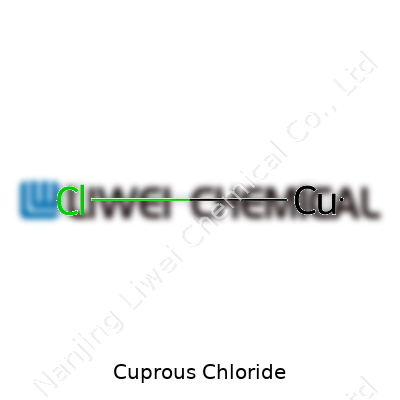
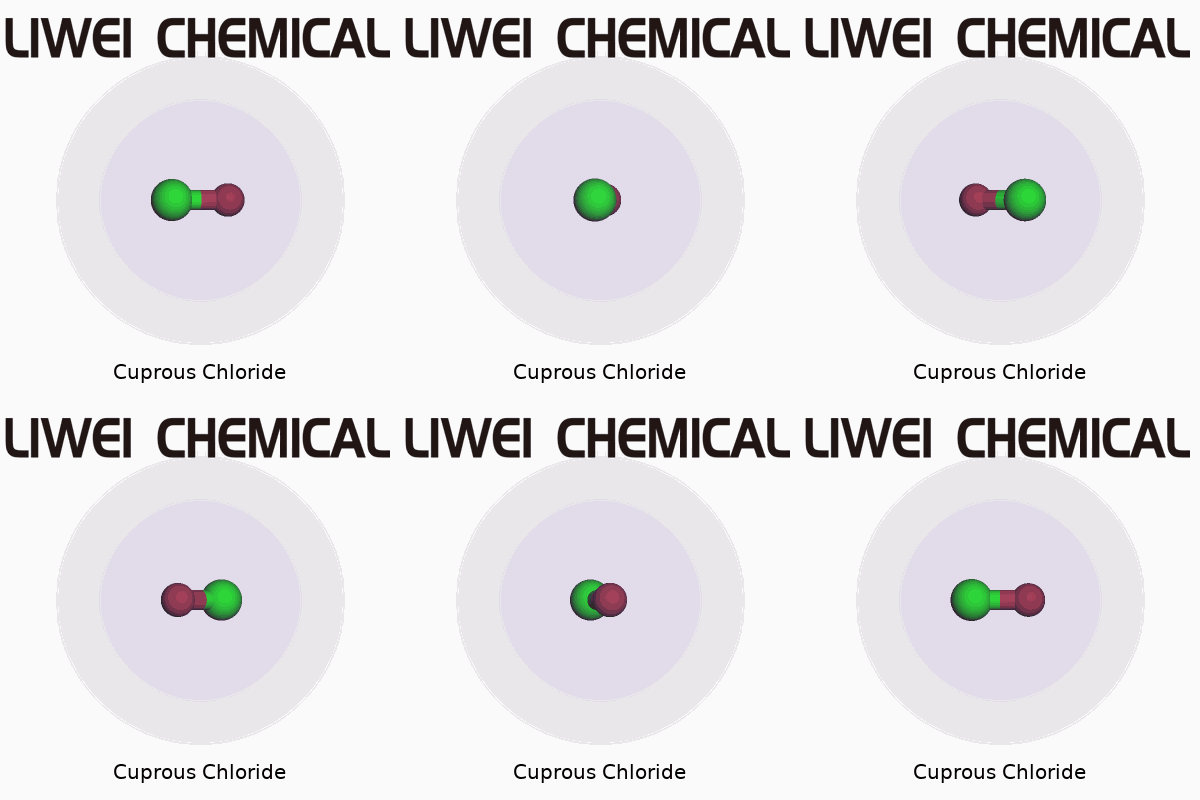
| Names | |
| Preferred IUPAC name | chloridocopper |
| Other names |
Cuprous chloride
Copper(I) chloride Copper monochloride |
| Pronunciation | /ˈkjuːprəs ˈklɔːraɪd/ |
| Identifiers | |
| CAS Number | 7758-89-6 |
| Beilstein Reference | 3581734 |
| ChEBI | CHEBI:31343 |
| ChEMBL | CHEMBL1201600 |
| ChemSpider | 23641811 |
| DrugBank | DB09151 |
| ECHA InfoCard | ECHA InfoCard: 100.007.423 |
| EC Number | 231-842-9 |
| Gmelin Reference | Gmelin 59 |
| KEGG | C00657 |
| MeSH | D003561 |
| PubChem CID | 22214 |
| RTECS number | GL8800000 |
| UNII | L5A5H2CLGB |
| UN number | UN3077 |
| Properties | |
| Chemical formula | CuCl |
| Molar mass | 134.45 g/mol |
| Appearance | White or off-white crystalline powder |
| Odor | Odorless |
| Density | D = 4.14 g/cm3 |
| Solubility in water | Slightly soluble |
| log P | -6.77 |
| Vapor pressure | Negligible |
| Acidity (pKa) | 13.3 |
| Basicity (pKb) | 7.5 |
| Magnetic susceptibility (χ) | +135.0·10⁻⁶ cm³/mol |
| Refractive index (nD) | 2.07 |
| Dipole moment | 0.00 D |
| Thermochemistry | |
| Std molar entropy (S⦵298) | 67.0 J·mol⁻¹·K⁻¹ |
| Std enthalpy of formation (ΔfH⦵298) | -121 kJ/mol |
| Std enthalpy of combustion (ΔcH⦵298) | -217.9 kJ/mol |
| Pharmacology | |
| ATC code | V03AW04 |
| Hazards | |
| Main hazards | Harmful if swallowed, causes skin and eye irritation, may cause respiratory irritation, very toxic to aquatic life. |
| GHS labelling | GHS02, GHS07, GHS09 |
| Pictograms | GHS07,GHS09 |
| Signal word | Warning |
| Hazard statements | H301 + H331: Toxic if swallowed or if inhaled. |
| Precautionary statements | P264, P273, P280, P302+P352, P305+P351+P338, P312, P332+P313, P337+P313, P362 |
| NFPA 704 (fire diamond) | 2-0-1 |
| Autoignition temperature | Autoignition temperature: 600°C (1112°F) |
| Lethal dose or concentration | LD50 oral rat 584 mg/kg |
| LD50 (median dose) | LD50 (median dose): Oral (rat): 584 mg/kg |
| NIOSH | CAS203 |
| PEL (Permissible) | PEL (Permissible Exposure Limit) for Cuprous Chloride: "1 mg/m³ (as Cu, 8-hour TWA) |
| REL (Recommended) | 0.01 mg/m3 |
| IDLH (Immediate danger) | 100 mg/m3 |
| Related compounds | |
| Related compounds |
Copper(I) bromide
Copper(I) iodide Copper(II) chloride Copper(I) oxide |


