Knowledge
Cupric Sulfate: Beyond the Blue Crystals
Historical Development
People have been using copper compounds for ages, long before chemistry textbooks landed on classroom desks. Records from ancient cultures point to the early use of blue vitriol, known today as cupric sulfate. Egyptians, Greeks, and Romans reached for blue crystals to treat wounds or create vivid pigments. By the 18th century, proper chemical methods set the stage for reliable production. Europe’s industrial boom made cupric sulfate a staple in textile factories, vineyards, and early laboratories. The journey from water jars in ancient temples to factory vats reflects not just a shift in knowledge, but also a growing appreciation for what copper could do.
Product Overview
Cupric sulfate usually appears as striking blue crystals, often called “blue vitriol.” Chemists and farmers both keep it close, though for different reasons. In agriculture, it makes its mark by fighting fungal diseases and managing soil. Industry workers pour it into processes for metal plating or catalyst preparation. The pharmaceutical world values it in microbial control and for certain diagnostic tests. Each bag carries a connection to science, health, and crops on the field.
Physical & Chemical Properties
This compound stands out with its vivid blue color thanks to hydrated copper ions linked up with sulfate. The pentahydrate form shows sharp, rhombic crystals that lose water on heating, shifting to a duller powder. In the lab, cupric sulfate dissolves in water, forming a clear blue solution. Its density and melting point line up well with copper chemistry—so the blue crystals hold steady unless pushed hard with heat or a chemical partner. Mixed with iron metal, it yields copper and iron sulfate—a favorite classic for students learning redox reactions. The crystals release water easily, acting as a time-proven indicator for hydration in labs. Physical familiarity with the powder or crystals gives technicians and students a practical grip on chemical phenomena.
Technical Specifications & Labeling
Commercial samples carry grades suitable for agriculture, industry, or laboratory work. On a typical bag, the blue crystals should rank above 98% purity for high-end lab use, with technical grades coming in just behind. Labels always name the hydrate form—pentahydrate, for example—and give clear warnings for handling. Reliable sources display batch numbers, lot codes, and manufacturer information. Trace impurities (such as lead, arsenic, or iron) matter for food, medical, and scientific uses. In industries, technical sheets highlight solubility, reactivity, and recommended storage. Many companies stamp the hazard labels right out front, so no one can miss them in a busy storage room or field shed. That keeps users well clear of accidental mix-ups and mishandling.
Preparation Method
People usually make cupric sulfate by reacting copper metal with hot, concentrated sulfuric acid, or, more safely, by using oxygen to help sulfuric acid attack copper at milder conditions. Old-school approaches involve roasting copper ore with air, then soaking the resulting powder in acid. For laboratory work, pure copper wires and sulfuric acid generate the compound with high yield. Often, crystallization from solution finishes the process, as the blue crystals separate nicely from the clear liquid. Each step reflects a common sense approach—use abundant materials, drive the reaction with heat or a little oxidizer, then harvest the product as cleanly as possible for safe use.
Chemical Reactions & Modifications
Cupric sulfate shows a knack for versatile reactions. When a strip of iron sinks in its solution, the blue color fades as copper metal collects on the iron's surface—a hands-on example of one metal taking over from another. Mixing with alkali forms copper hydroxide, a useful compound for further synthesis. Add ammonia, and you get a deep blue complex, revealing the coordinated bonds at the core of transition metal chemistry. In analytical work, it partners with sodium hydroxide or potassium ferrocyanide, marking the presence of reducing sugars or specific ions. That ability to swap partners and switch colors turns cupric sulfate into an excellent teaching tool and a reliable worker across the bench and field.
Synonyms & Product Names
Cupric sulfate often comes up as blue vitriol, copper(II) sulfate, or copper sulfate. Some industry catalogs list it as cuprum sulfuricum or bluestone. A warehouse manager or chemist might say "Crystalline Copper II" or simply "pentahydrate" when sorting inventory. These labels matter, especially with global suppliers using different languages and commercial terms. Whether in English, Latin, or trade shorthand, the unmistakable blue hue points to the correct bin or bottle.
Safety & Operational Standards
Handling cupric sulfate calls for paying attention. The powder harms eyes, skin, and lungs if contact lingers, so gloves, goggles, and mask matter. Ingesting or inhaling dust leads to nausea or respiratory symptoms, which puts pressure on training and proper labeling at every turn. Occupational safety guides like OSHA and GHS set clear boundaries for storage and disposal, knowing spills or runoff harm the water and soil nearby. Facility staff train for incident response, and those using high volumes build active ventilation into their workspaces. Post-use containment, with designated waste bins and rinse procedures, keeps accidents at bay both in big plants and small labs.
Application Area
Growers rely on cupric sulfate to treat fruit and wine vines for mildew and blight. In water systems, it stops algae before ponds turn green. Electroplaters depend on its copper source for circuit boards, batteries, and corrosion-resistant coatings. Animal nutrition experts blend tiny amounts into feed for growth and health. Medical teams sometimes apply solutions for fungus on the skin or as a trace element in intravenous feeds. School labs lean on this salt for a lineup of color-changing tests or crystal-growing experiments. Today, its reach extends from the most basic science class to million-dollar production lines.
Research & Development
In labs, researchers test new uses for cupric sulfate in sustainable farming and green manufacturing. Teams look at improved fungicide blends, more effective copper recovery in electronic waste recycling, and next-gen catalysts. Analytical chemists develop rapid diagnostic tests using color changes. Companies invest in finding partner chemicals that boost efficiency, limit environmental impact, or make recycling spent salts simpler. The excitement comes from small discoveries with big implications for health, food, water, and power grids.
Toxicity Research
Toxicologists study both acute and chronic effects of copper sulfate exposure. Lab studies show that high doses damage organs and disrupt cell function. Researchers monitor livestock, fish, and birds near treated fields, logging any buildup in tissue. Regulatory boards keep lowering acceptable exposure limits as more is learned about soil accumulation and the effect on drinking water. Environmental teams track runoff from farm use to freshwater streams, noting changes in aquatic creatures. Medical researchers have flagged the poisoning risk from improper storage in homes or clinics. These insights guide both regulation and the work of product reformulation to strike a balance between protection and productivity.
Future Prospects
Research is exploring smart fertilizers that release copper only when plants need it, cutting waste and runoff. Chemical engineers test recycling methods for spent solutions, aiming to close the loop in factories. Studies delve into lower-toxicity alternatives for crop protection, yet cupric sulfate consistently appears tough to replace in terms of performance and cost. Digital management tools track application rates and environmental levels, promising safer use on a large scale. More advanced crystal-engineering methods might tailor size and form for new industries—not just farming or plating, but even energy storage and medical imaging. The blue crystals that shaped ancient trade and modern chemistry may yet take on a new life, shaped by science and guided by the lessons of the past.
Everyday Chemistry and the Jobs It Does
Cupric sulfate shows up in more places than people expect. I’ve seen it in science kits in school, soaked into wood posts at farms, and hidden in bottles at the local pool shop. This blue powder has earned its place thanks to how it solves tangible problems – whether out in the field or inside a laboratory.
In Farming Fields and Orchards
Farming puts food on tables, but the process demands more than seeds and water. Fungal diseases like downy mildew or leaf spots can tear through grapevines or fruit trees. In vineyards across California and citrus groves in Florida, growers mix up a potion known as Bordeaux mixture: just copper sulfate and lime with water. Spraying this mixture has protected grapes and oranges for more than a hundred years. The copper locks onto leaf surfaces, disrupting fungal cells and helping crops tough it out through wet weather.
Animal agriculture leans on cupric sulfate, too. Livestock need trace amounts of copper to grow well. Feed makers add precise doses to chicken and cow diets, drawn from solid research that shows animals do better with the right balance of minerals. Pigs, for example, convert feed into weight more efficiently with a bit of added copper, so barns run with less waste and cost.
Water Safety and Public Health
Many folks don’t realize that pools and ponds can turn into slippery, mosquito-breeding nightmares without careful treatment. Copper sulfate gives algae nowhere to hide. Just ask any golf course manager or city parks crew: A measured scoop into a pond stops the thick green mats from taking over. This cuts down on mosquitos, makes the water safer for ducks and dogs, and keeps neighborhoods pleasant.
City water systems and small towns both lean on copper's antimicrobial punch. Water pipes can grow bacteria when stagnant, so adding cupric sulfate keeps lines clear between treatments. Even so, using copper salts for water safety demands serious training. Too much can harm fish or plants downstream. The difference between helpful and hazardous gets narrow, which makes careful measurement and solid oversight essential.
Classrooms and Chemistry Labs
Cupric sulfate always caught my eye in high school labs—its deep blue color looks like nothing else in the supply closet. Teachers use it for classic chemistry lessons: test for water, study crystal growth, and demonstrate copper’s chemical tricks. Handfuls of students learned about chemical reactions by watching the blue hue fade or darken, or by watching bright metal form on a nail dipped in the solution. The hands-on lessons stick because they’re simple to set up yet powerful in showing science at work.
Risks, Regulations, and Responsible Use
No chemical gives only rewards. Copper toxicity stacks up in soil if sprayed without planning, and aquatic creatures react badly to heavy-handed dumping. Farmers and facilities now track how much copper hits soil or water, with regulations in place in the US and Europe. Integrated pest management tries to put copper on the field only when needed and switches to other approaches when possible.
The takeaway from seeing cupric sulfate in so many places? Every scattered blue crystal on a farm or in a test tube reminds me that science delivers real benefits, but never in a vacuum. Care, oversight, and a respect for balance keep this workhorse tool safer for both people and the planet.
Recognizing Risks in Regular Tasks
Cupric sulfate, known for its blue crystals, pops up in classrooms, gardens, water treatment plants, and even art studios. Plenty have seen it listed in science project kits or fertilizer bags. On the surface, it seems harmless, almost inviting curiosity. I remember handling powdered cupric sulfate as a teenager, trusting the school’s modest directions. Most of us never paused to question what it meant for our skin, eyes, or even the air we breathed during experiments. Many, like me, learned the truth later; a good lesson, as cupric sulfate isn’t simply an ingredient in harmless blue water.
What Science Tells Us About Exposure
Direct skin contact can leave irritation, sometimes redness and itching that hangs around for a day or more. If cupric sulfate dust settles in an eye, expect pain, tearing, and the need for a doctor’s visit. Swallowing it or inhaling dust poses a bigger threat; copper sulfate can burn through internal tissue, cause vomiting, and build up toxic copper inside organs. Over long years, workers in agriculture and chemical labs have faced the consequences—copper toxicity and respiratory trouble. The U.S. National Library of Medicine and CDC highlight these risks, both for accidental and chronic exposures.
Proper Handling Beats Regret
School chemistry lessons sometimes gloss over glove use and goggle-wearing as “suggested precautions.” In fact, such safety steps keep burns, blisters, and frightening trips to the ER at bay. Experts recommend using nitrile gloves and protective eyewear, especially for anyone working with the powder or mixing solutions. Strong enough ventilation cuts the danger of inhaling dust. Anyone handling this substance, even for minutes, should wash their hands right after. Teachers, parents, and supervisors have a duty to model these habits.
Home and Garden Use Can Be Safe—With Caution
Many gardeners use cupric sulfate to fight fungal diseases. Applying it to plants can be safe, though touching bare hands to the product should be avoided. Instructions on the bag often match those in labs—safety goggles, gloves, and caution not to mix near food, pets, or children. Store leftover cupric sulfate up high and in a sealed container to keep kids and pets away. Rinsing equipment and hands outdoors, not in kitchen sinks, prevents trace copper from entering household food or water supply.
Strategies from Industry
Manufacturers provide safety data sheets with their products. These documents explain first aid steps, clean-up methods, and safe disposal. Trained workers use fume hoods, respirators, and regular monitoring for copper buildup. Some places switch to less hazardous alternatives for the same tasks, reducing risk for workers. This type of approach reflects what research supports: preventing exposure is easier and cheaper than treating health problems after the fact.
Better Habits for a Safer Environment
Cupric sulfate has practical uses, but its hazards can’t be brushed off. Kids and adults both make mistakes when the bright blue color tempts curiosity. Replacing casual handling with sound habits—protective gear, careful storage, and responsible disposal—protects everyone. Sharing real-life stories of irritation or children getting sick is more convincing than dry warnings. The goal goes beyond worry; it means taking evidence seriously and always making safety a habit instead of a rule.
Why Proper Storage Matters
Cupric sulfate never looks threatening—just a bright blue powder or crystals in a jar. I remember seeing it in my high school chemistry classroom, sitting beside the vinegar and sodium chloride, nothing fancy. The reality, though, is that cupric sulfate has a hazardous side. Left out in humid air, it clumps up and loses potency due to moisture absorption. Lay it out where kids or pets roam, and the risk skyrockets. Swallowing even a small amount could mean gut issues, kidney trouble, or a straight trip to the emergency room. For years, public safety data sheets have stressed hazard prevention. But there’s a certain wisdom in learning directly from people who’ve handled the stuff for decades in labs or on farms—it points to a few key lessons about safe storage.
Key Steps to Store Cupric Sulfate
Any container will not cut it. I learned quickly not to trust thin plastic lids or cardboard tubes. Cupric sulfate needs a tight-sealing vessel, glass or heavy-duty plastic, kept dry and out of the sun. A secure lid stops the crystals from soaking up water from the air and turning into a mushy mess. In the agricultural supply shed, many keep it on a high shelf, away from fertilizer and pesticides that might react. A cool, dry corner works best—room temperature is fine, but nowhere near the water heater or kitchen sink. Never put it near acids or ammonia—chemical reactions can happen fast and sometimes with dangerous results.
Kids and curious adults can’t resist a jar of electric-blue crystals. So the shelf should be locked, or labels should shout “Poison” in bold letters. In schools or work sites, regulations often demand a secure chemicals cabinet—and honestly, that’s a smart solution for homes, too. Accidents don’t just happen in labs. I once heard about a toddler who mistook it for blue rock candy, and the outcome was tragic. It taught local parents to stop thinking of home chemicals as just “science stuff” and start taking real precautions.
What Science Tells Us About Exposure
Studies from the National Institutes of Health and the CDC have clear warnings about copper toxicity. Eating cupric sulfate, inhaling dust, or getting it on the skin can easily result in burns, vomiting, or worse. This is not fear-mongering. The practical takeaway: gloves and goggles go on before opening the container. Don’t eat, drink, or even chew gum while working nearby. After handling cupric sulfate, soap and water should follow—every time. Equipment for mixing or measuring needs cleaning before moving on to anything else.
Better Storage Takes Community Involvement
Old habits in agriculture or classroom storage sometimes ignore safety codes for the sake of convenience. Community training can bridge the gap. Volunteer firefighters in some towns offer yearly workshops for farm chemical storage—simple, hands-on, no fancy language. Stores could hand out flyers with each purchase, not buried at the bottom of the bag. Even social media reminders from local schools keep safety top-of-mind.
The stakes remain high for keeping cupric sulfate secure. Rules come from years of hard lessons and scientific study—not just paperwork. Locked cabinets, sturdy containers, and plain labels mean peace of mind. Safe storage isn’t about paranoia, but respect for chemicals that help in work, science, and industry, but only when managed well.
What People Should Know About Cupric Sulfate
Cupric sulfate often shows up in laboratories, farming, and pools. Its blue color makes it easy to spot, but it’s still a chemical that can deliver some serious trouble. Exposure can happen by handling it at work, spilling some at home, or breathing dust outside. The truth is, this stuff isn’t like table salt—it’s toxic, and that risk is all too real if folks aren’t careful.
Touching and Breathing
Skin absorbs chemicals, sometimes more easily than most people realize. If cupric sulfate lands on the skin or gets in the eyes, it burns and irritates. With enough contact, people get rashes, redness, and blisters. Years ago, I saw someone splash a small amount on their arm in a greenhouse. Hours later, a red patch kept itching and didn’t go away for days. Gloves and eye protection matter, not just in big factories, but in small gardens, too.
Inhaling powder or dust doesn’t feel harmless. Many report coughing, sore throat, and sneezing almost right away. A few hours in an unventilated greenhouse or mixing area, and lungs pay the price: shortness of breath, wheezing, even chest pain if a person is sensitive. Children and older adults react faster and harder.
Swallowing: The Real Danger
Mistakes happen in the kitchen or around curious kids and pets. Ingesting cupric sulfate is a medical emergency—nausea, vomiting, stomach cramps, and even internal bleeding can follow. Swallowing as little as one gram could poison a child and cause severe effects in adults, like damage to the liver or kidneys. In hospitals, cases show up every year, many from homemade solutions or simple storage mishaps.
Long-Term Effects Many Ignore
Handling cupric sulfate every day, even at low doses, loads up copper in the body. Too much copper brings on headaches, dizziness, and constant tiredness. Over time, people can develop anemia and liver damage. Overexposure at work has left some with nerve and mental health issues. A doctor told me he’s seen patients struggle to recover after months around the chemical. Most never guessed what made them sick.
Why Proper Practice Makes a Difference
Basic safety changes the story. Gloves, goggles, and a real dust mask—not just a bandana—make all the difference. Storing cupric sulfate out of reach and in labeled containers cuts the risk for children and pets. Emergency instructions posted right where the chemical gets handled mean there’s no confusion when someone needs help. If a spill or exposure happens, quick skin washing and seeking medical attention can reduce harm.
Building Awareness and Setting Controls
Easy-to-understand labels and training tackle a huge part of the danger. Most accidents come from not knowing the risk or skipping steps. Calling poison control or a doctor helps more than searching online for solutions. Companies set workplace rules with clear signage and fresh air. Farmers who switch to safer alternatives for pest control avoid copper overload in fields and in themselves.
Doctors test for copper in blood and urine. If levels rise, the link to cupric sulfate exposure often explains years of odd symptoms. The health risks are real, which makes personal care, good storage, and honest communication between workers, parents, and healthcare experts essential tools in keeping people safe.
Cupric Sulfate: Uses and Risks
Cupric sulfate shows up in a lot of places—school chemistry labs, farms, even at treatment plants. People use it for killing algae, tinting papers, and setting up crystal experiments. Once finished with it, though, dumping it down the drain or into the backyard can come back to haunt the environment and community health.
Why Disposal Deserves Attention
I remember scrubbing those blue stains off countertops during high school science class and never really thinking where that stuff went. If you ever spilled some near the garden, the grass would start fading. That reaction isn’t an accident. Copper itself never disappears. In millionths of a gram, it helps both plants and animals grow, but in higher amounts, it quickly turns toxic. Fish can die when only a tiny bit leaks into lakes or streams. Soil can get hurt forever, stuck with too much copper for anything to grow.
Rules and Guidance
State and local laws actually treat cupric sulfate as hazardous waste in many places, not something to mix with regular trash. Throwing larger or concentrated amounts into your home drain creates a risk for anyone using household water—and even water workers miles downstream. Some city water systems can handle low doses, but many can’t filter out heavy metals. Eventually, it heads back out to rivers and ends up in drinking water or aquatic habitats.
Proper Steps at Home and School
Leftover liquid or powder asks for some simple, careful moves. Gather any unused solution into a labeled, sealed container. Wipe up the crystals and keep them in a small jar. Any rags or paper used to clean spills count as contaminated, too. I’ve found municipal waste stations or county hazardous material drop-off days provide the safest route. You pay a small fee in some cities, but it means no worries about your pipes, your garden, or the local pond.
If you work at a lab or a farm, most states expect the facility to register as a hazardous waste generator. That’s a bit of paperwork. Commercial outfits usually ship out the chemical waste to special incinerators or chemical treatment plants. These plants break the chemical down into less harmful forms.
Reducing Future Waste
People don’t always need to keep buying more chemicals than they’ll ever use. Teachers I know coordinate crystal-growing projects so the whole bottle disappears by semester’s end. Farms can explore non-chemical algae controls, like managing shade or flow in ponds, so they buy a fraction of the copper they used to. I see college students tweaking their experiments to use much smaller samples, just to avoid having to deal with leftover chemicals later on.
A Shared Responsibility
Most folks want clean drinking water and safe gardens, but some probably think one small spill or drain-pour doesn’t matter. Across a whole town or school district, it adds up. Safe disposal doesn’t just avoid fines; it protects our pets, food supply, and rivers. Making sure cupric sulfate never goes down the drain is a small but real step anyone can take for a healthier community.
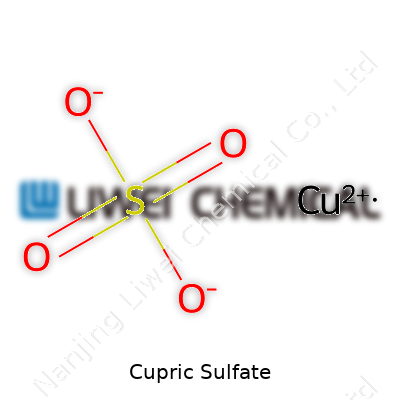
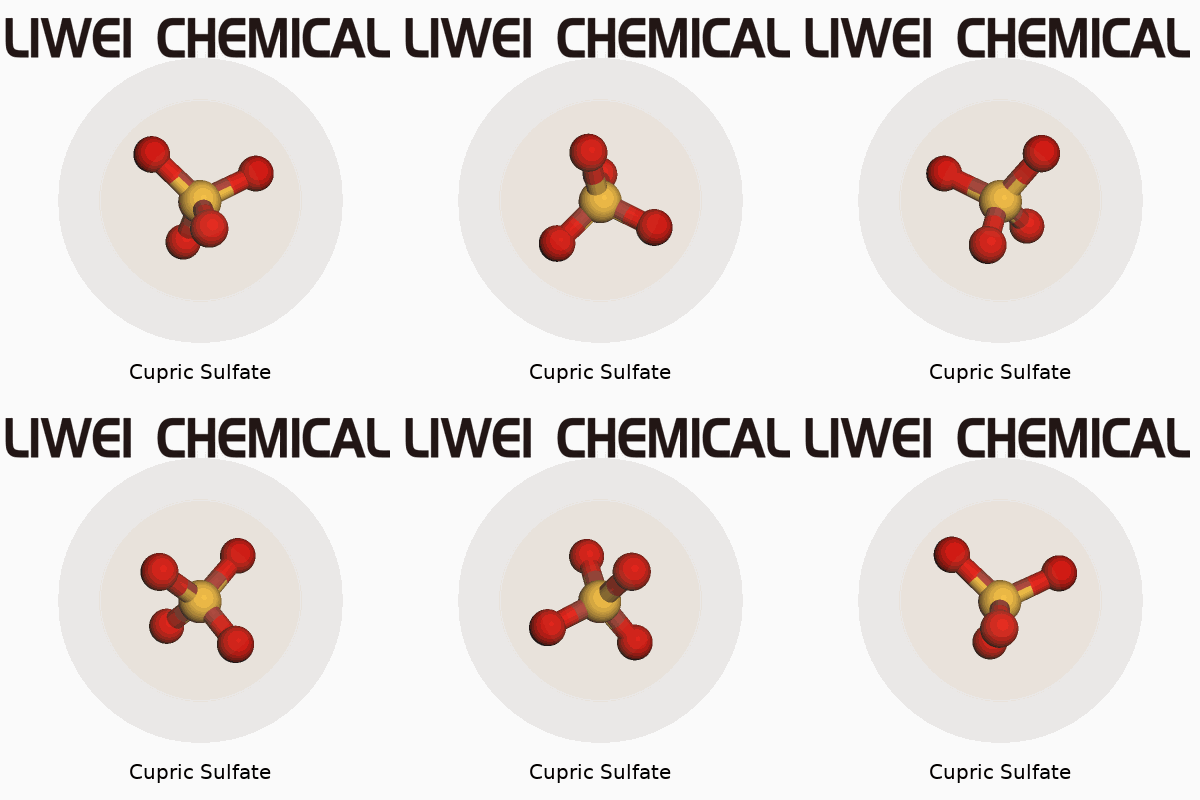
| Names | |
| Preferred IUPAC name | Copper(II) sulfate |
| Other names |
Blue vitriol
Bluestone Copper(II) sulfate Cupric sulfate pentahydrate Roman vitriol |
| Pronunciation | /ˈkjuːprɪk ˈsʌlfeɪt/ |
| Identifiers | |
| CAS Number | 7758-98-7 |
| Beilstein Reference | BC357508 |
| ChEBI | CHEBI:23413 |
| ChEMBL | CHEMBL1369 |
| ChemSpider | 22213 |
| DrugBank | DB14512 |
| ECHA InfoCard | 03a6ee21-c41d-4f72-9c2d-1df3c6b7fc85 |
| EC Number | 231-847-6 |
| Gmelin Reference | 1319 |
| KEGG | C00454 |
| MeSH | D003707 |
| PubChem CID | 24462 |
| RTECS number | GL8900000 |
| UNII | 8CBV7CQD9U |
| UN number | UN3077 |
| Properties | |
| Chemical formula | CuSO4 |
| Molar mass | 159.61 g/mol |
| Appearance | Blue crystalline solid |
| Odor | Odorless |
| Density | 2.286 g/cm³ |
| Solubility in water | 31.6 g/100 mL (20 °C) |
| log P | -1.36 |
| Vapor pressure | Negligible |
| Acidity (pKa) | ~2.0 |
| Basicity (pKb) | 8.5 |
| Magnetic susceptibility (χ) | +522.0×10⁻⁶ cgs |
| Refractive index (nD) | 1.518 |
| Dipole moment | Zero |
| Thermochemistry | |
| Std molar entropy (S⦵298) | 119.5 J·mol⁻¹·K⁻¹ |
| Std enthalpy of formation (ΔfH⦵298) | -769.0 kJ/mol |
| Std enthalpy of combustion (ΔcH⦵298) | -770.0 kJ/mol |
| Pharmacology | |
| ATC code | A12CX04 |
| Hazards | |
| Main hazards | Harmful if swallowed, causes serious eye irritation, may cause respiratory irritation, toxic to aquatic life with long lasting effects |
| GHS labelling | GHS07, GHS09 |
| Pictograms | GHS05,GHS07,GHS09 |
| Signal word | Danger |
| Hazard statements | H302, H315, H319, H410 |
| Precautionary statements | Keep out of reach of children. Do not breathe dust/fume/gas/mist/vapors/spray. Wash thoroughly after handling. Do not eat, drink or smoke when using this product. Wear protective gloves/protective clothing/eye protection/face protection. |
| NFPA 704 (fire diamond) | 2-2-3-OX |
| Lethal dose or concentration | LD50 oral rat: 300 mg/kg |
| LD50 (median dose) | LD50 (median dose): 300 mg/kg (oral, rat) |
| NIOSH | T500 |
| PEL (Permissible) | 1 mg/m³ |
| REL (Recommended) | 1 mg/m³ |
| IDLH (Immediate danger) | 100 mg/m3 |
| Related compounds | |
| Related compounds |
Copper(II) chloride
Copper(II) nitrate Copper(II) acetate Copper(II) carbonate Copper(II) oxide |


