
Knowledge
Cupric Nitrate: Commentary on a Blue Chemical with Deep Roots
Historical Development
Cupric nitrate has a long backstory—scientists explored the blue-green crystals far before the periodic table took its modern shape. Alchemists worked with copper salts even in the 1500s, sometimes by accident when mixing simple copper metal with nitric acid. Modern synthesis improved on their tinctures with purer crystals and more reliable yields. Observing its changing applications over the centuries paints a pattern: as industry matured, so did the ways creators put cupric nitrate to use, shifting its status from a laboratory curiosity to a critical raw material. If you’ve ever noticed the oddly blue stains on old lab benches, chances are, cupric nitrate played a role.
Product Overview
Commercial suppliers offer cupric nitrate in different forms, primarily as a hydrate—usually tetrahydrate or hexahydrate. Chemists and manufacturers rely on its solubility and vivid color, which gives an unmistakable visual cue in processes. Choosing the right grade matters, whether the goal is high-purity electronics use or simply a teaching supply for high school chemistry. The compound’s price has some swings—environmental and copper mining policies can nudge it up or down, and shipping hydrated salts requires careful packing to avoid caking or leaks. In my own lab experience, cupric nitrate always shows up with a clear signal: the sharp, nearly turquoise blue grabs attention.
Physical & Chemical Properties
Cupric nitrate stands out with its strong blue-green color and crystalline structure. Technically, the formula reads Cu(NO3)2·xH2O, with “x” often being 2, 3 or 6 depending on the water content. The salt dissolves easily in water and even in some alcohols—a property handy for chemical syntheses and dyeing. On heating, cupric nitrate decomposes to form nitrogen dioxide, an orange-brown gas with a harsh smell, and copper oxide, a black residue. These properties tie closely to its handling and storage. I once left a sample open near a sunny window—sunlight sped up decomposition, producing both color changes and a sharp odor that stuck around long after the sample was sealed away.
Technical Specifications & Labeling
A bottle from a reputable supplier lists purity—sometimes above 98%—plus water content and possible metal contaminants. Labels state its UN number and signal hazard classes. Safety data is mandatory: eye contact risk, warnings about skin sensitivity, and spill protocols. The packaging often advises on temperature, exposure limits, and keeps clear about not storing near flammable or easily oxidized materials. I’ve learned to check for batch numbers and manufacturing dates, helping track degradation or oddities if things go wrong during an experiment.
Preparation Method
Industrial methods usually involve reacting copper metal or copper oxide with nitric acid. Lab runs call for slow acid addition to copper filings, with plenty of fume extraction to catch nasty nitrogen oxides released in the process. Post-reaction, the solution gets evaporated and cooled, coaxing out shimmering blue crystals. Repeat crystallization can sharpen purity. On one occasion in college, following all steps by the book helped us avoid brown fumes filling the hood, saving everyone from a hasty evacuation. Homemade routes work for demonstration, but large-scale producers rely on tighter control to cut waste and minimize environmental impact.
Chemical Reactions & Modifications
Cupric nitrate reacts with a host of other chemicals. Add heat, and it splits down to copper oxide, releasing nitrogen dioxide and oxygen. React it with alkalis, and you’ll get copper hydroxide, a gelatinous blue-green solid perfect for other syntheses. If you’re designing catalysts or pigments, mix it with compatible salts to get complex copper compounds. The high solubility and ready oxidizing character let chemists use cupric nitrate as a catalyst, a reagent for nitration, or even for etching metals.
Synonyms & Product Names
You’ll find cupric nitrate sold as copper(II) nitrate, copper dinitrate, or even under brand names chosen by chemical companies for their packed bottles. Registration systems attach identifiers like CAS numbers. For the tetrahydrate, it’s sometimes plainly called “copper nitrate tetrahydrate” or “bichromate of copper” in older texts—certainly confusing if you’re paging through a century-old manual. Every name points to the rich color and the copper ion driving so many reactions.
Safety & Operational Standards
Cupric nitrate demands respect in any workplace. The dust can irritate mucous membranes, and long contact with the skin can trigger reactions. Handling it calls for gloves, goggles, and ventilation. Liquid spills must get neutralized before disposal, never washed down a drain without treatment. National and international safety protocols set strict thresholds for storage capacities, exposure time, and labeling. Laboratories are required to maintain spill kits and quick neutralization plans. I’ve seen firsthand how strong training and clear labeling prevent mix-ups—especially important since even small contamination messes with both experiments and health.
Application Area
You’ll spot cupric nitrate in more places than you’d guess: from textile dyeing to ceramics, from chemical analysis to fireworks production. Its strong color and oxidizing nature suit it for etching copper circuits, coloring glass, and creating catalysts for organic synthesis. Research labs use the salt to carry out selective oxidations or to build complex molecules. My own work leaned on cupric nitrate for studying redox chemistry—dropping a tiny amount into a solution often changed the entire course of a reaction, standing as a visible signal for oxidation events.
Research & Development
Research explores new ways to harness cupric nitrate. Teams study its role in catalyst design, environmental remediation, and advanced energy storage. One major drive pushes its use in green chemistry, where scientists aim to redesign reactions for lower energy and fewer waste products. Studies look at how controlling particle size or hydration can change reactivity. I’ve followed recent work tweaking crystal structures to get custom copper-based catalysts for special applications in pharmaceuticals and polymers—researchers test and retest to find a balance between stability, activity, and safety.
Toxicity Research
Concerns over toxicity surface in every safety briefing involving cupric nitrate. Dust and fumes irritate the respiratory system, and the risk climbs with exposure. Animal studies check for both acute and chronic effects, including possible organ toxicity. Environmental studies measure wastewater and runoff to gauge copper’s effect on soil and aquatic life—copper ions build up and harm sensitive organisms. This data informs disposal policies and pushes companies to clean waste streams better. In labs I've worked in, strict record-keeping and reliable neutralization steps ensured used materials didn't pose a risk to either people or the environment outside the building.
Future Prospects
With industries searching for cleaner catalysts and greener syntheses, cupric nitrate’s future looks promising if manufacturers tackle toxicity and disposal concerns. Advances in controlled-release systems and custom copper complexes push the boundaries. Renewable manufacturing processes, tighter regulatory standards, and smarter recycling can cut environmental impact. If researchers keep improving how we handle and repurpose copper salts, cupric nitrate can play a larger role in both old industries and the new wave of sustainable chemistry. In the end, this is a chemical that stays in the mix, shifting its uses as technology and priorities evolve.
Real Uses Beyond the Lab
Most folks don’t spend much time thinking about chemicals like cupric nitrate, yet this blue-green salt touches more lives than many realize. In high school, I found myself pouring this stuff during science labs because teachers trusted cupric nitrate for vivid chemical reactions. Simple demonstrations turned a plain beaker into a small stage for lessons about oxidation and metals. For science educators, cupric nitrate remains a favorite for showing students the basics of change and color in chemistry.
Metal Finishing and Electronics
Out in the world, manufacturers reach for cupric nitrate during metal etching. This job shapes circuit board designs and helps jewelry makers score fine details onto metal. Copper ions etch the surface with impressive precision. Modern electronics rely on these tiny etchings—without them, smartphones, laptops, and many medical instruments look very different. Metal finishing companies choose cupric nitrate because it produces clean, predictable patterns and doesn’t produce toxic fumes, reducing safety risks for workers.
Textiles Get a Boost
Dye houses use cupric nitrate to set colors in natural and blended fabrics. Cotton, linen, and silk take up dye more evenly when treated with this solution. As interest grows in sustainable clothing, textile designers want colors that hold up to sunlight and repeated washing. Strong mordants like cupric nitrate help extend the life of garments, which helps keep more clothes out of landfills.
Fertilizers and Agriculture
Farming depends on micronutrients. Some soils struggle with low copper, starving wheat, maize, and fruit trees of what they need to produce good harvests. Spraying cupric nitrate supports cell wall strength and disease resistance in crops. Copper shortage can crater yields, and countries with copper-deficient land watch plants bounce back when growers supplement this way. Healthier crops mean fewer pesticide sprays and less wasted land.
Environmental Remediation
Environmental cleanup work gets a hand from cupric nitrate, too. Wastewater plants treat effluent with copper salts to control bacteria and break down certain pollutants. Municipal workers in smaller towns tell me that copper-based treatments cut down on harsh chemicals and help meet strict water discharge standards. Cleaner streams and lakes benefit from lower nutrient dumping, which discourages out-of-control algae growth. Aquatic life bounces back and communities enjoy safer water.
Health and Safety
Cupric nitrate’s useful qualities come with important safety issues. High concentrations irritate skin and breathing passages, and accidental spills stain hands, floors, even equipment. Workers wear gloves and goggles and handle the material with care. Responsible companies invest in safety training, proper labeling, and secure storage instead of cutting corners.
Looking for Better Solutions
Some people want to swap cupric nitrate out for less hazardous alternatives. Research teams in Europe search for replacements to cut down on industrial chemical waste and lower risks for factory staff. At the same time, engineers work with smaller quantities and tighter controls. Smart chemistry and safe practices ensure that the benefits—improved electronics, stronger crops, clean water—don’t come at an unnecessary human or environmental cost.
Everyday Impact
Cupric nitrate quietly strengthens technology, health, and the environment without grabbing headlines. Farmers, engineers, teachers, and city workers rely on it, yet most of us only see its impact as clean clothes, reliable gadgets, and safer fields. A little knowledge about what’s behind these everyday wins helps us appreciate the connection between chemistry and better living.
Handling Cupric Nitrate Isn’t Like Dealing With Table Salt
Cupric nitrate sounds like something that belongs locked in a chemistry lab. Most folks won’t see it outside a science classroom, but it pops up in places you might not expect. This blue-green crystal helps process metals, acts as a reagent in chemical labs, and sometimes finds a home in specialty fertilizers. I remember the first time I worked with it in a high school chemistry class—our teacher handled it with a pair of gloves, and the room carried a faintly acidic tang. Students got a lecture about never working with chemicals bare-handed. That lesson stuck with me because cupric nitrate isn’t just a colorful powder on a shelf. It packs some real risks.
Exposure Risks: It’s More Than Skin-Deep
Picture powder floating through the air or a careless splash on exposed skin. Cupric nitrate irritates skin, eyes, and, if inhaled, your respiratory tract. People sometimes underestimate the strength of industrial chemicals because they seem like part of the background at factories or labs. But direct contact brings a burning or itching sensation, even at low levels. Inhaling dust or mist stings the nose and throat, making it tough to breathe clearly. Workers handling cupric nitrate wear gloves, goggles, and face protection for good reason.
Incidents of exposure don’t just risk immediate irritation. At higher levels, copper salts can damage organs like the liver or kidneys. Long-term or repeated exposure stacks up. Ingesting cupric nitrate—whether through poor hygiene or accidental contamination—brings on nausea, vomiting, abdominal pain, and diarrhea. In hospitals, copper poisoning isn’t common, but it gets serious fast, often landing people in emergency rooms for dehydration or even organ failure. The numbers from chemical safety boards show that accidental chemical ingestion—across the board, not just cupric nitrate—remains a steady concern in both industry and amateur settings.
What the Science Says: No Real Room for Guesswork
Many chemicals get a bad rap because they’re hard to understand, but the research behind cupric nitrate’s health hazards stands on solid ground. Toxicology studies indicate clear links between exposure and health issues, especially through skin and inhalation routes. Occupational Safety and Health Administration (OSHA) guidelines list copper compounds as substances warranting caution. The Centers for Disease Control and Prevention (CDC) outlines strict handling procedures for good reason. If you check the scientific literature, the stories share a common thread: take copper salts seriously, use engineering controls and personal protective equipment, and don’t get complacent at work or home.
Solutions and Smarter Practices
There’s a way through. Simple habits go a long way—label containers, keep chemicals locked away from food or drink, and maintain clean workstations. Regular safety training for employees helps keep minds fresh. I saw positive changes at a plant after a colleague fell ill during an accidental chemical spill. Management stepped up with improved ventilation and additional safety signage. Even outside the industrial world, clear instructions for anyone buying laboratory chemicals online keep risks in check. For folks who garden or handle metal treatments at home, reading product labels, washing hands after use, and storing supplies out of children’s reach make a real difference.
The push for better chemical literacy helps everyone, whether you manage a warehouse or tinker in a garage. Cupric nitrate isn’t the only tricky substance out there, but it reminds us: safety habits build strong communities.
Why Storage Matters More Than Many Think
Cupric nitrate, with its vivid blue crystals, catches the eye and looks almost harmless, but the danger hides in plain sight. In my years running chemistry classes, I’ve seen how careless storage leads to headaches, ruined experiments, and genuine safety scares. The stuff is an oxidizer. That single property means it jumps at the chance to react with something combustible. Once, a small spill on an unnoticed paper towel triggered a brief smoky flare in our prep room — a five-second scare that stuck with me. In an industrial setting, stakes run even higher, so proper storage isn’t optional.
Moisture and Contamination: Real Risks
Cupric nitrate pulls in water from the air like a sponge. Crystals left open grow sticky and start to dissolve. I’d find jars with blue puddles months after they’d been opened too many times. This deliquescent nature upends your careful measurements and creates conditions for chemical mischief: when dissolved, the solution spreads, corroding shelves and fusing container lids shut.
Separation Isn’t Just Paranoia
During a storage room audit, I once found an unlabeled bottle of cupric nitrate wedged next to household cleaners and printer paper. That’s a recipe for disaster. Mixing oxidizers with organic materials, acids, or reducing agents invites fires, toxic gas, or worse. The Environmental Protection Agency and OSHA both stress this risk; mixing oxidizers with combustibles leads to lab accidents every year. Separate shelves, made of non-combustible material, keep families, workers, and businesses out of the news and away from emergency rooms.
Container Choices Make or Break Safety
Plastic, glass, high-density polyethylene — I’ve tested them all. Glass stands up best, resisting both chemical attack and physical damage. Polyethylene works, but over years, caustic solutions chew through lesser plastics. A tight screw-cap lid stops moisture, but regular checks matter more; I once found a faded label and a crusty lid on a years-old bottle, and no one remembered what was inside. Proper labeling and regular inventory checks stop these mysteries before they start.
Simple Storage Steps Bring Real Peace of Mind
Cupric nitrate belongs in a cool, dry, well-ventilated spot. Lock it away from sunlight, heat vents, open flames, and the smallest hint of organic debris. After that close call with the flare, I made our department install metal cabinets only for oxidizers, with clear hazard signage. Staff log every check-in and check-out; no one just “grabs a jar” anymore. Testing cabinet air with simple humidity sensors cut down on caked-on residue and stuck jars.
What Works for Home Labs and Schools
For classrooms or hobby chemists, a clear system counts just as much. Investing in a small, fireproof cabinet, storing the smallest needed quantities, and keeping spill kits handy turns a risky compound into a manageable tool. I always remind students: respect the label, cap containers tightly, and treat even “simple” chemicals as if the consequences are real — because, once or twice, they have been.
The Bigger Picture
Sound storage saves property, protects skin and lungs, and fulfills legal requirements. Especially as more folks experiment at home, these lessons shape habits that last a career. Pay attention to where you put that blue crystal. You’ll sleep easier, and so will everyone who shares your workspace.
The Science Behind Cupric Nitrate
Cupric nitrate carries the formula Cu(NO3)2. Many students bump into this compound during their first serious chemistry course, and I can remember those bright blue crystals sitting on a reagent shelf that looked as striking as any gem. Looking past the color, it’s important to recognize why this formula matters. With copper in the +2 oxidation state combined with nitrate ions, the very makeup of the molecule guides how it interacts with water, with metals, and with the environment, both in labs and in the industry.
Why Chemistry Learners Should Care
Let’s face it, memorizing formulas rarely feels exciting. Teachers throw a list on the board with copper, iron, and nickel compounds. Yet the formula reveals a bigger story. The two nitrate ions balance the charge of the copper ion, which helps in predicting reactions. For example, drop a piece of copper into a nitrate solution and nothing happens. Drop iron or zinc instead, and a fizzing reaction starts up straight away. Nitrate ions are also strong oxidizers, boosting the reactivity of cupric nitrate compared to something like copper sulfate.
Industry Uses and Everyday Touchpoints
Cupric nitrate doesn’t stay locked away in test tubes. It dissolves easily in water, so it’s handy for making other copper compounds. The world of fireworks relies on it for blue flashes. In metallurgy, it plays a role in etching or surface finishing, particularly for printed circuit boards. For me, seeing copper nitrate used for coloring glass connected the dots between classroom chemistry and real-world products. After all, those blue or green hues in stained glass don’t just come from artists’ intuition — there’s solid chemistry guiding those hands.
Risks and Environmental Impact
Chemistry teachers always told us to respect blue copper salts because of how toxic they get at high concentrations. Cupric nitrate breaks down to release nitrogen oxides, a set of gases that concern air quality. Accidental spills can cause trouble if run-off reaches waterways, leading to copper build-up that throws local ecosystems out of balance. This sticks in the mind because responsible handling isn’t just about safety in the lab. It underscores the need for waste treatment and for using alternatives where possible.
Building Stronger Chemistry Foundations
Learning chemical formulas like Cu(NO3)2 isn’t merely an academic game — it’s about gaining a sense for how things work at the molecular level. Getting familiar with the role of the +2 copper ion, understanding the impact of nitrate as an oxidizer, and seeing links to daily life provide context. It’s not enough to carry the right answers for an exam; real value appears when a student or a professional connects dots between how a compound is built and how it acts, both in the lab and beyond.
Practical Steps for Better Understanding
Schools can build better labs with hands-on demos, including safe tests with dilute cupric nitrate to see reactivity in action. Textbooks can go further by linking formulas like Cu(NO3)2 to actual products or emergencies reported in local news. Industry folks can share case studies about cleanup challenges or why regulatory agencies set strict limits on copper emissions. Good science teaching doesn’t wall off chemical facts; it roots them in shared experiences, preparing everyone to make decisions that consider health, safety, and environmental well-being.
An Eye for Everyday Risks
So much in chemistry feels like it’s about what you can do, but real safety calls for asking what you should do. Cupric nitrate, with its deep blue crystal look, draws plenty of attention in classrooms and laboratories. Some get curious about adding it to other chemicals, hoping for useful reactions or striking color changes. This curiosity can land folks in trouble if basic precautions go ignored. I remember my first year as a teaching assistant, standing next to students eager to learn, but unaware of how unforgiving copper compounds can be.
Mixing Almost Always Means Reacting
Cupric nitrate doesn’t usually sit quietly when tossed into a new chemical mix. It has an oxidizing nature, ready to jumpstart trouble when paired up with the wrong companions. Acids like sulfuric acid change the game fast—noxious vapors sometimes sneak out of mixtures, making it dangerous even before seeing any color change. Ammonium compounds cause surprise reactions that can produce copper ammine complexes or, with the slightest miscalculation, explosive nitrogen triiodide. Even simple organics like acetone don’t play nicely; strong oxidizers can kick off a fire or release toxic fumes.
Looking Past the Surface
For those who picture lab chemists moving with caution, there’s truth in that image. Experience means knowing not to mix chemicals on a whim, since real disasters often happen in small, overlooked moments. Even in industry settings, I’ve seen seasoned professionals double-check chemical compatibility charts before pouring out a gram of cupric nitrate. This attentiveness keeps both careers and community health intact.
Health Takes a Backseat—Until Things Go Wrong
Inhaling copper salt dust or fumes causes persistent coughing or inflammation in the lungs. If mixed incorrectly, exposure to copper nitrate’s byproducts can give skin or eyes a burning surprise. Just because the blue color looks inviting doesn’t mean it’s harmless. Some misguided tutorials online gloss over this reality, posing unnecessary risks to hobbyists who don’t recognize warning signs until headaches or worse symptoms hit.
Following the Trail of Knowledge and Responsibility
Trusted information matters more than ever. Relying on proper chemical safety data sheets (SDS) pays off every time. Universities and labs keep these documents close for a reason. Always start by checking concentration, potential reaction products, and the need for proper disposal. Chemical education is valuable, showing that “just mixing” for the sake of curiosity is rarely worth the fallout that can follow.
Responsible Steps Toward Safer Science
Better ventilation, clear labeling, and using small amounts—instead of diving in with both feet—all kickstart good habits. If inexperienced, asking for supervision goes a long way. Schools and hobby shops should keep information boards and safety sheets visible to anyone considering experiments. Understanding the risks beforehand and sticking with safe practices allows curiosity to grow without real dangers lurking in the corners.
Building Trust Through Care
Cupric nitrate can be useful in agriculture, dyeing, or even art projects, but reckless mixing undermines trust in science and safety. Whether in a classroom or an industrial floor, care and knowledge make the difference, ensuring that chemical reactions are useful without bringing hidden harm to your own health or those nearby.
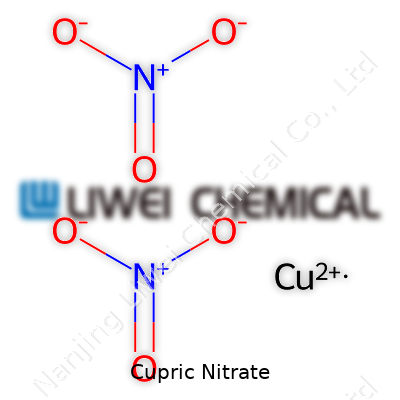
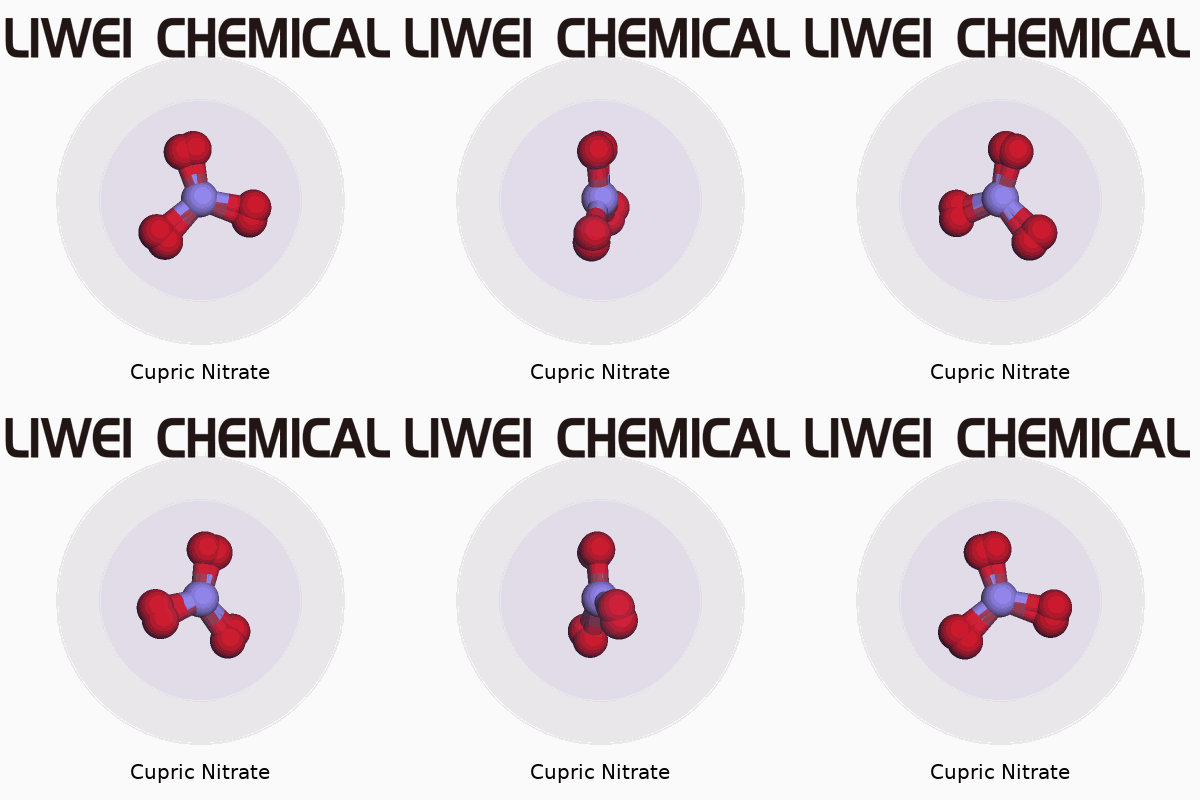
| Names | |
| Preferred IUPAC name | Copper(II) nitrate |
| Other names |
Copper(II) nitrate
Cupric dinitrate Nitric acid, copper(2+) salt |
| Pronunciation | /ˈkjuː.prɪk ˈnaɪ.treɪt/ |
| Identifiers | |
| CAS Number | 3251-23-8 |
| Beilstein Reference | 358961 |
| ChEBI | CHEBI:78049 |
| ChEMBL | CHEMBL1201817 |
| ChemSpider | 10416315 |
| DrugBank | DB14532 |
| ECHA InfoCard | 04be91b0-8e3b-4f7c-8df3-e7a49a752b4d |
| EC Number | 231-847-6 |
| Gmelin Reference | Gmelin Reference: 878 |
| KEGG | C01843 |
| MeSH | D003556 |
| PubChem CID | 15410 |
| RTECS number | QU7350000 |
| UNII | M3U8DQ3181 |
| UN number | UN1477 |
| Properties | |
| Chemical formula | Cu(NO3)2 |
| Molar mass | 187.56 g/mol |
| Appearance | Blue crystals |
| Odor | Odorless |
| Density | 2.32 g/cm³ |
| Solubility in water | 125 g/100 mL (20 °C) |
| log P | -2.34 |
| Vapor pressure | 0.02 mmHg (25°C) |
| Acidity (pKa) | 2.3 |
| Basicity (pKb) | 8.7 |
| Magnetic susceptibility (χ) | +60.0e-6 cm³/mol |
| Refractive index (nD) | 1.5 |
| Dipole moment | 3.17 D |
| Thermochemistry | |
| Std molar entropy (S⦵298) | 238.7 J/(mol·K) |
| Std enthalpy of formation (ΔfH⦵298) | -206.2 kJ/mol |
| Std enthalpy of combustion (ΔcH⦵298) | -373.1 kJ/mol |
| Pharmacology | |
| ATC code | M01AE62 |
| Hazards | |
| Main hazards | Oxidizer, toxic if swallowed or inhaled, causes severe skin burns and eye damage |
| GHS labelling | GHS02, GHS05, GHS07, GHS09 |
| Pictograms | GHS03, GHS05, GHS07 |
| Signal word | Danger |
| Hazard statements | H272, H302, H314, H332 |
| Precautionary statements | P261, P271, P280, P305+P351+P338, P310, P304+P340, P312, P301+P312, P330, P370+P378, P501 |
| NFPA 704 (fire diamond) | 2-3-0 OX |
| Autoignition temperature | 150°C (302°F) |
| Lethal dose or concentration | LD50 oral rat 940 mg/kg |
| LD50 (median dose) | LD50 (median dose): Oral (rat): 940 mg/kg |
| NIOSH | QN2875000 |
| PEL (Permissible) | PEL (Permissible Exposure Limit) of Cupric Nitrate: "1 mg/m³ (as Copper, fume and dust) |
| REL (Recommended) | 16 mΩ·cm |
| IDLH (Immediate danger) | IDLH: 100 mg/m³ |
| Related compounds | |
| Related compounds |
Copper(II) chloride
Copper(II) sulfate Copper(II) acetate Copper(I) nitrate Copper(I) oxide |


