
Knowledge
Cobalt Sulfate Heptahydrate: A Deep Dive Into Its World
Historical Development
Cobalt compounds found their first footing in pigment use hundreds of years ago. Back in the 18th and 19th centuries, cobalt’s striking blue garnished ceramics, glass, and tiles, sometimes without anyone knowing exactly what made the color. Once researchers isolated cobalt sulfate heptahydrate, the scientific world gained a gateway to a more reliable source of cobalt. The value of cobalt kept changing with technology, especially when batteries and electroplating entered the scene in the 20th century. Today, the story has shifted again, as cobalt sits at the fulcrum of new green technologies. History shows how a compound’s worth swings with human progress, often in surprising ways.
Product Overview
Cobalt sulfate heptahydrate, recognizable by its pinkish-red crystals, stands out as a primary source of cobalt in both lab and industry. Unlike some lab standards, this chemical doesn’t just hide behind academic glassware. It shows up as a core ingredient for batteries, catalysts, animal feed, and pigments. In my own work years ago, cobalt sulfate heptahydrate received careful handling because its character demanded respect. Labs—both industrial and research—use this salt for everything from crafting catalysts to preparing supplements for livestock. Its presence in nickel plating helps build everything from coins to bespoke jewelry. The bridge from ore to chemical couldn’t be built without cobalt sulfate heptahydrate, especially as the world moves away from fossil fuels and toward lithium-ion storage.
Physical & Chemical Properties
With its seven water molecules tucked into every unit, cobalt sulfate heptahydrate boasts a unique structure. The crystals dissolve with ease in water, making them ideal for solutions in electroplating and battery manufacture. The salt melts at a relatively low temperature, turning from solid to liquid near 100°C, and sheds water in stages. That’s not just trivia; this dehydration kicks in during higher-temperature processes, leaving behind anhydrous cobalt sulfate. The color—a bright pink to red—lets you spot it even among dozens of bottles. From my experience, it lacks the volatility of some transition metal salts, but the dust deserves care since inhaling heavy metals can lead to workplace illnesses. Its chemical stability means it won’t break down under standard lab conditions, although acids and bases alter its hydration state and interactions with other chemicals.
Technical Specifications & Labeling
Cobalt sulfate heptahydrate arrives in drums or sealed bags, usually labeled by purity—commercial users expect at least 98% purity, but top-shelf battery makers sometimes insist on 99% or higher. Bulk packaging highlights the water content (about 20% by mass), and hazard labeling addresses the compound’s toxic nature. Material Safety Data Sheets specify risks, recommended storage, and emergency measures. Barcode labeling has recently become standard, improving traceability as supply chains grow more complex. Regulations now push for tighter tracking to manage health and environmental risks, especially since cobalt has become critical for next-gen batteries and electronics. Any chemical supplier worth its salt maintains compliance certificates and batch records.
Preparation Method
Manufacturers produce cobalt sulfate heptahydrate by reacting cobalt-bearing ores with sulfuric acid, which leaches out cobalt ions and forms a solution. The process demands precise temperature control because too much heat drives off the water, so the crystals may not form as desired. Filtration and purification steps pull out nickel, copper, and iron impurities that often accompany cobalt ores. The solution then cools and the distinctive crystals form. In the lab, the same reaction works at small scale—dissolve cobalt oxide or carbonate in sulfuric acid, then evaporate slowly. Waste from this process, if not managed well, introduces sulfate and heavy metals to local waterways, so streamlining the recovery and recycling of both cobalt and sulfuric acid has become more urgent under environmental laws.
Chemical Reactions & Modifications
Cobalt sulfate heptahydrate participates in plenty of reactions: it moves from one state of hydration to another with heat, forms complexes like tetraamminecobalt(II) with ammonia, and can transform to cobalt(III) when exposed to oxidizing agents such as hydrogen peroxide or chlorine. These reactions anchor the compound’s place in catalysis research and electrochemical studies. I’ve seen students use it to demonstrate transition metal color changes in undergraduate labs—a simple trick, but one that teaches the reactivity of cobalt ions better than hours of lectures. Industrial plants modify cobalt sulfate to yield catalysts, including those for the Fischer-Tropsch process, as well as newer battery cathode materials. The sulfate anion also allows cobalt to be readily replaced by other ions, so cobalt sulfate serves as a precursor to an array of cobalt compounds.
Synonyms & Product Names
Cobalt sulfate heptahydrate pops up under several names, depending on where you look: cobaltous sulfate, cobalt(II) sulfate heptahydrate, and even “red vitriol” in older literature. These synonyms can trip up buyers and researchers not tuned into the habit of chemistry jargon. Product codes and catalog names, like “CoSO4·7H2O” or “CAS 10026-24-1,” keep records clean, and those identifiers prevent mix-ups with the less common monohydrate and anhydrous forms. For battery and pigment manufacturers, catalog grades matter less than the presence of trace impurities, a detail that often vanishes under generic naming conventions. Still, getting the right chemical often depends as much on understanding old texts as on reading data sheets.
Safety & Operational Standards
Cobalt sulfate heptahydrate demands careful handling practices. Chronic exposure risks lung problems and skin irritation, while dust can harm those with respiratory issues. OSHA and EU REACH place cobalt compounds in a category demanding tight controls—fume hoods, gloves, goggles, and spill kits always accompany real laboratory practice. In a battery production plant, ventilation systems draw dust away from workers, reducing the risk of inhalation. Wastewater from use gets tested for heavy metals before release. Training matters just as much as equipment—one oversight in labeling or storage can result in confusion, with direct health consequences downstream. Recent workplace standards now call for regular health checks for workers dealing with cobalt salts, a move shaped by rising concerns over heavy metal toxicity.
Application Area
Battery makers can’t ignore cobalt sulfate heptahydrate, especially for the layered oxide cathodes in lithium-ion batteries. Its role there helps power everything from smart phones to electric vehicles, shaping the direction of clean technology. In animal feed, small amounts deliver essential cobalt for ruminant health, since cows and sheep need cobalt to synthesize vitamin B12—no B12, no healthy herd. Then there’s electroplating, where cobalt sulfate gives metal surfaces a glossy, corrosion-resistant layer. Pigment producers use it for that classic cobalt blue. The semiconductor sector, always keen for innovation, taps cobalt for its magnetic properties and as a seed for growing “spintronic” devices. Projects I’ve seen with research teams sometimes cross boundaries, blending battery science with surface chemistry to discover new uses for old compounds.
Research & Development
Universities, start-ups, and major players dive into research on cobalt sulfate heptahydrate to unlock better battery materials, study new magnetic alloys, and cut down on environmental impacts during production and recycling. Studies now measure trace impurities down to the part-per-billion level, tuning synthesis methods to fit strict electronics-grade standards. Researchers study routes for recycling cobalt from spent lithium-ion batteries, as mining poses serious ethical and environmental challenges. Laboratory teams track particle shape, hydration states, and reactivity to build more efficient catalysts. At the same time, toxicologists and environmental engineers work to reduce workplace risks and manage waste, developing filters and absorbers that capture cobalt spills before they can do harm. Investment in technical improvements has enabled cleaner synthesis, sometimes by using bioleaching—bacteria break down ores, delivering purer precursors for chemical manufacturing.
Toxicity Research
Cobalt sulfate heptahydrate, for all its usefulness, carries a heavy load of risk. Toxicologists report that repeated exposure leads to heart, lung, and thyroid trouble in workers. Animal studies document increased risks at lower doses than once thought, especially for those with pre-existing sensitivity to metal dusts. As battery demand grows, researchers watch groundwater near production plants for cobalt residues that may leach into crops or drinking water. Regulators like the EPA, ECHA, and China’s MIIT place pressure on manufacturers to cut occupational and environmental exposure. There’s a growing push to engineer out excess cobalt, finding lower doses that preserve technical function but reduce health risks, or to develop coatings that prevent dusting and leaching. Transparency in supply chains points to responsible sourcing and manufacturing as a key pillar of risk management, since many environmental problems start in regions with weak oversight.
Future Prospects
Over the next decade, cobalt sulfate heptahydrate’s fortunes hang on two trends—booming demand for rechargeable batteries and tightening safety standards. Battery researchers chase alternatives that use less cobalt or swap it for cheaper, less controversial elements, but performance gaps still keep cobalt on the spec sheets for most high-performance products. Companies invest more in recycling old batteries to recover cobalt, both for cost and ethical reasons, as governments call for cradle-to-grave oversight. New tech, like sodium-ion or solid-state batteries, could disrupt the market, but cobalt’s role in magnetics, catalysts, and animal nutrition will remain. The need for strict waste treatment and environmental controls will keep manufacturers on their toes. If supply chains can balance supply, safety, and sustainability, cobalt sulfate heptahydrate will keep powering an evolving world—sometimes out of sight, but always vital to things we now take for granted, from dairy cows to smart devices and electric cars.
The Battery Connection
Every time you charge your phone or an electric car, there’s a good chance cobalt plays a supporting role behind the scenes. Cobalt sulfate heptahydrate helps make rechargeable batteries—especially the ones found in electric vehicles and smaller gadgets. Over the years, the world has shifted towards these battery-powered tech items, amplifying the need for materials that can hold energy safely and for long periods. Lithium-ion batteries rely on stable, efficient cathode materials, and cobalt sulfate drives this process. I’ve watched the headlines: mining companies race to secure more cobalt, auto manufacturers sign deals, and countries map out strategies to avoid shortages.
Boosting Global Agriculture
For most people, cobalt sounds like something out of a chemistry textbook. But for livestock, cobalt sulfate means life. Dairy cows and sheep can’t make vitamin B12 without cobalt, which leads to health problems and lower yields. Farms in regions with cobalt-poor soils have learned this the hard way. Cobalt sulfate shows up in vitamin mixes added to feed—small change, big impact. Growing up around family farms, I remember conversations about how trace minerals kept animals productive and healthy. Cobalt wasn't the hero on the feed bag, but without it, the results spoke for themselves.
Color, Chemistry, and Craft
Long before anyone cared about batteries, cobalt salts colored ceramics and glass in rich, deep blues and even pinks. Cobalt sulfate still shapes these colors in pottery studios and factories. Artisans use it for glazes, glassmakers for stained glass, and pigment makers for dyes. You spot the shade on delicate tea cups, on tiles in old subways, in art glass catching light on window sills. This isn’t just about history—there’s a modern market for materials that artists and manufacturers trust to deliver results every time.
Industrial Treatments and Hidden Helpers
Cobalt sulfate also shows up in electroplating, a process used to provide metals with protective or decorative layers. It finds its way into catalysts that help make plastics or refine petroleum. Industrial chemists turn to cobalt compounds for their reactivity and stability. These uses don’t get the spotlight, but they touch everything from packaging to building materials. Walking through a manufacturing plant, you see how even the smallest ingredient can play a huge part in making a product stronger, cleaner, or more beautiful.
Addressing Supply and Impact
The world’s hunger for cobalt sulfate puts pressure on sources in a few countries—most notably the Democratic Republic of Congo. Mining exposes workers and communities to hazards. Reports of child labor and unsafe practices raise ethical questions. As a consumer, I think about the journey materials take before reaching my hands. Companies and governments have begun to trace supply chains, aiming for more transparency and fair treatment of workers all along the path.
Innovation brings potential answers. Some researchers look for battery chemistries that use less or no cobalt, turning to nickel and other options. Recycling spent batteries can also help. It's clear that science, industry, and public demand are shaping the next chapter. Understanding where cobalt sulfate heptahydrate fits in this broader story helps all of us make better decisions, whether we work in tech, agriculture, manufacturing, or as everyday consumers.
Getting to Know Cobalt Sulfate Heptahydrate
Cobalt sulfate heptahydrate isn’t just a tongue-twister. This bright-pink salt finds its way into more places than you'd expect. The chemical formula—CoSO4·7H2O—points to one cobalt ion, one sulfate group, and seven water molecules hanging around each formula unit. Seeing those seven waters might feel like overkill, yet those molecules make a big difference in how this chemical looks and behaves.
Why Water Makes a Difference
Picking up a scoop of cobalt sulfate heptahydrate, I remember my undergrad chemistry lab. The sample, colored like bubblegum, nearly glowed in the beaker. It was those water molecules creating that punchy color. Anhydrous cobalt sulfate looks completely different, pale and washed out, barely catching the eye. The difference just one formula tweak brings teaches a valuable lesson: careful observation beats memorization.
Water in crystalline form influences everything from color to solubility. Industries that count on cobalt sulfate’s ready mixing in water—battery plants, pigment manufacturers, farms blending animal feed—aren’t tossing in just the dry chemical breadcrumb by itself. Hydration matters, as it changes weight, mixing behavior, and even stability.
Impact on Industry and Everyday Life
The formula CoSO4·7H2O often comes plastered on containers shipped to various industries. When working in a battery lab, I saw how a miscalculation—a slip in accounting for those extra water molecules—skewed batch results. The final battery cell performed below expectations, forcing extra work and wasted materials. Hydrates demand respect for accuracy and safety, especially with cobalt, which isn’t something to handle with bare hands.
Battery producers aren’t the only audience. Farmers use cobalt sulfate as a trace mineral for livestock. Small amounts support healthy metabolism in cattle and sheep. Too much, though, tips into toxicity. That’s why accurate dosing, based on correct formulas and weights, protects not just the animals but impacts the entire food chain.
Handling and Responsibility—What We Can Do Better
Too many headlines mention metals leaking into groundwater or turning up in unintended places. Large stockpiles of cobalt sulfate need secure, sealed storage and real attention to risk management. I’ve seen warehouses with improper labeling or ventilation—tempting fate, risking chemical spills and worker safety.
Better training, rigorous measurement, and wider use of digital inventory systems lower the chance of a mix-up. Regulators and industry leaders can help standardize safe handling procedures. Young scientists sometimes skip over the importance of proper formulas, eager for quick results. Real-world disasters and costly errors, though, show the danger in shortcuts.
Looking Forward
Cobalt sulfate heptahydrate’s formula may look like a puzzle on paper, but it shapes real choices and outcomes in laboratories, factories, and farms across the world. Honest, accurate work—from double-checking weights to securing safe storage—protects both workplace and environment. Chemistry may begin with formulas, but it ends with responsibility.
Respect the Hazards
Cobalt sulfate heptahydrate serves in everything from batteries to pigments. This bright pink chemical packs a punch. Experience in the lab teaches respect for what a bottle of it can do, both to you and to the environment. It isn’t just about resourcefulness or knowledge on the job; it’s about paying attention to every step.
Personal Protective Equipment Is Non-Negotiable
Coming into contact with cobalt compounds brings well-known risks. Skin rashes, asthma, and in rare cases, links to more chronic conditions. Gloves aren’t an afterthought here; nitrile gloves actually stand up well. No one should handle this powder with bare hands. Safety goggles and a face shield become crucial whenever dust or splashes could happen—cobalt salts don’t offer second chances with the eyes. For tasks that raise dust, a fitted respirator comes out, no excuses. In some places, air monitoring equipment sits close by to track what’s getting into the air.
Work Area Setup Matters
Lab work with cobalt sulfate heptahydrate doesn’t belong on just any counter. Experience says setting up inside a chemical fume hood beats risking exposure in the open. Every container needs a tight-fitting lid—this cuts down on accidental spills and keeps dust where it belongs. Surfaces should be smooth and easy to clean; powdery spills love cracks and crevices. Forget about eating, drinking, or stashing your phone in the work zone. Cross-contamination walks in on the soles of shoes and leaves on hands, so the focus drifts to regular hand-washing, washing down work surfaces, and keeping clean and dirty gear apart.
Handling and Storage Keep Problems at Bay
From years of lab work, the rules stay simple: handle the smallest amount needed, return the bottle, and lock it up tight afterward. Cobalt sulfate heptahydrate asks for a cool, dry spot, away from heat that could break down the material. Acidic and oxidizing chemicals in the same cupboard spell trouble, so separate storage means less chance of an unwanted reaction. Every container gets a label showing what’s inside, the date it arrived, and who signed it out last. This level of care paid off after a spill—facts, not guesswork, shaped a fast cleanup.
Take Spills and Waste Seriously
No one plans for an accident, but sooner or later, a spill will test your habits. Bench absorbents work for liquids while a HEPA vacuum stops dust getting airborne. Using paper towels and brushing dry powder causes more problems than it solves—clean-up must keep particles from floating up. Colleagues know and practice the steps—often that means a quick call to the local hazardous waste team. At the end of the day, never dump cobalt compounds down the drain. Waste bags hold spent gloves, wipes, and any leftover material until proper disposal happens, not just the trash bin.
Training and Vigilance Save Lives
No piece of gear or instruction manual does the job alone. Watching out for coworkers, reminding each other of the procedures, and staying up to date with safety training keeps mistakes rare. If exposure happens, everyone needs to know how to act and where the safety showers and first aid kits sit. Every workplace should review its safety data sheets and handle this material with open eyes.
Protect People and the Planet
Years spent handling chemicals like cobalt sulfate heptahydrate prove the value of thoroughness and respect. It’s about more than rules. The stakes stay high for your own health and for the environment. Careful planning, the right equipment, and a habit of thinking ahead make all the difference in working safely with this potent compound.
Understanding the Stuff in the Drum
Storing chemicals like cobalt sulfate heptahydrate just isn’t something you leave to luck or wishful thinking. I remember my early days working in a lab, where we’d get shipments of all sorts of bright blue and mysterious powders. One lesson stuck with me – attention to storage stops accidents before they start. Cobalt sulfate heptahydrate looks almost harmless, but even these seemingly simple chemicals demand respect.
Risks That Sneak Up on You
Moisture always finds a way in. This compound draws water from the air, which can mess with its weight and purity. Over time, old containers with cracked seals could turn that sharp crystalline powder into a sticky mess. I’ve seen plenty of colleagues trip up by taking shortcuts with container lids or choosing shelves close to the hot water pipes – humidity turns dreams of tidy labs into chaos.
Safety isn’t about being fussy just for the sake of it. Cobalt sulfate can be toxic if eaten, breathed in, or handled without gloves. Dust in the air puts everyone in the room at risk, especially those with allergies or weak lungs. It stains skin and clothing, a reminder that you can’t underestimate even the so-called routine chemicals.
Sound Storage Approaches
Simple solutions last. Airtight containers, preferably made of something tough like high-density polyethylene, cut out most problems straight away. I’ve always insisted on screwing lids tight and checking for splits before putting anything on the shelf. Labeling helps a lot too – tired eyes after a long day can find cobalt sulfate’s blue shade blends into the background, so a bold label ends unnecessary confusion.
Temperature plays a part. Many old labs put their chemicals right above radiators or heat sources, but the heat can actually make things worse. Keeping cobalt sulfate in cool, shaded spots avoids both humidity swings and accidental spills from sweaty hands. Never mix up ordinary storage cabinets with flammable material lockers – chemical storage isn’t one-size-fits-all.
Good ventilation matters. Even if cobalt sulfate heptahydrate doesn’t carry a strong smell, storing containers in well-ventilated rooms cuts down on the risk of buildup from any accidental spills or dust. People with asthma or sensitive lungs notice poor airflow long before air quality meters do.
Training and Routine Checkups
Getting this right calls for a team effort. I’d rather spend a morning running a training session than a month dealing with the fallout from a careless spill. Regular visual inspections keep surprises away. If containers show corrosion or crystal growth at the edges, it’s time to switch them out.
Emergency tools belong within reach. Last summer, I watched a new lab tech handle a small spill by herself, because our spill kit sat in a locked closet down the hall – bad planning makes simple problems worse. Eye-wash stations, gloves, and clean-up materials should sit close by to let crews respond fast.
Practical Solutions
Updating old storage routines pays off. I recommend keeping an up-to-date log of who accessed specific chemicals, what came in, what went out, and how much gets used. Capsulizing chemical use, securing supply rooms, and making sure everyone cleans up right after use keep every batch in solid condition.
These steady habits make a world of difference not just for safety, but for lab budgets too. Less wasted compound, fewer health complaints, more reliable results. Responsible storage protects friends, co-workers, and the science itself. In the end, common sense, teamwork, and clear routines turn what looks like an ordinary blue powder into something everyone can handle with confidence.
Understanding Purity Levels
For anyone working with cobalt sulfate heptahydrate, purity matters. Laboratories and manufacturers stake their outcomes on the precise composition of chemicals. Most industrial cobalt sulfate heptahydrate offers a minimum cobalt content around 20.5%. This value flags the difference between high-grade material used in battery production and lower-grade variants that suit less critical purposes.
Battery producers, for example, can face big setbacks if cobalt content dips below promised levels or stray metals join the mix. Trace elements like iron, nickel, or copper carry the potential to trip up the chemistry of lithium-ion cells. Reliable suppliers often provide product grades with total impurity levels well under 0.1%. The margin gets tighter as companies chase greater cell efficiency.
Typical Specifications You Can Expect
A well-documented certificate of analysis tells you more than just the cobalt percentage. Moisture content, usually above 20%, reflects the heptahydrate form. That distinct seven-water-molecule structure shapes both weight calculations and storage requirements.
Producers test for pH (commonly between 3.5 and 5.0 in a 5% solution), water insolubles (kept below 0.05%), and heavy metals such as lead, arsenic, and mercury. Confirming these points speaks to the product’s suitability for use in animal nutrition, plating, and fine chemical synthesis.
Some data sheets push the purity envelope higher, offering cobalt sulfate heptahydrate with less than 0.001% iron and nickel. Demand for this level traces straight to the world of advanced batteries and electronics. Producers aiming for premium material invest in extra filtration, improved crystallization steps, and tighter environmental controls.
Quality Control and Traceability
Ethical supply chains work hard to back their specs with third-party certificates and regular audits. ISO certifications, RoHS compliance, and Responsible Minerals Initiative documents now pop up on many supplier websites. Smelters communicating origin and batch data do more than jump regulatory hoops—they give buyers confidence, long before powder hits the warehouse.
A few years ago, counterfeit and substandard batches slid onto the market, undercutting some of the hard-earned trust in chemical supply. Authenticity markers like batch numbers and QR codes now appear throughout packaging and paperwork. Digital records help track any quality slip back to its source and support fast corrective action.
The Role of Transparency for End Users
End users spend less time fighting quality surprises when suppliers share clear data on cobalt sulfate heptahydrate. That means disclosing the results of every major parameter, not just the headline ones. Responsible producers understand that product transparency leads to real production savings and fewer health or safety risks. Detailed spec sheets allow users to plan dosing or formulation changes before costly process interruptions.
Customers in animal feed, plating, and especially batteries should press for up-to-date analyses and open communication channels. Certainty around what enters the production line saves headaches down the road. In my own experience, an open line to technical staff at reputable suppliers turns uncertainty into real-world problem-solving. Instead of guesswork, buyers know how the cobalt sulfate heptahydrate will perform across batches, with no surprises.
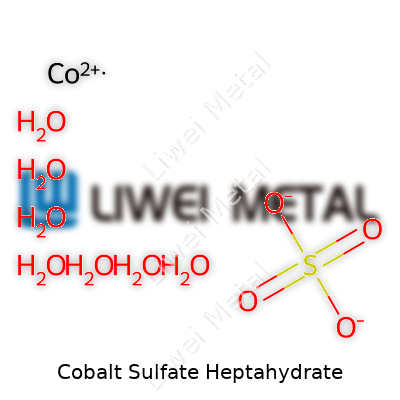
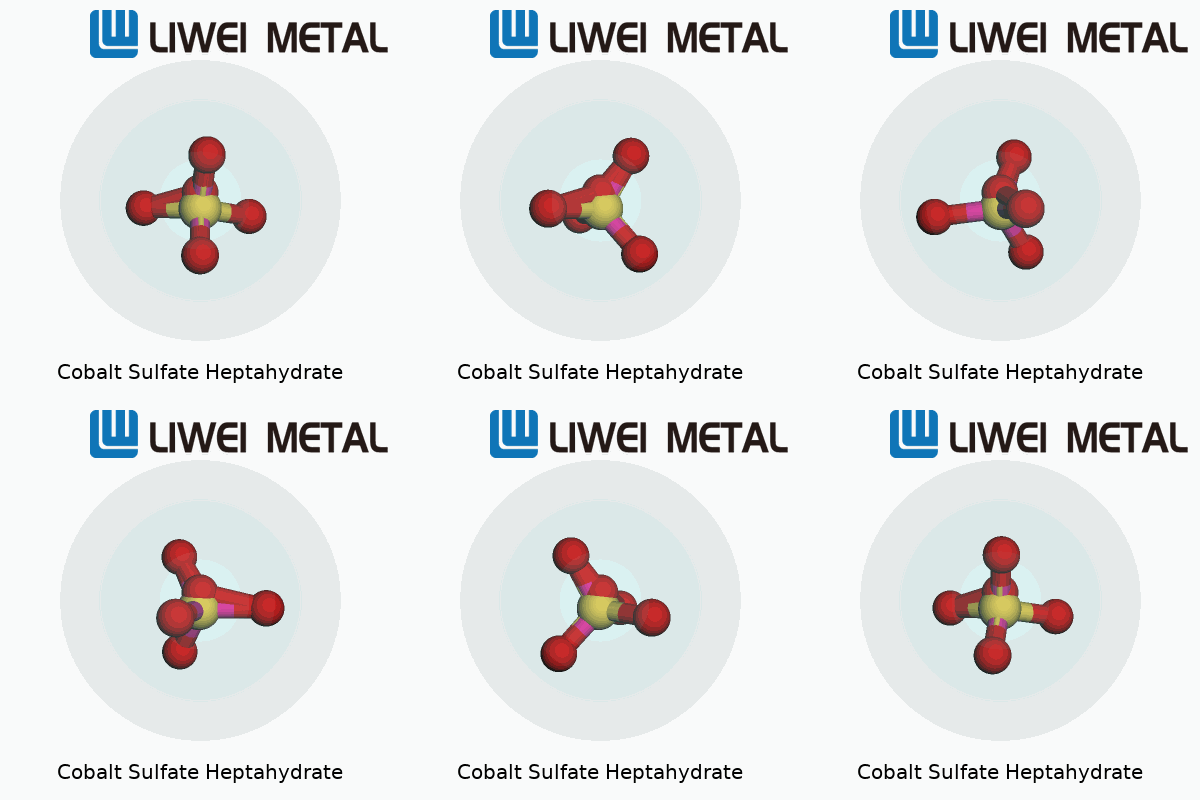
| Names | |
| Preferred IUPAC name | heptaaquacobalt(2+) sulfate |
| Other names |
Cobalt(II) sulfate heptahydrate
Sulfuric acid, cobalt(2+) salt (1:1), heptahydrate Erythrite Red cobalt sulfate CoSO4·7H2O |
| Pronunciation | /ˈkoʊ.bəlt ˈsʌl.feɪt ˌhɛp.təˈhaɪ.dreɪt/ |
| Identifiers | |
| CAS Number | 10026-24-1 |
| Beilstein Reference | 3548282 |
| ChEBI | CHEBI:31346 |
| ChEMBL | CHEMBL1201603 |
| ChemSpider | 20087165 |
| DrugBank | DB11350 |
| ECHA InfoCard | 100.028.273 |
| EC Number | 233-334-2 |
| Gmelin Reference | 77806 |
| KEGG | C01738 |
| MeSH | D003046 |
| PubChem CID | 24857106 |
| RTECS number | GF9175000 |
| UNII | N1K0091QG0 |
| UN number | UN3077 |
| Properties | |
| Chemical formula | CoSO4·7H2O |
| Molar mass | 281.10 g/mol |
| Appearance | Red crystalline solid |
| Odor | Odorless |
| Density | 2.03 g/cm³ |
| Solubility in water | Very soluble |
| log P | -2.2 |
| Acidity (pKa) | ~1.2 |
| Basicity (pKb) | 6.0 |
| Magnetic susceptibility (χ) | +2500e-6 cm³/mol |
| Refractive index (nD) | 1.47 |
| Dipole moment | 0 D |
| Thermochemistry | |
| Std molar entropy (S⦵298) | 427.4 J·mol⁻¹·K⁻¹ |
| Std enthalpy of formation (ΔfH⦵298) | -2988 kJ/mol |
| Pharmacology | |
| ATC code | V03AB32 |
| Hazards | |
| Main hazards | Harmful if swallowed. Causes serious eye irritation. May cause an allergic skin reaction. May cause cancer. Suspected of damaging fertility or the unborn child. Toxic to aquatic life with long lasting effects. |
| GHS labelling | GHS07, GHS08 |
| Pictograms | GHS07,GHS09 |
| Signal word | Warning |
| Hazard statements | H302, H317, H319, H334, H341, H350, H360, H410 |
| Precautionary statements | P264, P270, P273, P280, P302+P352, P305+P351+P338, P308+P313, P501 |
| NFPA 704 (fire diamond) | 2-2-2 |
| Lethal dose or concentration | LD50 oral rat 424 mg/kg |
| LD50 (median dose) | 4,691 mg/kg (Rat, oral) |
| NIOSH | NT8050000 |
| PEL (Permissible) | PEL (Permissible Exposure Limit) for Cobalt Sulfate Heptahydrate: 0.1 mg/m³ (as cobalt, OSHA TWA) |
| REL (Recommended) | ACS, 98% |
| IDLH (Immediate danger) | IDLH: 20 mg Co/m³ |
| Related compounds | |
| Related compounds |
Cobalt(II) chloride
Cobalt(II) nitrate Cobalt(II) carbonate Cobalt(II) oxide Nickel(II) sulfate Copper(II) sulfate |


