
Knowledge
Cobalt Sulfate: More Than a Battery Ingredient
Historical Development
Cobalt sulfate has a reputation that stretches back into the early chapters of industrial chemistry. Long before electric cars captured daily headlines, workers in Europe roasted cobalt ores and stumbled across sulfate salts as byproducts. It wasn’t always about technology or progress for the sake of greener choices—many early uses landed in pigments, glass, and ceramics to meet demand for bright, stable blue colors. Chemical manufacturers grew skilled in isolating cobalt compounds by the late nineteenth century, with European chemistry driving new methods and reliability. As global industry shifted through wars and technological booms, cobalt sulfate’s profile shifted. Western miners dug most commercial cobalt from Congolese soils, but the refining and purification of sulfate forms always depended on steady hands in the plant and science labs. Production scaled up gradually to meet needs in agriculture and later, the tech industries hungry for lithium-ion battery components.
Product Overview
This compound, usually found as pink to red crystals, comes straight from the reaction between cobalt-containing materials and sulfuric acid. Whether produced in China, Finland, or Canada, it rarely shows up in a pure, “showcase” form. Industrial-grade cobalt sulfate turns up in a range of purities, with quite a bit of focus today on battery-grade material. That clarity of purpose—powering portable electronics and electric cars—marks a big shift from earlier decades, when pigments and plating jobs dominated the scene. Manufacturers ship the product as fine granules or crystalline powder in bulk bags or sealed drums; purity grades matter to everyone, since even trace impurities can disrupt performance in high-value lithium battery applications.
Physical & Chemical Properties
Cobalt sulfate heptahydrate—that’s CoSO₄·7H₂O—is the classic workhorse, thanks to its stability at room temperature and apartment-safe handling. Touch the crystals and you’ll notice they’re pink with a faint reddish cast. As for structure, the compound breaks down under strong heat. Water loss happens over 100°C. In a solution, it yields free cobalt(II) ions, which give the blue hue to laboratory flame tests and also underpin the chemistry in animal nutrition mixes. Its moderate solubility in water and decent shelf stability means easy storage and transport. Non-hydrated or lower-hydrate versions exist, but land mostly in research or specialist settings where pyrometallurgical processes demand them.
Technical Specifications & Labeling
Technical literature and product sheets list cobalt content by weight—most high-end battery material tops 20% cobalt by mass. Water content needs careful attention as well. A manufacturer selling into the battery supply chain must quote residual moisture, sulfate content, and levels of contaminants like lead, nickel, or iron. Regulatory labels advise on safe handling, transport, and response in case of spills or contact. Markings meet requirements set by regional authorities, ranging from the United Nations numbers for dangerous goods to national labor regulations and environmental controls. Cobalt producers stand under increasing scrutiny, not just for purity, but for supply chain traceability and proof of non-involvement in forced labor or unsustainable mining practices.
Preparation Method
A refinery worker starts with cobalt ores mixed with copper, nickel, or arsenide minerals. Through flotation, roasting, and leaching with sulfuric acid, iron and other side elements are shed out, yielding a pink to red solution. Filtration gets rid of solid residues and unwanted metals. Crystallization takes over next: controlled cooling and evaporation force solid cobalt sulfate out of solution. Purification tweaks—sometimes ion exchange, sometimes repeated crystallization—drive the finished produce up to battery-grade if needed. The process has to walk a tight line between efficiency, cost, and purity. Every tweak impacts energy use and waste output, so chemical engineers keep an eye on water re-use and by-product value.
Chemical Reactions & Modifications
Cobalt sulfate opens the door to a suite of new compounds. With sodium carbonate, it turns into cobalt carbonate—handy for ceramic colors and metallurgical work. Heat it alongside hydrogen, and you get cobalt(II) oxide, crucial in high-strength alloys. Kids may remember bright pinks turning blue in school labs: that’s a pH-driven color shift as the sulfate forms complex ions. Cobalt sulfate holds onto water tightly, yet strong acids or bases can split the salt into new products, making it a natural feedstock for advanced chemistry, not just final-user blends. In research, scientists tweak the molecular structure or combine it with rare earth elements, seeking new battery compounds with better cycling or less reliance on critical raw materials.
Synonyms & Product Names
Ask for cobaltous sulfate, red vitriol, or sulfuric acid cobalt salt in an old manual—and you’ll run into cobalt sulfate by another name. Catalogues list it under CAS numbers 10124-43-3 for the heptahydrate. Trade literature throws out brand names or codes, depending on the distributor or the intended application. In the industrial supply world, it pays to know not just the name, but the form, specs, and grade. Skip this step, and the results for users—especially those in battery or medicinal research—turn unpredictable. Not every “cobalt sulfate” delivers the same results in the field or in the lab.
Safety & Operational Standards
Any producer handling cobalt sulfate needs strict protocols. Inhalation can spark respiratory irritation; skin contact leads to allergic reactions in some people; chronic exposure spells trouble for organs and long-term well-being. Beyond the shop floor, environmental releases affect aquatic life and threaten soil quality, especially when heavy metal run-off finds rivers. International agencies, including OSHA and the European Chemicals Agency, demand strict labeling, worker protection, and limits for airborne dust. Their rules track permissible exposure and force companies to install ventilation and personal protective gear. Trained staff know the risk isn’t hypothetical—stories circulate about accidental exposure and lessons learned the hard way. Any spill or fire draws on safety data sheets and practiced routines. Waste handling—key to environmental stewardship—means monitored landfill, incineration with full pollution controls, or expensive recycling to reclaim metal value.
Application Area
Right now, the world tunes into cobalt sulfate for lithium-ion batteries. From electric cars to smart phones and grid storage banks, demand runs hot. Battery manufacturers need reliable, high-purity supplies, and any hitch in the chain—mining slowdowns or political barriers—gets headlines from Wall Street to Detroit. Beyond batteries, cobalt sulfate surrounds us in agriculture as a micronutrient for livestock. Trace doses boost animal health and productivity, especially in regions where soils lack cobalt. Ceramics, pigments, electroplating, and catalysts round out the big uses, each needing different grades or particle sizes. In research, the push for better magnets, medical radioisotopes, and advanced catalysts keeps labs running tests and industry watching for breakthroughs.
Research & Development
Laboratories worldwide run tests to improve cobalt sulfate’s processes and performance. Chemists tinker with refining to lower costs and cut impurities. Material scientists work on hybrid electrodes for batteries, searching for the sweet spot between energy density, life cycle, and green credentials. Some researchers turn toward recycling, figuring out how to pull pure cobalt sulfate out of spent batteries with minimal waste. Environmental scientists join in, looking for methods that curb toxic byproducts and safeguard rivers and streams. Pharmaceutical teams study cobalt biology—tiny doses run vital functions in people and livestock, so purity and contaminant controls remain essential. The fast-moving energy storage sector drives trends in analytic standards and molecular tuning—every decimal change in composition might drag years off a battery’s useful life or add value to an old industrial process.
Toxicity Research
Toxicologists put cobalt sulfate under scrutiny, linking both acute and chronic exposures to real-world health outcomes. Lab work confirms it causes skin rashes and lung irritation. Epidemiologists track exposures in mining communities, plant workers, and those living near smelters, reporting issues from asthma to increased cancer risks with prolonged contact. Dosing studies in livestock prove low amounts are vital for nutrition, but overdoses spill into poisoning territory. Regulatory agencies set exposure ceilings after reviewing the data, not just to protect workers, but the public downwind of refineries or waste dumps. Ongoing research tackles how cobalt ions interact in the body, from protein binding to hormone interference, leading some governments to tighten rules on cobalt use in certain consumer products.
Future Prospects
Cobalt sulfate’s future sits between opportunity and pressure. Demand growth for energy storage and transport electrification looks set to outpace supply unless recycling and new mining sources ramp up. Pressure mounts from manufacturers and end-users for “ethically sourced” cobalt—traceable supplies that steer clear of child labor, environmental destruction, or geopolitical choke points. On the technology front, battery firms invest heavily in chemistry tweaks to use less cobalt or unlock alternatives, which calls for robust supplies of high-purity sulfate regardless of source. Recycling gains urgency, both for resource security and waste management; big investments pour into closed-loop processes aimed at capturing cobalt from old electronics. Safety remains paramount, with stricter chemical controls and better worker protections rising worldwide. While the product’s role in pigment, ceramics, and livestock health holds steady, the race to power a greener economy means every gram of cobalt sulfate gets weighed, tested, and tracked as part of a high-stakes global supply chain.
A Driving Force in Rechargeable Batteries
Cobalt sulfate has become a key chemical in the world of batteries. Factories everywhere use it to make the cathodes for lithium-ion batteries, which power nearly every electric vehicle on the market. My first car was a noisy gas guzzler, but my latest ride hums along on lithium-ion battery cells—powered in part by cobalt sulfate. Tesla, BYD, and other automakers are securing their supply lines for cobalt sulfate, because nobody wants production to stall with demand climbing higher each year.
By 2030, electric vehicle demand could push the world’s cobalt needs to almost double, reports the International Energy Agency. Cobalt helps manage the stability of the battery and prevents overheating and fires. Without this metal, batteries wouldn’t last as long or remain as safe. The technology might still work, but electric driving hours would shrink and safety risks would rise.
Recharge Beyond Cars: Portable Electronics and More
When I look around my desk, nearly every device—phone, laptop, power bank—draws energy from lithium-ion batteries filled with cobalt compounds. Not long ago, phones used to die by early afternoon; cobalt-based cathodes now help stretch screen time. These rechargeable gadgets rely on cobalt sulfate not just for performance but for reliability. People expect batteries to hold up for years, and without enough cobalt sulfate in the pipeline, tech companies could lose their edge.
Pigments and the World of Color
Color industries owe a lot to cobalt sulfate. Artists, glassmakers, and ceramics crafters count on the vibrant blues that only cobalt can deliver. Cobalt sulfate shows up in the mix, helping pigment suppliers deliver consistent color for tiles, sinks, pottery, and even the bright blue hues in certain paints. My first art class used cobalt blue to tint skies and lakes; the depth was unmatched by other blues. That vivid hue starts life in chemical plants that process cobalt sulfate.
Agriculture and Nutrition: Small Dose, Big Impact
Feed manufacturers sprinkle cobalt sulfate into animal diets, especially for sheep and cattle. The animals can’t produce enough vitamin B12 without it, so ranchers make sure their feed includes just enough cobalt to keep herds healthy. Global reports show that parts of Australia and New Zealand, with low-cobalt soils, rely on imported cobalt sulfate for animal health. People don’t talk about it much, but milk and beef production depend on these trace supplements.
The Cost: Sourcing and Supply Chain Risks
Mining operations in the Democratic Republic of Congo produce most of the world’s cobalt, raising fair labor and environmental concerns. Reports from Amnesty International and others highlight the tough choices facing the industry when cobalt demand rises. Supply disruptions drive up prices, challenge battery makers, and force automakers and electronics giants to find new ways to recycle and substitute cobalt. Companies such as Apple and Volkswagen are investing in closed-loop recycling, aiming to recover cobalt sulfate from old batteries. Elsewhere, research groups work to shrink the amount of cobalt needed or to swap it for cheaper materials, but so far, nothing replaces the unique stability it offers. Building ethics and sustainability into the cobalt sulfate supply chain gives consumers peace of mind and protects communities.
Understanding the Formula: CoSO4
Cobalt sulfate carries the formula CoSO4. This might look like a jumble of letters and numbers, but it tells a bigger story. Cobalt, a transition metal, links up with a sulfate group. Together, they form a vivid red-pink solid that finds its way into batteries, pigments, and even animal feed additives. Speaking from personal experience in the science classroom, the first time I mixed cobalt salts, I expected something simple and gray. The eye-catching color felt almost like nature showing off what chemistry can do, underlining the formula with bold, unmistakable hues.
Why Cobalt Sulfate Really Matters
Walking through any electronics store, you see the result of ongoing cobalt demand. Lithium-ion batteries, the heart of smartphones, tablets, and electric cars, depend on compounds like cobalt sulfate. The push for sustainable energy rests on this reddish salt. This makes supply chain transparency and sourcing ethics crucial. Glancing at the formula alone doesn’t reveal the human element—a lesson I learned at a tech repair event, where discarded batteries often left red stains, a reminder of what powers our devices.
Many cobalt mines operate in the Democratic Republic of Congo, contributing over 70% of the world’s supply. Reports from organizations such as Amnesty International highlight challenges like unsafe working conditions and child labor. Anyone using devices powered by rechargeable batteries unwittingly connects to these distant mines. The formula CoSO4 sits at the intersection of modern-day convenience and real-world struggles, showing the cost often hidden behind each shiny gadget.
Environmental Costs and Challenges
Producing cobalt sulfate poses significant environmental challenges. Mining operations can release hazardous materials into the surrounding soil and water, affecting local agriculture and communities. Touring a small chemical processing site gave me firsthand insight into just how strict industrial hygiene and proper waste management need to be. Without robust safeguards, ecosystems around refineries risk contamination, and those living nearby often bear the consequences.
In response, some companies have begun recycling batteries at scale, extracting cobalt and reusing it. While walking through an e-waste facility, the process struck me as both gritty and hopeful—a place where chemistry offers redemption, closing the loop on a growing problem. Companies like Umicore and Li-Cycle now recover cobalt sulfate from spent batteries, aiming to keep the formula in play while reducing the need for new mining.
Moving Toward Solutions
Stakeholders from tech manufacturers to governments must ask tough questions about cobalt sourcing. Some steps include supporting battery designs with lower cobalt content, investing in new extraction methods that reduce harm, and enforcing greater transparency throughout supply chains. Growing consumer awareness pushes brands to trace the origins of their materials, not just avoid shortcuts but show care for the communities involved.
Cobalt sulfate’s formula doesn’t change, but the story behind each molecule keeps evolving. Looking beyond the science, responsible choices—investment in recycling, ethical sourcing, and strict environmental protections—stand as the clearest ways forward for both technology and those who power it.
The Real Story Behind Cobalt Sulfate's Health Risks
Over the past years, Cobalt sulfate has been popping up in more conversations than ever. It’s not just tucked away in chemistry textbooks—it’s showing up in headlines about batteries, electric vehicles, and workplace safety. This isn’t some fringe concern, either. I’ve worked next to folks in battery recycling, listened to parents who live near battery plants, and watched how stories change when new research comes out. Turns out, the danger tied to Cobalt sulfate comes down to how it’s handled and who spends time around it.
Cobalt Sulfate: Beyond Industrial Use
Cobalt sulfate plays a big role in making rechargeable batteries, pigments, and animal feed supplements. Most people never see it or touch it. For those who spend their workdays handling or breathing near it, the situation looks different. I remember the first time I walked into a storeroom at a battery facility: the strict rules around dust, gloves, and air monitoring didn’t seem overboard—they seemed essential.
Health Hazards from Exposure
Every chemical brings its own risks, but the ones with long-lasting effects can’t be ignored. Skin rashes, breathing trouble, and eye irritation come up often in reports, but longer exposure brings bigger worries. Scientists point to evidence that inhaling cobalt dust over months or years can leave lungs scarred or cause asthma that hangs around for life. The International Agency for Research on Cancer calls some forms of cobalt “possibly carcinogenic.” That word “possibly” doesn’t mean much comfort when you’re the one taking deep breaths each day.
Workers in battery and paint industries see this up close. Even trace amounts in air or stuck to hands can build up over time. Regular blood or urine tests start to reveal trends long before symptoms advance. In one case from the Netherlands, workers in a cobalt processing plant developed lung diseases at rates much higher than the national average. Families of workers sometimes end up exposed too, because cobalt dust doesn’t just stay at the factory—it rides home on shoes, clothes, and skin.
Protecting Health and Reducing Risk
It doesn’t make sense to ban a substance used in batteries powering the next generation of cars—at least not yet. The real solution sits with better protection, regular health monitoring, and transparency. Workplaces can install advanced ventilation, run air quality checks, and make sure everyone wears protective gear every time. Employees need the right to know what they’re dealing with—clear training goes a long way. I remember an older technician in a workshop who always double-checked his mask. He’d buried too many friends to take shortcuts.
Government rules matter here too. Agencies like OSHA set exposure limits and put teeth behind them with inspections and fines. These steps have saved lives, even if the paperwork piles up. Outside the workplace, community groups are learning to watch where old batteries and electronics go. Safe disposal means less cobalt sulfate dust in neighborhoods and water supplies.
Beyond Policy—Personal Action Matters
The push toward electric vehicles and cleaner energy shouldn’t ignore health risks for workers and nearby families. If you work near cobalt or live near a production plant, don’t wait for someone else to raise concerns. Ask questions, follow up on health checks, and push your employer for details on safety steps. It may feel like one voice won’t change much, but demands for safety and transparency add up over time. We owe it to the people making the world’s energy future possible.
A Real-World Problem Many Overlook
Cobalt sulfate isn’t some obscure chemical reserved for labs in distant research centers. It plays a serious role in rechargeable batteries and pigments—just to name a couple. I remember talking with an old colleague who worked in battery recycling. He used to say that no matter how modern the plant, simple details like chemical storage could make or break safety and quality.
Risks Stem From Neglect, Not Mystery
Cobalt sulfate brings hazards to the table, mostly because of its toxicity and its knack for drawing in moisture. Some years back, I visited a facility where the entire stockpile of blue powder turned to mush because humidity sneaked in. They skipped proper containment, assuming nobody would notice. Turns out, the warehouse also paid in lost product and big headaches during cleanup.
Solid Storage Advice Comes From Lived Experience
In any storage room, small mistakes shape big disaster stories. Cobalt sulfate thrives in a dry, cool, and well-ventilated space. Think of the way you store flour or sugar in a kitchen; let humidity in, and you face lumps or spoilage. Chemicals act the same but with higher stakes. I once saw a team argue over whether a container needed changing. The person who insisted on sealed, airtight drums saved everyone a load of trouble—and protected the building from contamination down the line.
Safety: No Place for Shortcuts
Long-term exposure to cobalt compounds can lead to skin irritation or lung trouble. Strong ventilation does more than keep air moving—it minimizes the chance of workers breathing particles. Someone I know suffered respiratory problems after years of poor airflow in a chemical storeroom. Their case shifted our company’s attitude: everyone now checks exhaust fans as seriously as locks on the doors.
Inhalation and improper contact rank as real concerns, not just checklists for inspectors. Eye-level labeling, chemical-specific gloves, and face masks set clear boundaries that nobody crosses by accident. I’ve watched newcomers rush tasks, only to double back when an old-timer points out the correct protective gear. That shared knowledge beats any warning sign taped to a wall.
Containing The Mess Is Cheaper Than Cleaning It Up
Ask anyone who has tackled a chemical spill, and they’ll tell you that simple precautions save more than just time. Using corrosion-resistant shelving, secondary containment, and clear labeling helped our team dodge many small disasters. Insurance assessors respect solid records—a detail some skip until a problem crops up. I can’t forget how one facility manager had to explain to the board why an inventory audit failed: Improper storage and unclear logs did more damage than theft ever could.
Lessons and Solutions from the Field
Training sticks when people understand why these rules exist. Blaming individuals after a spill never solved much. Sharing real stories about mistakes drives the message home. More frequent site walk-throughs, checklists built from actual incidents, and peer-to-peer knowledge exchange stick better than written memos. Change started at one site with a single safety leader pointing out how much product loss came from ignoring best practices. The bottom line? Making the right choices with cobalt sulfate isn’t about ticking regulatory boxes—it protects health, environment, and the business itself.
The Real Face of Cobalt Sulfate
Cobalt sulfate turns heads with its color. One glance is enough to spot those pinkish to reddish crystals, whether you’re holding granular powder or peering at a glass bottle in the lab. Some people may catch a whiff and describe its smell as metallic or even slightly sharp, especially if the compound is hydrated. The color comes from the cobalt ion itself, not from a dye or any added substance. It’s a water-attracting substance; if you leave it out, it can start absorbing moisture from the air. That’s called being hygroscopic, and it really matters if you hope to store it for a while.
Weight, Shape, and Feel
Cobalt sulfate often appears as a salt with distinctive chunky grains or shiny, glass-like flakes. The most common form is the heptahydrate version—meaning each molecule grabs seven water molecules. In your hand, it feels a bit heavier than baking soda with finer crystals, but not quite as dense as table salt. Pressed between the fingers, the crystals might crumble a bit but don’t melt or dissolve instantly unless you add water.
Behavior With Water
Drop a pinch into water, and it dissolves pretty fast, coloring the water light red or pink. That’s a giveaway you’re working with real cobalt sulfate. The ability to dissolve so well matters for a lot of industries, especially in metal plating or battery production. Solutions of cobalt sulfate look clear but colored—there’s never a muddy suspension or weird film. If you see sludge at the bottom, chances are something went wrong with the purity.
Other Important Qualities
This stuff isn’t volatile—you won’t see fumes coming off the crystals at normal temperatures. But heat it up too high, and you’ll see those water molecules begin to drift off, starting to turn it from a pretty red to a dull gray. That’s the dehydration process, and it starts around 100°C. Push the heat even further, and the crystal will break down, releasing sulfur oxides, which anyone with lab experience wants to avoid breathing in.
At room temperature and even for long periods, cobalt sulfate doesn’t break down or change much. It can stick around for years if stored in a dry spot away from direct sunlight. Direct sun can bleach out its color and make it clump up, so storage isn’t just an afterthought.
Why All This Matters
Over the years working with battery researchers and talking with chemical engineers, I’ve learned that knowing exactly how raw materials look and behave makes or breaks a project. A color change or odd consistency often signals a problem before tests spot anything. Cobalt sulfate’s color—rich, deep, unmistakable—serves as a built-in quality marker.
A lot of safety questions come up with cobalt compounds, too. Touching small amounts isn’t likely to cause issues for most people, but dust or solution getting on skin can cause irritation. Inhalation is a real risk if you work with powders all day long. Labs and factories keep gloves and goggles close, not just for show, but because cobalt exposure links to health risks over time, including lung problems and dermatitis.
Looking Ahead
Some researchers hope to develop safer handling methods and better storage containers to reduce exposure. Simple solutions—air-tight jars, proper labeling, color-coded bins—already make a difference in labs and warehouses. Most of all, seeing those pink crystals should always remind people of both the opportunities and responsibilities that come with handling cobalt sulfate. That awareness can protect health and ensure safer workplaces, moving science and industry forward the right way.
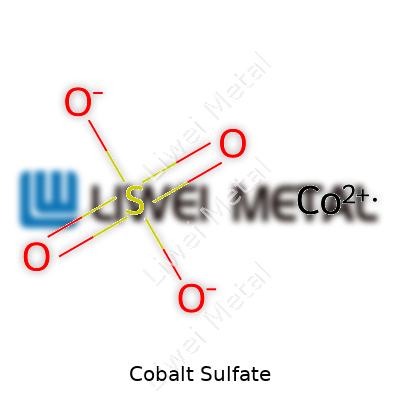
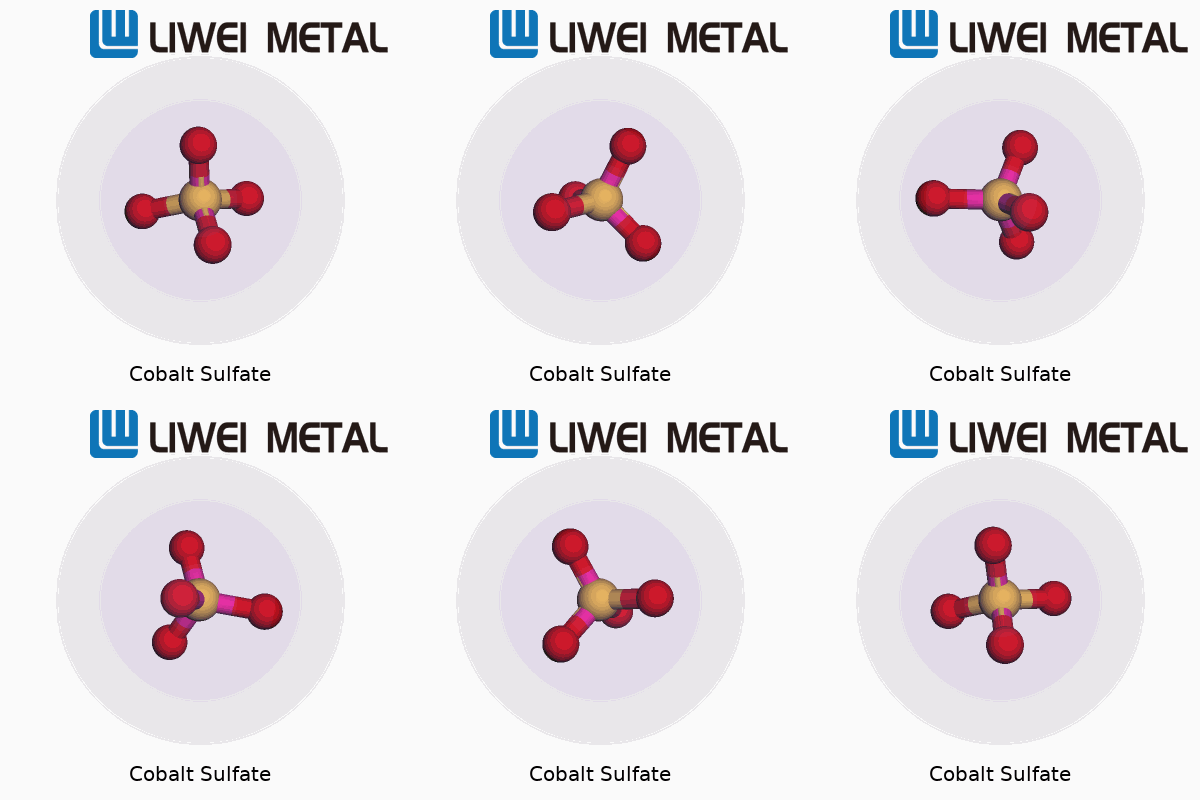
| Names | |
| Preferred IUPAC name | cobalt(2+) sulfate |
| Other names |
Sulfuric acid, cobalt(2+) salt
Cobaltous sulfate Cobalt(II) sulfate Cobalt monosulfate Cobalt sulfate heptahydrate |
| Pronunciation | /ˈkoʊ.bɔːlt ˈsʌl.feɪt/ |
| Identifiers | |
| CAS Number | 10124-43-3 |
| 3D model (JSmol) | `C [Co+2].[O-]S(=O)(=O)[O-]` |
| Beilstein Reference | 1820725 |
| ChEBI | CHEBI:31346 |
| ChEMBL | CHEMBL1200878 |
| ChemSpider | 6758 |
| DrugBank | DB11130 |
| ECHA InfoCard | 05e13b6e-4c4a-4956-ba1c-da5ba99e41f7 |
| EC Number | 233-334-2 |
| Gmelin Reference | 14010 |
| KEGG | C02523 |
| MeSH | D003054 |
| PubChem CID | 24598 |
| RTECS number | GF9590000 |
| UNII | KE209O437J |
| UN number | UN3077 |
| CompTox Dashboard (EPA) | DTXSID8022237 |
| Properties | |
| Chemical formula | CoSO4 |
| Molar mass | 155.00 g/mol |
| Appearance | Pink to red crystals or granular powder |
| Odor | Odorless |
| Density | 2.71 g/cm³ |
| Solubility in water | Very soluble |
| log P | -2.55 |
| Vapor pressure | Negligible |
| Acidity (pKa) | ~2.0 |
| Basicity (pKb) | 7.58 |
| Magnetic susceptibility (χ) | +135.0e-6 cm³/mol |
| Refractive index (nD) | 1.62 |
| Dipole moment | 0 D |
| Thermochemistry | |
| Std molar entropy (S⦵298) | 96.9 J·mol⁻¹·K⁻¹ |
| Std enthalpy of formation (ΔfH⦵298) | -771.9 kJ/mol |
| Pharmacology | |
| ATC code | V09XX04 |
| Hazards | |
| Main hazards | Toxic if swallowed, may cause allergic skin reaction, suspected of causing genetic defects, may cause cancer, causes damage to organs through prolonged or repeated exposure. |
| GHS labelling | GHS07, GHS08, GHS09 |
| Pictograms | GHS05,GHS06,GHS07,GHS09 |
| Signal word | Danger |
| Hazard statements | H302, H317, H319, H334, H341, H350, H351, H360, H410 |
| Precautionary statements | P264, P270, P272, P273, P280, P302+P352, P304+P340, P305+P351+P338, P308+P313, P312, P314, P321, P332+P313, P333+P313, P337+P313, P362+P364, P391, P405, P501 |
| NFPA 704 (fire diamond) | 2-2-0 |
| Lethal dose or concentration | LD50 oral rat 2,048 mg/kg |
| LD50 (median dose) | 440 mg/kg (Rat, oral) |
| NIOSH | HY8510000 |
| PEL (Permissible) | 0.1 mg/m3 |
| REL (Recommended) | 50 mg/L |
| IDLH (Immediate danger) | 20 mg/m3 |
| Related compounds | |
| Related compounds |
Cobalt(II) chloride
Cobalt(II) nitrate Cobalt(II) carbonate Nickel(II) sulfate Iron(II) sulfate |


