
Knowledge
Cobalt Chloride Hexahydrate: More Than a Colorful Chemical
Historical Development
Cobalt chloride hexahydrate has always fascinated chemists. Stories of this chemical stretch back to the eighteenth century, when researchers tried to explain why blue and pink streaks appeared in some mineral samples. Through years of careful work, scientists unraveled its structure, and the world finally recognized cobalt chloride’s chameleon-like color changes with moisture. Early uses, like invisible inks and humidity sensors, grew out of these color shifts, and every chemistry classroom has shown students the pink-to-blue trick. The chemical’s journey follows the rise of coordination chemistry, a field that changed how we look at metals in compounds. This history does not just sit on a dusty archive shelf. It still shapes modern research, where teams continue to dig deeper into cobalt’s quirky behavior, searching for new applications that build on old experiments.
Product Overview
Cobalt chloride hexahydrate stands out in a laboratory cabinet as a blue or pink crystalline solid. Its formula, CoCl2·6H2O, speaks straight to the balance between cobalt, chloride, and water. Manufacturers ship this substance worldwide, packed in moisture-proof containers that keep it from changing color in transit. Batch numbers, purity grades, and country of origin appear on the label; global demand roots itself in industrial, academic, and clinical laboratories. The stuff travels from chemical suppliers to paint-makers, desiccant suppliers, battery researchers, and analytical chemists. I remember the first time I weighed out a few grams in a teaching lab, startled by how fast it sucked up moisture from the air. That moment leaves a mark: here is a reagent that reacts not just in the test tube but right on the benchtop.
Physical & Chemical Properties
Cobalt chloride hexahydrate appears as large, pink to red-purple crystals, easily distinguished among bottles of white and yellow powders. The color tells stories about its hydration state. Set the crystals out on a dish and they lose water, turning blue. The density—about 1.92 g/cm³—and melting point of 86°C put it comfortably within reach for most standard lab setups. Solubility in water tips the scale at over 500 g/L at room temperature, but add a little heat and it dissolves even faster. In alcohol, the stuff breaks down as well, but only to a lesser extent. The subtle smell, if anyone catches it, blends mineral and metallic notes familiar to hands-on chemists.
Technical Specifications & Labeling
Every lab needs clear, honest labeling, especially for transition metal salts. Suppliers have standardized specifications for cobalt chloride hexahydrate that include typical purity—often between 98% and 99.5%—alongside levels for contaminants like iron, nickel, and copper. These numbers matter, especially for research work and pharmaceutical production. Companies print hazard warnings front and center: “Toxic”, “Harmful if swallowed”, “Avoid inhalation.” Labels usually include batch codes, recommended storage temperatures, hazard pictograms, and advisory phrases in multiple languages. The year I spent organizing a chemistry stockroom taught me that missing safety codes on a label can hold up entire projects, or worse, risk lab accidents.
Preparation Method
Lab technicians usually produce cobalt chloride hexahydrate by dissolving cobalt metal, cobalt carbonate, or cobalt(II) oxide in hydrochloric acid. The resulting solution, filtered and allowed to evaporate, grows characteristic pinkish crystals as it cools. On an industrial scale, reactors and filtration systems streamline the steps and control impurities tightly. No high-tech wizardry, just solid, straightforward chemistry. Watchful attention during crystallization makes all the difference, as excess exposure to air or contaminant ions can ruin a whole batch. Purification steps—either by recrystallization or controlled precipitation—tighten quality and guarantee consistent color and hydration state.
Chemical Reactions & Modifications
Cobalt chloride hexahydrate doesn’t just sit on the shelf. Chemists coax it into all sorts of reactions. It’s a starting material for cobalt complexes, and mixing it with various ligands opens up a broad world of color changes, redox activity, and catalytic behavior. Expose it to ammonia and you get deep blue ammine complexes. Heat drives away the water, converting it to the anhydrous blue form. Add hydrogen peroxide or other oxidants and the cobalt(II) turns into cobalt(III) salts, which have their own story in the world of oxidative catalysis. Organic chemists sometimes use cobalt chloride as a catalyst for carbon-carbon bond formation, tapping its ability to shuffle electrons between different atoms. Each modification produces signals—not just color, but changes in magnetic susceptibility, absorption spectra, and reactivity—that guide further research projects.
Synonyms & Product Names
Cobalt chloride hexahydrate shows up under a variety of labels, depending on region, supplier, and intended use. Some call it “cobaltous chloride hexahydrate” or simply “cobalt(II) chloride.” The shorthand “CoCl2·6H2O” appears across chemical catalogs. Each label traces a path to a different regulatory or trade environment. These alternate names keep things transparent for customs officials, manufacturers, and health agencies—vital for a substance that moves across borders and into different product classes. Paint manufacturers and biochemical companies might even invent branded trade names, though most scientific work sticks with traditional IUPAC conventions.
Safety & Operational Standards
Workplace safety shapes everything about handling cobalt chloride hexahydrate. Toxicity warnings are not just words on a page; the risks have real-world consequences. Chronic exposure can cause respiratory issues, skin sensitization, and in some studies, an increased risk of cancer. The blue Safety Data Sheet folder in any lab will describe everything: gloves, goggles, fume hood use, proper respiratory protection. Labs store these crystals away from incompatible agents like nitric acid or cyanides. Spill kits should always stand nearby, and any waste leaves the site only through licensed chemical disposal services. Supervisors remind new lab workers at every training session—never underestimate the hazards of even “routine” reagents. These hard-learned habits cut down on contamination and exposure, a lesson my colleagues and I have reinforced many times on late-night spills and risk audits.
Application Area
Cobalt chloride hexahydrate has layers of use across industries and academic labs. It works in chemical teaching labs as a color-changing demonstration for humidity and dehydration. It finds a spot in humidity indicator cards that guard electronics and export goods from excess water. Beyond the classroom, chemists draw on this compound as a precursor in catalysis, including Fischer–Tropsch and hydroformylation. Paint makers sometimes rely on it for industrial pigments. Battery researchers use cobalt salts in cathode preparation for lithium-ion cells, and the world’s push for better energy storage technology keeps this demand alive. Cobalt chloride also serves as an analytical reagent, helping scientists detect trace ammonia, potassium, or other ions. When I ran a small water-quality survey last year, I relied on cobalt chloride for quick, visual ammonia tests—fast results, minimal waste.
Research & Development
Researchers keep finding new ways to leverage cobalt chloride hexahydrate. Some teams have zeroed in on its coordination chemistry, hunting for innovative sensors and smart materials that register temperature or chemical changes by switching color. Others focus on green chemistry, tweaking preparation methods to recover cobalt from mining waste or recycle spent batteries. There’s plenty of hype around its catalytic properties, as industries search for cheaper, more efficient processes to produce fuels, plastics, and specialty chemicals. The challenge always ties back to balancing the remarkable reactivity of cobalt with sustainability and cost. Decades of research grow outward from simple experiments in undergraduate labs, showing that everyday compounds can serve as launch pads for technological advances.
Toxicity Research
Toxicologists have tracked cobalt chloride hexahydrate for decades, especially as cases of occupational exposure trickled in from factories and chemical plants. Inhalation and ingestion are the biggest worries—prolonged contact can damage internal organs, lead to dermatitis, or, at high doses, cause cardiotoxicity and thyroid imbalance. Animal studies help draw limits on safe contact and feed into regulatory guidelines from agencies like OSHA and the European Chemicals Agency. I’ve worked with labs where special cobalt sensors sit near the fume hood, monitoring for trace contamination. Some researchers have started investigating alternatives or substitutes in humidity indicators and pigments, aiming to cut the persistent toxicity risks. But the search for a perfect replacement continues, as few chemicals bring the same suite of useful color-changing properties.
Future Prospects
The story of cobalt chloride hexahydrate keeps unfolding. Renewable energy, smart packaging, and environmental sensors all pull in demands for better, safer, and more versatile materials. As the market for lithium-ion batteries grows, sourcing and recycling cobalt become major concerns—not just for supply chain managers, but for researchers on the ground, too. Future chemistry likely steers toward more sustainable production methods, less toxic substitutes, and new frameworks for recycling spent chemical reagents. Collaboration across borders and specialties, from mining engineers to medical toxicologists, brings hope that the next generation of cobalt chemistry will reduce risk and keep innovation moving forward. I see this every time I talk with young students eager to push beyond the instructive color changes toward a modern, practical chemistry that respects both history and health.
A Blue-Pink Story in Chemistry
Cobalt chloride hexahydrate catches the eye with its color-changing magic. In my high school chemistry class, the moment we heated a bit of this powder, the blue of the anhydrous form turned pink once the moisture returned. It seemed like a party trick, but it opened a window into the way science meets real life. The compound’s ability to sense humidity makes it popular far beyond the classroom.
Humidity Indicator Power
Walk into a hardware store and look at those little silica gel packets tucked inside electronics, shoes, or vitamin bottles. Some contain a few specks of cobalt chloride hexahydrate. Once moisture creeps in, these specks turn from blue to pink, signaling trouble. Moisture risks electronics, rusts metal, and even ruins precision medical gear. Warehouses, museums, and transportation companies use this simple indicator to spot humidity before it wrecks goods. Tracing back, moisture is a big problem for many sectors. For instance, pharmaceutical shipments depend on dry conditions to keep drugs effective. That color shift helps people know if moisture sneaked past the seals.
Teaching and Testing
Chemistry sets and laboratories keep a bottle or two on the shelves. Teachers and students use cobalt chloride hexahydrate for experiments that demonstrate reversible chemical reactions and hydration-dehydration cycles. This hands-on learning sticks—a dry blue paper slips into a mouth and exits pink. Suddenly, theories about water vapor and reaction equilibrium make sense. Schools count on reliable, visual tools to grab attention and drive home scientific principles. Cobalt chloride’s vivid color change delivers just that.
Industrial Uses in Synthesis and Catalysts
Industry cranks out new chemicals every day. Some steps in making dyes, inks, alloys, and various intermediates rely on transition metal salts. Cobalt chloride hexahydrate acts as a source of cobalt ions in chemical syntheses, providing raw material for specialized pigments, rechargeable batteries, and even electroplating. Cobalt-based catalysts help turn raw materials into finished products, especially when companies need consistent results and proven quality.
Risks and Regulation
Safety isn’t just for the lab. Cobalt chloride hexahydrate can cause health issues—itchy skin, respiratory irritation, and even harm to internal organs with too much exposure. The European Chemicals Agency lists it as a substance of very high concern. Professional settings rely on gloves, goggles, ventilation, and strict limits on waste disposal. Safer alternatives for moisture indicators get more popular every year, but the distinctive color change of cobalt chloride continues to hold a spot.
Looking for Better Solutions
Finding alternatives matters, especially for workplace safety and environmental health. Researchers keep their eyes peeled for non-toxic humidity indicators and cobalt-free catalysts that keep up with demand. Students also learn early in their training to balance chemical benefits with smart handling and proper disposal.
In the big picture, cobalt chloride hexahydrate is a workhorse. From high school labs to factory floors, it shows the link between what we learn and what we do. Better and safer compounds may take its place someday, but plenty of people still rely on its straightforward color story in the fight against hidden moisture.
Everyday Lab Realities
Cobalt chloride hexahydrate pops up often in labs, school experiments, even in some humidity sensors and chemistry sets. That bright purple or blue powder seems harmless at first glance. In my experience, it’s as common as table salt on some shelves, and the bottles don’t have barbed wire around them. It’s tempting to think, "How bad could this really be?"
The Hazards Lurking Behind the Color
Scratch the surface and things get complicated. Cobalt chloride hexahydrate qualifies as hazardous. Even small amounts can spark health problems. Getting the powder or its dust on your skin or breathing it in can cause rashes or trigger asthma for some. The body often reacts to cobalt with sensitivity after a handful of exposures — and that surprise cough or itch means you’re starting to build up an allergy.
Danger increases fast if the chemical moves past the skin barrier or enters the lungs. After years handling reagents and lab chemicals, I watch how easily powders swirl into the air when you open a container. One careless wrist flick is enough. Even the best glove and fume hood habits sometimes slip, especially in tight classrooms where students cluster around to watch a reaction change color.
Chronic Effects and Regulation
Cobalt itself belongs on the list of metals that can cause long-term health issues. It’s not just about getting an itchy patch — doctors link regular exposure to cobalt compounds with heart problems, thyroid disruption, and even cancer. The IARC, which rings the alarm every time science finds a new carcinogen, classifies cobalt chloride as possibly cancer-causing to humans. European regulations don’t toy around here: the chemical lands on restriction lists, and any shipment or use above a certain limit needs a real strategy for risk control.
Environmental Spillover and the Bigger Picture
Labs and schools only use a fraction of what industry does. Bigger players use cobalt chloride in batteries, alloys, ceramics, and invisible ink for color-changing materials. Once this compound escapes into the soil or water, the risk expands. Plants pull cobalt up into their tissues, which moves through the food chain. Fish and animals pick it up and, before long, local water or food gets a cobalt flavor no one asked for. Wildlife health suffers, and cleanup costs make taxpayer eyes water. Most folks never get told how a little bottle from the lab can spark problems in local ecosystems.
Solutions That Make A Difference
No one wants students or industrial workers breathing in cobalt dust. Gloves, goggles, and fume hoods help, but gear isn’t made to carry all the weight. Training plays a bigger role — new people in labs need stories, not just sheet after sheet of safety rules. Real incidents stick in memory more than official language. Stronger lab culture can reduce risks, not just for part-time workers but for everyone down the line, from custodians emptying trash to people outside the fence.
Recycling strategies for used cobalt compounds also help keep them out of landfills and storm drains. Clear labeling and locked chemical storage take some pressure off staff. Pressure on the industries using cobalt to research less harmful alternatives or adopt strict emission controls creates ripple effects. Ignoring warnings because the hazard seems remote only works until something goes wrong — and somewhere, it always does.
Quick fact: Even low exposure over time counts more than a single large spill. Safety measures always work best if you see the chemical as a sneaky hazard, not just a bright powder with a long name.Know the Risks, Stay Ahead
Cobalt chloride hexahydrate looks harmless enough — a deep blue or pink crystalline solid, depending on moisture in the air. Easy on the eyes, sure, but it doesn’t take much for this chemical to become a headache. Prolonged exposure to air and light kickstarts a process where it absorbs moisture or, in drier air, sheds it and shifts color. If left to breathe comfortlessly on a cluttered shelf, it turns into a lumpy mess, loses accuracy for lab work, and becomes harder to handle safely. Storing this compound right limits messes and keeps expenses down over time, which always matters in a lab with tight margins.
Respect for Health and Environment
I’ve seen what happens when safety slips—one careless moment and dust clouds rise, coating hands and surfaces. No one enjoys extra cleanup or, worse, health problems. Cobalt chloride hexahydrate can cause skin and respiratory irritation. Chronic contact has links to more serious health issues, including cancer. Good storage does more than stop product waste; it protects workers, janitors, and anyone else moving through the lab, especially those who may not realize the risks at first glance.
Right Container, Right Spot
Experience says forget about makeshift storage—coffee tins or resealable bags lead to spillage or leaks. Use the manufacturer’s sealed containers, ideally glass or HDPE plastic with tight-fitting tops. Always label everything in plain language. Skipping this small step leads to confusion and accidents, especially as chemicals change hands through the years. Place these containers in a cool, dry spot, away from direct light and heat sources like radiators or sunny windowsills. These locations cause it to degrade faster, sometimes even before the expiration date.
Don’t set these bottles near acids or bases. In my old lab, a lazy layout meant bottles bumped elbows with incompatible materials. It only took a broken seal to kick off reactions—and unwanted attention from the safety team. Chemical storage best practice means separation according to hazard classes, not just alphabetic order. Local rules and the Globally Harmonized System (GHS) help spell out compatible neighbors.
Humidity: The Hidden Enemy
Cobalt chloride hexahydrate loves to draw in moisture from the air. In a humid storeroom, the chemical clumps, loses calibration, and can “bleed” out of poorly sealed jars. I’ve watched researchers try to weigh gooey, sticky powder on sensitive scales—accuracy and convenience, both lost. Desiccators (airtight cabinets filled with drying agents) offer an old-school but dependable fix. Some modern labs run climate-controlled storage, but a basic desiccator with fresh silica gel gets the job done and saves on fancy equipment.
Safe Handling Every Step
Wearing gloves and goggles isn’t optional, even for brief tasks like topping up a tray or decanting the solid. Accidents happen sometimes—spills or splashes especially if someone hurries. Keeping cobalt chloride hexahydrate well-contained during storage cuts down on these events and simplifies clean-up if an accident does occur. Waste also counts; store spent material in sealed drums set aside for hazardous waste pickup. Lax disposal not only breaks laws but pollutes soil and water, hurting people and wildlife who never agreed to any risk.
Why Storage Practices Matter
Cobalt chloride hexahydrate storage isn’t only about keeping the chemistry right. Proper storage protects health, meets regulations, extends shelf life, and keeps labs—and the world beyond—safer for everyone. Small habits, like closing lids fully, using dry tools, and watching humidity, add up to big results and peace of mind. Science moves quickly, but safety never gets old.
Understanding What Cobalt Chloride Hexahydrate Really Is
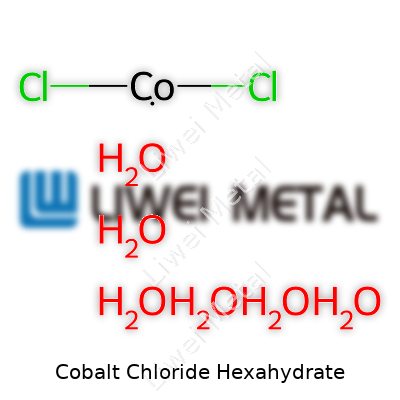
Cobalt chloride hexahydrate isn’t usually discussed over cups of coffee, yet anyone who’s worked in a chemistry lab respects its striking color shift and utility. You’ll see a lot of students with blue or pink paper strips, dipping them in solutions or holding them to the air; those strips rely on cobalt chloride for their magic. The formula itself is pretty straightforward: CoCl2·6H2O. That means you have one cobalt atom, two chlorine atoms, and six water molecules all huddled together in a single unit.
Why This Formula Matters in Real Life
During my own lab experience, I found that memorizing formulas was only the surface. What really hits home is how these formulas guide safe handling and successful experiments. Cobalt chloride hexahydrate stands out with its sensitivity to water. As it sits exposed, it can swing from blue to pink, depending on humidity levels. This color change isn’t just a neat trick—it helps detect moisture in the air, which can change the outcome of chemical reactions or even spoil entire batches of certain products. The formula isn’t just an identifier; it marks a relationship between cobalt salt and water, crucial for its behavior.
Health, Safety, and Environmental Challenges
Safety never gets old in chemistry. Cobalt compounds have been flagged for health risks. Cobalt chloride is one of those substances that demand respect. It can irritate skin and eyes, and long-term exposure increases cancer risk. Keeping its formula visible on labeling helps workers remember exactly what they’re handling. In the classroom, we often talk about donning gloves and goggles, yet in industry, the stakes grow much higher—spill management, waste disposal, and air filtration must match the risk spelled out by the formula. The “hexahydrate” part means a fair amount of water rides along, which means storage requires dry, secure locations.
Industry and Laboratory Uses
Cobalt chloride hexahydrate shows up wherever moisture detection matters, such as in humidity indicators for electronics packaging and certain types of desiccants. We also use it to teach coordination chemistry, where water molecules bonded to cobalt create a perfect example of how transition metals interact. Some manufacturing lines employ it in electroplating, giving products a critical corrosion-resistant finish. Here’s the challenge: waste management with cobalt needs careful control. If it lands in waterways, it harms aquatic life, so regulations limit discharge and require recycling.
Room for Better Practices and Solutions
Working with this compound reminds me how chemistry always circles back to responsible use. Labeling matters, not only for compliance but for the safety of everyone in the building. Finding replacements or alternative compounds with lower toxicity proves tough, especially for moisture detection, but research never sits still. Investments in robust recycling and waste-handling systems can cut down on environmental risks.
Sharing knowledge and putting clear, science-backed practices in place raises safety and helps everyone—scientists, workers, students, and the environment. It’s not just about knowing the formula; it’s about knowing what’s at stake every time you open a bottle of cobalt chloride hexahydrate.
Understanding the Risks
Cobalt Chloride Hexahydrate comes in that bright, crystalline blue form, often catching attention in chemistry labs. Its color makes it unique, but this chemical brings more than just visual appeal. Exposure links to skin irritation, respiratory issues, and it gets flagged for its link to cancer with long-term contact. Just breathing in the dust, or having it linger on your hands, stacks up risks that really stick around. I've learned through years handling various chemicals: treating pretty powders with too little caution invites trouble nobody wants.
Donning the Right Gear
Before cracking open any bottle, the basics stay the same. Pull on nitrile gloves. Regular latex sometimes doesn’t hold up, and skin contact leads to rashes or worse over time. Safety goggles never feel optional, as a single splash could leave permanent damage or long-term irritation. A buttoned-up lab coat makes a shield against accidental drips on your arms or torso. Don’t skip the closed-toe shoes or skip wearing long pants. I’ve seen colleagues try shortcuts, and emergency rinses later show it’s never worth shaving off a few seconds.
Clean Air Matters
Cobalt Chloride Hexahydrate releases dust easily when scooping, weighing, or measuring. Working only under a chemical fume hood keeps the air safe in your breathing zone. Tiny particles can travel, and a standard room never clears the air as well as a properly filtered hood. An extra bonus: you won't carry invisible dust home on your hair or clothes. If you can smell or see dust, you’re already late to fix the problem.
Mixing and Measuring Safely
Scale and spatulas pick up more chemical than you think. Dedicating separate tools for measurement helps you avoid accidental mixing or contamination. Spills need to get wiped right off using damp cloth or towels, since dry brushing sends it airborne again. Never use your hands, even if it’s just a small pile. Think twice before working in a cluttered spot. Chemicals hide in messes and accidental blending creates real dangers, especially with oxidizers or acids nearby.
After-Use Clean Up
Wash your hands and arms right after work—don’t wait until the day wraps up. Soap and warm water clear far more residue than sanitizer wipes. Take time to label anything you store, both for yourself and anyone else using the workspace. If a spill happens, stick to proper spill kits. Regular paper towels won’t cut it, and they can muddy the clean-up process by smearing the powder. Dispose of contaminated towels in designated hazardous waste bins instead of trash cans around the lab.
Storing Away from People and Food
I keep Cobalt Chloride Hexahydrate in a locked cabinet, away from food, drinks, and high-traffic areas. Humidity matters: too much moisture in the air turns that blue powder pink and messes with experiment results or chemical purity. Store it in a tightly sealed container, somewhere cool and dry. Leaving it out uncapped, even for a minute, invites contamination and accidental exposure.
Replacing Old Habits with Smarter Ones
Years in the lab teach you that taking shortcuts creeps up on you later. Treating every chemical with respect never slows you down as much as backtracking or dealing with an accident does. Relying on solid safety routines every day means you lower your risk every time, protect those around you, and avoid adding your story to the cautionary tales chemists always swap after hours.
| Names | |
| Preferred IUPAC name | cobalt(2+) chloride hexahydrate |
| Other names |
Cobaltous chloride hexahydrate
Cobalt(II) chloride hexahydrate Cobalt chloride, 6-hydrate |
| Pronunciation | /ˈkoʊ.bælt ˈklɔː.raɪd ˌhɛks.əˈhaɪ.dreɪt/ |
| Identifiers | |
| CAS Number | 7791-13-1 |
| Beilstein Reference | 3589604 |
| ChEBI | CHEBI:31344 |
| ChEMBL | CHEMBL1233558 |
| ChemSpider | 21863608 |
| DrugBank | DB02661 |
| ECHA InfoCard | 100.033.863 |
| EC Number | 231-589-4 |
| Gmelin Reference | 75460 |
| KEGG | C00941 |
| MeSH | D003058 |
| PubChem CID | 24822 |
| RTECS number | FF3150100 |
| UNII | Q248UDT4XC |
| UN number | UN3288 |
| CompTox Dashboard (EPA) | DTXSID1021286 |
| Properties | |
| Chemical formula | CoCl2·6H2O |
| Molar mass | 237.93 g/mol |
| Appearance | Pink crystalline solid |
| Odor | Odorless |
| Density | 1.92 g/cm³ |
| Solubility in water | 450 g/L (20 °C) |
| log P | -2.6 |
| Vapor pressure | <0.1 hPa (20°C)> |
| Acidity (pKa) | 6.3 |
| Basicity (pKb) | 6.0 |
| Magnetic susceptibility (χ) | +1400e-6 cm³/mol |
| Refractive index (nD) | 1.500 |
| Dipole moment | 3.71 D |
| Thermochemistry | |
| Std molar entropy (S⦵298) | 200.0 J·mol⁻¹·K⁻¹ |
| Std enthalpy of formation (ΔfH⦵298) | –1337 kJ/mol |
| Pharmacology | |
| ATC code | V03AB34 |
| Hazards | |
| Main hazards | Harmful if swallowed, in contact with skin or if inhaled. Suspected of causing cancer. May cause genetic defects. Causes serious eye irritation. May cause an allergic skin reaction. Toxic to aquatic life with long lasting effects. |
| GHS labelling | GHS07, GHS08 |
| Pictograms | GHS07,GHS09 |
| Signal word | Danger |
| Hazard statements | H302, H317, H319, H334, H341, H350, H360, H410 |
| Precautionary statements | P201, P202, P264, P270, P280, P308+P313, P405, P501 |
| NFPA 704 (fire diamond) | 2-3-0 |
| Explosive limits | Not explosive |
| Lethal dose or concentration | LD50 Oral - rat - 766 mg/kg |
| LD50 (median dose) | LD50 Oral Rat: 766 mg/kg |
| NIOSH | LTWT40000 |
| PEL (Permissible) | PEL (Permissible): 0.1 mg/m3 (as Co) |
| REL (Recommended) | 0.02 mg/m³ |
| IDLH (Immediate danger) | 250 mg/m³ |
| Related compounds | |
| Related compounds |
Cobalt(II) chloride
Cobalt(II) chloride dihydrate Cobalt(III) chloride Nickel(II) chloride hexahydrate Iron(II) chloride Copper(II) chloride dihydrate |


