
Knowledge
Cobalt Carbonate: A Deep Dive into Its Science, Industry, and Tomorrow’s Challenges
Historical Development
People have worked with cobalt compounds for centuries. Medieval miners stumbling upon striking blue ores never guessed the color’s root traced back to cobalt atoms mixed in natural minerals. Early glassmakers in Egypt and the Near East used cobalt oxides in pigments without understanding the true chemical picture. By the eighteenth century, European scholars like Georg Brandt isolated cobalt from mineral samples, sparking studies into its unique chemistry. It took modern chemistry labs well into the twentieth century to precisely characterize cobalt carbonate, pin down its formula as CoCO3, and work out better ways to produce it without impure byproducts. As technology for battery manufacturing emerged, new demand for high-purity cobalt salts fueled both research and commercial innovation. People who once saw cobalt as little more than a coloring agent found themselves at the crossroads of materials for batteries, catalysts, and even environmental control.
Product Overview
Cobalt carbonate now finds itself in a range of chemical supply chains. It comes as a pink to reddish powder, stable under dry conditions. Manufacturers offer granular or fine forms in drums or sealed bags, depending on end use. With the cobalt market driven by batteries and alloys, the carbonate serves as a key precursor. In the lab, the substance draws attention for its usefulness in synthesis and its predictable reaction profile. Production at scale, especially with the rise in electric vehicles and renewable energy installations, links this simple salt to some of today’s biggest resource debates.
Physical and Chemical Properties
Cobalt carbonate presents as a solid with a distinct pinkish hue, hardly mistaken for more common salts. It sits in water with very limited solubility—less than 0.01 grams per 100 milliliters at room temperature. Under acidic conditions, it reacts promptly, bubbling as carbon dioxide escapes and cobalt ions dissolve into solution. It begins decomposing above 400°C in a kiln, leaving behind loose, black cobalt oxide and releasing carbon dioxide gas. The crystalline solid maintains its color unless exposed to high temperatures or strong acids. Its density sits around 4 g/cm3, not particularly heavy but distinct enough to notice when poured by hand. High-purity batches arrive with tightly controlled cobalt content, sometimes topping 46% cobalt by weight, with trace analyses for iron, nickel, and copper as possible contaminants.
Technical Specifications & Labeling
Cobalt carbonate leaves factory gates with clear technical sheets—the cobalt content targets fixed points, moisture and sulfate content get checked, and particle size comes matched for downstream handling. Hazard labels mark the powder as harmful if swallowed, toxic to aquatic life, and capable of causing allergic reactions. Every drum and bag carries batch numbers, test results, and safety recommendations. Producers may list lot-specific impurity levels, since battery makers and metal refiners have little tolerance for unwanted metals. Users see clear instructions for storage: lock it away from acids, keep it dry, and limit dust. For bulk trade, standards agreed upon through industry consortia, like those set by ASTM or ISO, make sure no party cuts corners.
Preparation Method
Factory production takes cobalt salts—especially cobalt sulfate or nitrate—as the starting point. These dissolve in water, giving a deep pink solution. Carbonate ions enter the mix, usually from sodium carbonate or ammonium carbonate. In seconds, a pink precipitate forms, ready for filtration and washing. Repeated rinsing clears away sodium or ammonium contaminants. Drying the material at low heat locks in the water-free form, making bulk packs easy to ship. In the lab, small-scale batches use the same method, but with closer scrutiny of temperatures and rates to tailor properties for catalysts or specialty compounds.
Chemical Reactions & Modifications
Put cobalt carbonate in strong acid and it gives up cobalt ions, transforming to cobalt(II) chloride or sulfate after color changes and fizzing. Raise the heat high enough and it shifts to cobalt oxide, a move that feeds battery makers hungry for Co3O4. Add a flux and you get mixed oxides or spinels used in ceramic pigments. In research, scientists modify its surface with organic ligands, creating new catalysts for organic synthesis or water splitting. Its predictable chemistry offers a launchpad: from starting material to targeted intermediate, users shape it for whatever direction emerging tech demands.
Synonyms & Product Names
Cobalt carbonate travels across the world under several labels, keeping customs officials and buyers aware: cobaltous carbonate, cobalt(II) carbonate, and sometimes EINECS 208-169-4 or CAS 513-79-1 on documents. Names shift with languages but market references don’t stray too far. Battery-grade powders may advertise themselves by precursor grade or purity instead of chemical name, calling out EV or NMC applications. In ceramics, it goes by pigment cobalt pink or cobalt rose, depending on artistry. Scientific suppliers list every synonym in catalogs, giving users confidence they’re ordering the right compound.
Safety & Operational Standards
Handling cobalt carbonate needs more than gloves; the fine dust irritates the lungs, and even small skin contact prompts allergic reactions for some users. Safety data sheets warn users to avoid ingestion, rinse spills immediately, and ventilate areas before making powders airborne. Workplace exposure limits, set by OSHA or European regulators, restrict how much cobalt ends up on surfaces or in the air. Regular monitoring keeps workers safe, especially in tight quarters where aerosols could drift. Proper disposal means treating the material as hazardous waste; improper dumping leaches cobalt back into soils, threatening groundwater and food chains in the long run.
Application Area
Battery makers rely on cobalt carbonate to feed their manufacturing pipelines, converting it to mixed cobalt oxides needed in cathodes for lithium-ion cells. Metal refiners use the salt as a bridge compound—once it hits a smelter, it gives way to pure cobalt powder used in steel and superalloys. Ceramic artists keep the pigment on hand for delicate pink or blue glaze effects. Scientists prize it for simple synthesis of magnetic compounds, emerging catalysts, or even as a template in nanomaterial development. In agriculture, trace levels show up as micronutrient additives for livestock, correcting soil deficiencies in regions where natural cobalt fails to reach crops and feed.
Research & Development
Labs keep stretching cobalt carbonate’s utility. Research programs, spurred by the push for greener batteries and stronger magnets, fiddle with its phase transitions, particle sizes, and surface activations. Industry tests alternatives for cobalt supply, aiming to recycle old batteries into fresh carbonate or synthesize it from byproducts like mining tailings. Some scientists try to steer away from cobalt entirely, but for the time being, tweaking the carbonate’s characteristics buys time for next-generation materials. New analytical tools—like synchrotron X-ray mapping or micro-actuated balance studies—dig out more details than ever, building a case for both efficiency and safety in future cobalt cycles.
Toxicity Research
Decades of animal studies flag cobalt carbonate as a respiratory irritant with potential for low-dose chronic toxicity. Long-term data connect high cobalt exposure, whether through dust or ingestion, to heart and thyroid complications in mammals. In humans, skins rashes and asthmatic responses appear in poorly ventilated spaces or after repeated exposure. Current occupational guidelines exist for a reason—protecting factory and lab workers from repeated, hidden harm. Ecotoxicologists see risk not just for people, but for fish and soil microbes, as cobalt persists and disrupts key enzymes. Safer handling and closed-system operations cut those risks, but accidental releases still create long cleanups in both developing and developed regions.
Future Prospects
Demand for cobalt carbonate rises and falls with every shift in the world’s transition to green technology. Raising metal recovery yields and lowering environmental impact have become priorities, pushing manufacturers to close loops and monitor supply chains. Battery innovations promise less reliance on cobalt, yet current cathode designs still draw from the carbonate pool. Chemistry innovation, including more selective extraction and rapid purification, sets the tone for a less wasteful future. Debates over ethical sourcing, labor standards in mining regions, and recycling technology sharpen every year. In the lab, scientists pursue cobalt alternatives while continuing to fine-tune carbonate for specialty alloys and compounds. As renewable power and electrified transport spread, every kilogram of cobalt carbonate carries the weight of technological promise and ethical responsibility.
Not Just Another Mineral Compound
Mention cobalt carbonate, and a lot of folks probably think about batteries, mining, and some chemistry lab tucked away in a corner somewhere. But the stuff has its fingerprints all over modern life—often in ways that sneak under the radar.
Why The Paint in Museums Looks That Good
As a kid, I always wondered how artists from centuries ago managed to get such vibrant blues in their paintings. Turns out, cobalt carbonate is behind plenty of those deep, lasting hues in both ceramics and glass. Artisans mix it into glazes, fire up their kilns, and what comes out are pieces that can stay bright for hundreds of years. The brilliant cobalt blues and pinks in pottery and stained glass owe a lot to this versatile powder. That’s not something you find in every backyard mineral.
Backstage in Battery Production
People talk a lot about lithium when smartphones or electric cars come up, but cobalt carbonate doesn’t get the same headlines. It goes into batteries too, playing a crucial role in keeping charge cycles stable. The compound heads off for further processing, eventually ending up as a battery-grade material inside lithium-ion cells. Folks worried about running out of juice on their phone during a trip should probably thank cobalt carbonate for helping power so many rechargeable batteries across the world.
Keeping Livestock (and People) Healthy
On the farm where I grew up, supplement tubs for cattle weren’t just random lumps of minerals. Cobalt carbonate got blended in to make sure animals got enough cobalt, an essential building block for vitamin B12. Without that, cows start slowing down, productivity drops, and the whole food chain feels the pinch. The same goes for humans: cobalt turns up in vitamin supplements, helping people with B12 deficiencies avoid a whole stack of health issues, from nerve problems to fatigue.
Industrial Workhorse
Cobalt carbonate runs in the background of a lot of industrial processes. One of the big ones: making catalysts. Refineries rely on these to clean up fuels and get rid of sulfur before gasoline ever reaches the pump. Fewer emissions mean less strain on people with asthma and cleaner air in big cities. In some chemical plants, cobalt carbonate helps make other forms of cobalt, all of which go into magnets, inks, and even dental materials you might find in your own mouth.
The Not-So-Pretty Side
None of this comes free. Mining cobalt often brings up tough questions: unsafe labor conditions, pollution, and local communities dealing with the fallout. A lot of cobalt around the world comes from places that face these realities every day. Companies at the top—everybody from carmakers to tech giants—have started tracing where their cobalt comes from, trying to weed out suppliers that cut corners. Some new projects use recycled batteries to recover cobalt instead of digging fresh ore, aiming for a cleaner path forward.
Looking Down the Road
It’s easy to overlook everyday materials like cobalt carbonate, but they’re stitched into the world we’ve built—art, fuel, tech, and even the butter on the breakfast table. If more people understood what’s behind the products in their hands, there’d be more support for cleaner practices and innovation. Better transparency, smarter recycling, and fairer working conditions can keep these stories from ending up as just another footnote in a chemistry textbook.
Looking at the Risks
Cobalt carbonate pops up in the news because it comes with a deep violet color and links to the battery industry. What often gets missed is the stuff it can do to people who handle it. Breathing in cobalt carbonate dust could mean more than a few sneezes. If you get exposed enough, your lungs can start telling you something’s wrong. Chronic cough, shortness of breath, and chest pain aren’t things you want to shrug off. Science backs those concerns up, too. Long-term exposure brings up real worries about hard-to-treat lung problems. Research by the National Institute for Occupational Safety and Health shows breathing problems may develop even in folks who never smoked a cigarette in their life.
People who work with cobalt salts report skin irritation, rashes, and sometimes more serious allergic reactions. The cobalt ions get through damaged skin fast. Doctors have linked this kind of exposure to occupational dermatitis. The American Conference of Governmental Industrial Hygienists set cobalt (and its compounds) as substances worth keeping close tabs on because of these health risks. Folks in factories, battery plants, and chemical labs, take most of the heat. But DIYers playing with pigments or minerals for hobbies risk some of these health effects too.
Cobalt's Reputation in Industry and Everyday Life
Mining and processing cobalt comes with tough conditions, not just in remote corners of the world. It shows up in lots of everyday items — ceramics, pigments, vitamins, and even animal feed additives. Kids’ toys, jewelry, and electronics parts sometimes show trace amounts too. Most people living far from cobalt dust and vapor won’t face the same danger as workers rolling sacks around in factories. Still, any home hobbyist who grinds or mixes colored minerals needs to know what’s floating in the air. A little dust can go a long way.
The World Health Organization classes cobalt compounds as possibly carcinogenic. That means, with enough exposure over enough years, cancer risk enters the picture. Studies in France and the US point to a higher risk of lung cancer for industrial workers around cobalt dust. Cobalt in the bloodstream also affects the heart. A handful of studies link high levels to a weakened heart muscle, sometimes leading to serious heart failure. Nobody wants to take a gamble on something you can easily avoid with the right precautions.
Solutions for Safer Workplaces and Homes
Ventilation matters a lot. Keeping dust below breathing level in any shop or lab goes a long way. Masks rated for fine particles, full gloves, and goggles make sense on every safety checklist. Workplaces that track cobalt exposure tend to log fewer health issues, so posting visible guidance pays off. Making sure folks get medical monitoring and safety training isn’t just about ticking boxes on a compliance form. It builds confidence that nobody has to roll the dice just to earn a paycheck or finish a weekend project.
Finding alternatives brings good results, too. Where companies swap out cobalt compounds for less risky materials in paints or glazes, workers see fewer rashes and respiratory risks. Spreading the word about cobalt’s side effects in trade classes and maker spaces helps people pay attention to labels. It only takes one overlooked bag of pigment or dusty bottle to open up a risk that lasts for years. Health and safety authorities recommend closed systems and better spill controls, but common sense—washing hands, cleaning up, not eating or drinking at the workbench—makes just as much difference.
Paying Attention Before It’s Too Late
Cobalt carbonate causes trouble when treated like any other powder on a shelf. Knowing what’s inside a colored jar at work or at home beats guessing every time. No law forces you to look after your own lungs or skin, but nobody else will if you don’t. Paying a little extra attention where cobalt carbonate crops up, whether you’re a skilled worker or a curious hobbyist, keeps those side effects as distant as possible.
Understanding the Basics: Chemical Formula
Cobalt carbonate comes with the chemical formula CoCO3. In a world where people often skim past the significance of formulas, this one packs quite the story. Cobalt carbonate sits at the meeting point of metal chemistry and real-world problems, whether those involve batteries, ceramics, or even nutrition. The formula’s simple nature belies its impact, linking one cobalt atom, one carbon atom, and three oxygen atoms. The reason this matters so much has to do with how cobalt ions react under different circumstances, especially in industries craving precision.
Practical Roles in Everyday Life
I’ve worked with ceramics hobbyists who use cobalt carbonate to create striking blue glazes. They always talk about how a single scoop transforms dull clay into something eye-catching on any dinner table. That single scoop wouldn’t do much without understanding its formula. CoCO3 means cobalt in the +2 oxidation state, which lets it serve as a reliable colorant. Potters, glassmakers, and even pigment suppliers rely on that predictability.
Its use moves beyond color. Cobalt carbonate feeds the raw material demand for rechargeable lithium-ion batteries. These batteries keep phones, laptops, and electric cars running. Refined from cobalt carbonate, cobalt oxide jumps into the battery mix to keep electrons flowing. The tech sector depends on enough battery-grade cobalt carbonate, which links the chemical formula to the gadgets most of us use every day.
Why Purity and Source Matter
Purity changes everything in both tech and nutrition. Impurities hide inside minerals mined from the ground, and the wrong mix can ruin a batch of batteries or make livestock feed ineffective. Cobalt supports vitamin B12 production, which ties directly to health. Animal feed producers always check chemical analysis reports looking for that clear CoCO3 signature, not mystery compounds that could create health hazards.
Health and safety play a big part. In my work with environmental science students, I’ve pointed out how improper handling of metal compounds, including cobalt carbonate, can load soil or water with unwanted byproducts. Safe sourcing and smart disposal procedures stem from knowing the exact chemical involved. Cobalt carbonate, with its defined formula, gives industries something reliable to test for, regulate, and track.
Challenges and Solutions
Anyone who tracks mining news sees supply challenges. More demand pops up in the energy transition. If extraction methods cut environmental corners, contamination follows. Strict oversight at mining and refining stages helps, but gaps remain. Refineries with proper environmental controls can keep contaminants out. These changes call for investments from companies that want to secure cobalt carbonate without harming local communities or the land.
On the customer end, labs should verify product composition, not just trust supplier labels. Open databases with third-party verification keep mistakes rare and counter fraud, which matters when cobalt carbonate costs rise with global demand. Universities, tech companies, and chemical engineers need to keep pushing for transparency and cross-checking—good science means good records.
The Formula Keeps Industry Moving
CoCO3 says more than most letters and numbers listed on a safety sheet. It tells scientists, engineers, artists, and business owners exactly what to expect from the compound in front of them. The next time someone asks about the formula for cobalt carbonate, it’s worth remembering that this bit of chemistry powers technology and color and touches health and safety concerns that deserve careful attention.
Lessons from the Lab and the Shop
Cobalt carbonate turns up in more places than folks might think — paints, ceramics, battery plants. If you’ve handled powders in a warehouse or worked the night shift in a chemical lab, you know the way dust goes everywhere if you don’t respect the material. I still remember chasing a cloud of fine cobalt dust off my bench on a humid day. My lesson: Don’t treat these things like plain chalk or baking soda.
Keen Eyes on Hazard
Science backs up the worry. Cobalt carbonate comes with clear warnings. It irritates skin, the dust can hurt your lungs, and no one wants cobalt ending up in drinking water. The science is well settled: too much cobalt in the air adds risk for workers, especially over time. Some researchers point to evidence that the compound brings bigger trouble than a rash — possible links to lung issues and even more serious disease with regular exposure.
Storage — Keep It Dry, Keep It Tight
Keeping cobalt carbonate from turning into a bigger headache starts with where you stash it. I’ve seen good warehouses and some real disasters. The best approach uses sealed containers with clear labels carried out of the humidity line. Just an afternoon in a leaky shipping dock and the stuff clumps up or reacts. A steel or HDPE drum with a gasket lid shields against moisture, and everyone gets the benefit of less airborne dust when it’s opened carefully. Stick it on a storage rack, not on a warm patch of floor, to avoid accidental spills or exposure.
Proven Rules for Handling
I’ve found one habit separates safe teams from risky ones: respect for gloves and masks. It’s easy for experienced hands to skip these when things get busy, but the research doesn’t lie. Nitrile gloves and a P2 or N95 mask make a difference. Goggles protect against dust clouds, especially if you’re scooping out of a drum. I tell anyone I train: wash your hands right away after handling, don’t eat nearby, and keep cobalt away from food storage.
Spills happen fast. More than once, I’ve watched a careless shove knock over a tub, and that purple-pink powder floats up in seconds. The smartest crews work with spill kits close by, ready with absorbent pads and a bucket. Scooping up with a broom just stirs the problem. Dampen the powder gently and use a vacuum with a HEPA filter — that makes cleanup safer.
Good Practices Go Beyond Rules
No one runs a tight ship on regulations alone. Managers and crew work best when everyone knows why safety matters. Posting clear procedures on the wall beats a binder in a drawer. Regular small-group safety talks do more than online refresher courses. I’ve seen old hands share stories that drive home the message: breathing dust feels minor today, but can haunt you years down the road.
Looking Forward
Big companies invest in better equipment — glove boxes, local exhaust fans, training programs. For smaller shops, asking suppliers for detailed safety sheets and getting advice from industry groups makes a real difference. It helps to remember: handling cobalt carbonate right means a safer job, less waste, and more trust from everyone in the building. Taking shortcuts carries a cost nobody wants to pay.
Mining and Chemistry: The Starting Point
Cobalt carbonate might sound like a niche chemical, but it sticks out once you look into battery production and specialty alloys. You’ll see large operations—whether in Central Africa, Australia, or even refineries in Asia—rely on it for the raw cobalt inside. Companies start with cobalt carbonate to make cobalt metal and other compounds. If you’ve worked near any company making superalloys for jet engines, you’ll notice that trace cobalt brings strength that basic metals can’t. Even on the chemical side, it serves as a stepping stone to make dyes, catalysts, and vitamins. It isn’t always glamorous, but without it, big sectors would struggle to get pure cobalt.
Batteries: No Electric Revolution Without It
Electric cars keep grabbing headlines, but it all depends on one thing—high-performing rechargeable batteries. Most battery manufacturers still turn to cobalt carbonate because it helps form lithium cobalt oxide, which has shaped the lifespan and reliability of consumer electronics for years. You’ll find it in the supply chains of power tools, smartphones, and grid-level storage batteries, especially where energy density or safety matters. With demand for cobalt in batteries rising, the way this chemical enters battery manufacturing really shapes the pace of technological growth.
Pigments and Ceramics: Art and Everyday Color
Every time you see a piece of deep blue pottery or a bold ceramic tile, that color might come from cobalt carbonate. It supplies a crucial ingredient for creating stable blue pigments. These pigments stand up to heat and light, making them favorites for artists, manufacturers, and people decorating homes. Stained glass makers and enamel workers depend on the color consistency and durability, and if you’ve spent any time in a pottery studio, you’ll have handled glazes with cobalt mixed in. Rich blue shades just can’t be faked with cheap substitutes.
Animal Nutrition: Small Elements, Huge Impact
Farmers and feed companies include cobalt carbonate in supplements for cattle and other ruminants. Ruminant animals need cobalt to make vitamin B12 in their stomachs. Without enough, livestock can suffer poor growth and health. Mixing a precise dose into feed ensures healthier animals and, by extension, safer meat and dairy for people. Walk through any ranch or farm supply store, and you’ll find products advertising cobalt—proof that decisions made by chemical suppliers ripple out all the way to the dinner table.
Environmental Catalysts and Inks
Commercial chemical plants put cobalt carbonate to work as a catalyst in some pollution control systems and as part of inks and driers for paints. Even if it doesn’t make up a huge volume in these cases, its presence affects the efficiency of industrial waste treatment and keeps factory emissions below certain limits. In the printing industry, it dries out inks reliably, keeping production lines humming and printed material smudge-free.
Facing Challenges: Sourcing and Responsibility
Sourcing cobalt carbonate brings questions about environmental impact and ethics. Cobalt extraction can harm ecosystems and communities if done recklessly. Investigative journalism and transparency encourage more responsible mining and recycling. Battery manufacturers set new expectations for tracking the origins of chemicals, and industries that use cobalt carbonate now push for cleaner sourcing.
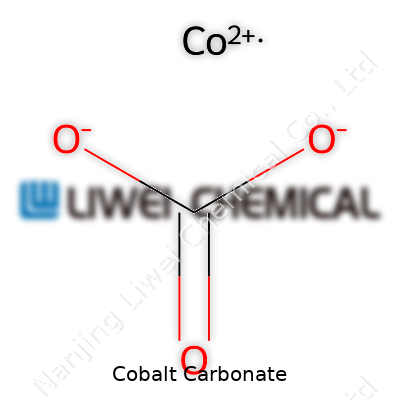
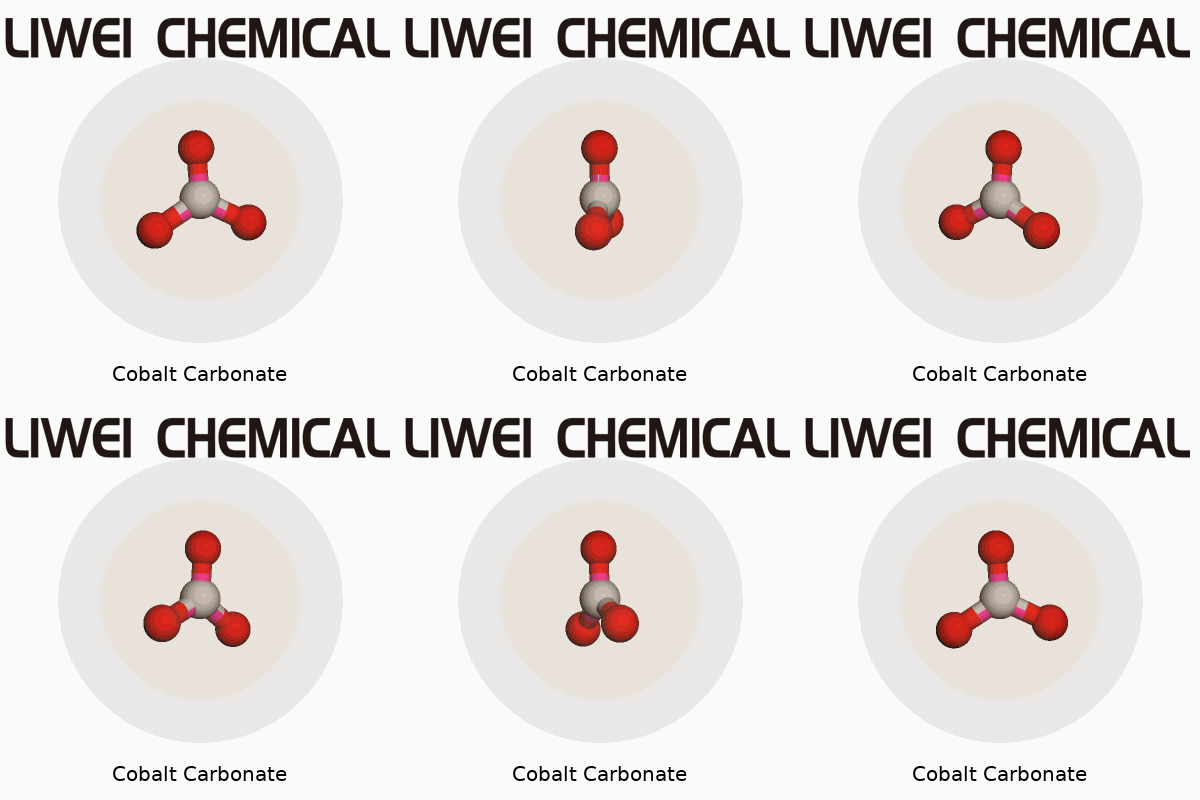
| Names | |
| Preferred IUPAC name | Cobalt(2+) carbonate |
| Other names |
Cobalt(II) carbonate
Cobaltous carbonate Carbonic acid cobalt(2+) salt Cobalt carbonate (CoCO3) Cobalt monocarbonate |
| Pronunciation | /ˈkoʊ.bəlt ˈkɑːr.bəˌneɪt/ |
| Identifiers | |
| CAS Number | 513-79-1 |
| Beilstein Reference | 'Beilstein Reference 4126580' |
| ChEBI | CHEBI:46813 |
| ChEMBL | CHEMBL1201647 |
| ChemSpider | 14008 |
| DrugBank | DB14537 |
| ECHA InfoCard | 100.026.882 |
| EC Number | 209-170-2 |
| Gmelin Reference | Gmelin Reference: Co 34 |
| KEGG | C00413 |
| MeSH | D003059 |
| PubChem CID | 10100245 |
| RTECS number | GF8575000 |
| UNII | 7L4XA56GMN |
| UN number | UN3077 |
| Properties | |
| Chemical formula | CoCO3 |
| Molar mass | 118.94 g/mol |
| Appearance | Pink or purple-red powder |
| Odor | Odorless |
| Density | 3.7 g/cm³ |
| Solubility in water | Insoluble |
| log P | -0.41 |
| Vapor pressure | Negligible |
| Basicity (pKb) | 7.7 |
| Magnetic susceptibility (χ) | +2250.0e-6 cm³/mol |
| Refractive index (nD) | 1.601 |
| Dipole moment | 0 D |
| Thermochemistry | |
| Std molar entropy (S⦵298) | 97.0 J·mol⁻¹·K⁻¹ |
| Std enthalpy of formation (ΔfH⦵298) | -721.6 kJ/mol |
| Std enthalpy of combustion (ΔcH⦵298) | -730.8 kJ/mol |
| Pharmacology | |
| ATC code | V03AB33 |
| Hazards | |
| Main hazards | Toxic if swallowed, causes skin and serious eye irritation, may cause allergic skin reaction, may cause cancer, suspected of damaging fertility or the unborn child, very toxic to aquatic life with long lasting effects. |
| GHS labelling | GHS07, GHS08 |
| Pictograms | GHS07,GHS09 |
| Signal word | Danger |
| Hazard statements | H302, H317, H319, H334, H335, H350, H410 |
| Precautionary statements | P260, P261, P264, P272, P273, P280, P302+P352, P304+P340, P308+P313, P314, P321, P332+P313, P362+P364, P405, P501 |
| NFPA 704 (fire diamond) | 2-2-0-OX |
| Lethal dose or concentration | LD50 (oral, rat): > 2,000 mg/kg |
| LD50 (median dose) | LD50 (median dose): Oral rat LD50: 2,250 mg/kg |
| NIOSH | BLD130 |
| PEL (Permissible) | 0.1 mg/m3 |
| REL (Recommended) | 8 hours |
| IDLH (Immediate danger) | 40 mg Co/m³ |
| Related compounds | |
| Related compounds |
Cobalt(II,III) oxide
Cobalt(II) oxide Cobalt(II) hydroxide Cobalt(II) chloride |


