
Knowledge
Bismuth Oxide: Past, Present, and Future
Historical Development
Bismuth oxide has a story that stretches back several centuries. In alchemical days, bismuth compounds often went unnoticed, grouped in with lead and tin ores, simply because the tools to tell them apart didn’t exist. It took curiosity and perseverance to separate bismuth from its metallic cousins. Chemists in the 18th and 19th centuries started pulling this metal out of the shadows, first by observing its unique oxide colors—vivid yellow and subtle orange, nothing like the grays and whites of other metal oxides. By the tail-end of the Industrial Revolution, bismuth oxide had carved out a niche in pharmacy and paint, celebrated for being less toxic than its rivals. These early discoveries made a real difference, sparking interest in new medicines and richer pigments.
Product Overview
Bismuth oxide pops up in several forms, but the two most common ones are the alpha and beta crystal structures. Alpha shows up as a bright yellow powder, stable at room temperature. Beta appears orange, usually only at higher temperatures, and slips back to alpha once things cool down. Pure bismuth oxide always stands out on a shelf—its yellow’s striking, almost like sulfur, not something you find every day in a lab. It’s not really found in nature as a pure oxide, so manufacturers produce it mostly by roasting bismuth metal in an oxygen-rich furnace. The material’s high price tends to reflect the rareness of its parent metal, making purity and careful production especially important for industrial buyers and researchers.
Physical & Chemical Properties
What stands apart about bismuth oxide is its heft—high density and weight, which adds to its value in radiation shielding and high-temperature glassmaking. Its melting point lies just above 820°C, a bit higher than lead oxide, but accessible in modern kilns. In terms of solubility, it barely dissolves in water, which generally means less worry about leaching, but it dissolves quickly in strong acids and alkalis, ready to form other bismuth compounds on contact. Its electrical properties are odd for an oxide. Alpha bismuth oxide resists current fairly well, but the beta form becomes an efficient conductor at elevated temperatures, which matters for advanced electronics and fuel cell research.
Technical Specifications & Labeling
Pure bismuth oxide often exceeds 99% assay, driven by demands from the electronics and pharmaceutical sectors. Particle size makes a real difference for ceramics and catalysts, so suppliers grind and sieve batches to tight tolerances, usually offering mesh sizes from coarse powders to ultrafine nano-scale. Packaging always needs to focus on safety: tough plastic drums hold back dust, while labels list hazard statements, batch numbers, and safety data as mandated by global standards like GHS or OSHA. Storage requirements come down to keeping the powder dry and away from acids to avoid unwanted reactions—practices rooted more in real-world experience than abstract rules.
Preparation Method
Getting bismuth oxide of high purity relies on a straightforward, tried-and-tested method: take metallic bismuth, heat it up in controlled air until a yellow crust forms, and scrape off the new oxide as it appears. The powder often goes through several roasting-cooling cycles to reach the right degree of oxidation. Modern tweaks to this process involve closed furnaces and filtered air, capturing every speck of value and minimizing environmental release. Large-scale refineries sometimes add chemical leaching steps to pull out metals like silver or lead first, because contaminants at even tiny levels can ruin a batch for use in electronics or medical powders.
Chemical Reactions & Modifications
Bismuth oxide reacts with concentrated acids, producing soluble salts like bismuth nitrate, which in turn feed into pharmaceutical and catalyst manufacturing. In strong alkalis, it yields bismuthates—a class of compounds important for analytic chemistry. Its reactivity with certain fluxes allows glassmakers to fuse it directly into optical and radiation-shielding glass. A newer trend involves doping bismuth oxide with rare earth metals or transition elements, changing its electrical and optical behaviors for use in advanced energy storage or photocatalysis. Chemists take special interest in these reactions because slight tweaks in recipe or conditions can lead to big swings in conductivity, color, or stability.
Synonyms & Product Names
In the world of trade and research, bismuth oxide goes by many names. Chemists know it as bismuth(III) oxide, bismuth trioxide, or just Bi2O3. Old pharmaceutical texts sometimes use Spanish yellow or bismuth ochre. Product codes and trade names add more flavors, like Bismox or BiOx, depending on the catalog. Certain pigment houses label it simply as “bismuth yellow,” though color industries now rely on synthetic blends for stable hues. Recognizing these names helps buyers avoid confusion, since regional catalogues and safety sheets may swap synonyms without warning.
Safety & Operational Standards
A big reason people turn to bismuth oxide over other heavy metal oxides comes down to safety. It carries lower toxicity than lead or cadmium compounds, which reflects in looser—but still careful—handling rules. Industrial settings put emphasis on dust extraction and sealed systems, since the powder can still irritate lungs or eyes. Workers suit up with masks and gloves, not just by habit but because in real labs, even low-toxicity dust can build up over time. Waste handling follows strict local and international rules—nothing gets poured down the drain, and proper documentation tracks every step, fueled by growing attention to trace metals in water sources. Operational standards outlined by bodies like NIOSH and REACH lay out clear guidelines for employers, shaped by hard-won lessons in industrial hygiene.
Application Area
Bismuth oxide has become a crucial material in several fields. Ceramics manufacturers rely on it to create specialized glasses that filter UV or X-rays in hospital environments. The electronics industry counts on it both for varistors—devices that defend circuits from voltage surges—and as a starting point for piezoelectric ceramics in buzzers, ultrasonic sensors, and actuators. Dental suppliers use bismuth oxide to improve radiopacity in root canal sealers, giving clinicians a clearer X-ray image than traditional fillings. More recently, chemists have unlocked uses for bismuth oxide in renewable energy. Template scientists use it in solid-oxide fuel cells and as a visible-light photocatalyst, trying to push forward the dream of cheaper solar hydrogen from water. Each new use draws from practical experience—engineers need bismuth’s density and stability when safety demands are high, while researchers use its gentle toxicity profile to explore greener alternatives to established heavy metals.
Research & Development
Research on bismuth oxide keeps branching into unexpected territories. Labs focus on doping the oxide with other metals, tuning its crystal structure to open up new electronic or catalytic functions. In medical research, teams are testing nano-sized bismuth oxide for targeted drug delivery and diagnostic imaging, hoping its heavy-metal core will highlight tissues under modern scanners without the downsides linked to lead or mercury. Material engineers push for more efficient ceramic capacitors using bismuth oxide’s natural high dielectric constant. Some of the most promising work involves photocatalytic water splitting—converting sunlight to hydrogen with minimal waste. As demand for toxic-free and sustainable processes grows, bismuth oxide shows up in more R&D grant proposals, reflecting confidence in its safety track record and adaptability. Even when results fall short of commercial use, every new finding adds to global databases, making each step forward carry the weight of practical knowledge for the next researcher.
Toxicity Research
Toxicity stands high on any buyer’s checklist, so researchers have scrutinized bismuth oxide since the days of early pharmacy, especially when compared to more poisonous compounds like lead oxide. Long-term animal studies point to low absorption rates in mammalian bodies, which matches what occupational medicine has seen among workers. Routine blood testing shows little bioaccumulation, and elimination mostly occurs through urine and feces, without the bone storage that makes lead so dangerous. Still, modern studies check for rare allergic reactions in sensitive individuals, and regulatory agencies keep exposure limits low just in case. Unintended ingestion or chronic inhalation hasn’t linked bismuth oxide to cancer or organ failure, but researchers don’t rest easy, keeping an eye on cumulative exposure due to the powder’s fine particulate nature. Environmental scientists also monitor its presence in landfill leachates, but real-world studies note rapid settling and low mobility, further reducing risk.
Future Prospects
Bismuth oxide looks set for new growth, especially as industries move away from more hazardous heavy metals. As electronics shrink and demand for renewable energy climbs, the oxide’s unique blend of electrical properties, high density, and relative safety keeps it on the minds of engineers and product designers seeking alternatives to lead. Advances in nanotechnology promise to unlock still more applications, with nano-scale powders set to enter the worlds of medical diagnostics, catalysts, and flexible electronics. Its continued low-toxicity rating supports further rollout in consumer applications, while strong global supply chains for bismuth drive down costs for scale-up. Ongoing work on recycling and recovery methods demonstrates that bismuth oxide not only fits into new technologies but does so with an eye toward sustainability and long-term impact on industrial health and safety.
Ceramics and Glass: Making Everyday Items Better
Ceramics play a big role in daily life, shaping everything from kitchenware to bathroom tiles. Bismuth oxide gives color and stability to ceramic glazes. Potters and designers use it because it helps create bright finishes and can take the heat. Glass makers turn to this compound for its ability to increase the density and brilliance of glass. You can find it in special glass for optical fibers, night-vision gear, and even some medical equipment.
Electronics: Powering Devices Quietly
The modern world leans hard on smartphones, tablets, and computers. Bismuth oxide acts as a core material in certain capacitors and varistors—tiny components that help control the flow of electricity and protect circuits from surges. Unlike many other metal oxides, bismuth oxide doesn’t bring toxicity issues, making it a safer choice for consumer electronics.
Researchers see solid oxide fuel cells as a clean energy source for the future. Bismuth oxide shows strong ionic conductivity at lower temperatures. This means new designs may use this material to improve efficiency and reduce emissions. Universities and energy startups continue to experiment with it, aiming to replace older, less sustainable materials.
Medical Applications: Safe and Steady
Heavy metals often raise alarms for doctors and patients, but bismuth-based compounds offer a safer option in many cases. Bismuth oxide appears in some dental cements and pastes because it brings both safety and stability. Dentists value it for root canal treatments. Medical imaging uses contrast agents, and bismuth compounds serve this need, shining under X-rays while remaining gentle for the body.
Catalysts and Pigments: Bringing Color and Cleaner Air
Industrial processes depend on catalysts to make chemical reactions cleaner and faster. Bismuth oxide plays a role in producing acrylic fibers, which end up in everyday clothing and home goods. Factories that create plastics or make specialty chemicals rely on this compound to keep things moving smoothly. Paint makers also use bismuth oxide to achieve certain yellow and orange colors, staying away from more toxic options like lead chromate.
Lead Replacement: Health and Environment
It’s tough to talk about heavy metals without thinking about the risks tied to lead. Bismuth oxide often steps in as a non-toxic substitute for lead-based materials, especially in items like fire sprinklers and shotgun pellets. Hunters and plumbers have seen the shift firsthand; using bismuth instead of lead protects both wildlife and water supplies.
Many governments today enforce stricter pollution standards. Manufacturers searching for safer alternatives find bismuth oxide suits these needs, providing similar properties to lead without harming people or nature. Even now, research teams continue pushing for wider adoption.
Looking Forward: Challenges and Opportunities
Price sometimes slows down wider use—bismuth remains rarer and costlier than other metals. Education on the benefits also lags behind. As more people learn about safer materials and governments keep up the pressure for greener industry, demand for bismuth oxide continues to grow. Companies and scientists are finding new ways to recycle it, cut waste, and stretch what they have. If more industries choose safety and sustainability, bismuth oxide has the potential to make a difference in both daily life and the broader environment.
So, Is Bismuth Oxide Safe in Everyday Use?
Bismuth oxide shows up a lot—from ceramic glazes to certain types of medical imaging. This yellow powder stands out for its hefty density and its use in radiation shielding. Yet, every time I end up near a chemical supply, some version of the question pops out: “Is this actually safe to handle?” It’s a reasonable worry. A few decades ago, I watched a friend’s science project stall because his teacher got jittery about anything involving a mystery powder. Most people carry that same hesitance, and for good reason—chemicals deserve respect.
Touching, Inhaling, or Swallowing: Here’s the Deal
Nobody wants to spend an afternoon in a lab breathing in weird dust, bismuth oxide included. Its reputation comes from being less toxic than many heavy metal compounds. Lead oxide and cadmium powders, for example, bring long lists of health warnings with them. Bismuth scores as low toxicity—at least by chemical standards. Animal studies and medical reviews back this up; bismuth doesn’t hang around long in the body, and it breaks down pretty well. That’s one reason doctors sometimes use it for X-ray contrast.
But there’s a difference between “safer” and “harmless.” Fine powders, bismuth oxide included, can irritate the lungs if they become airborne. Swallowing large amounts isn’t smart, either—nausea and digestive trouble can follow. Skin contact usually doesn’t cause problems, though dry hands or cuts might trigger short-lived rashes in rare cases.
Everyday Situations: Science Labs, Art Studios, and More
I’ve seen bismuth oxide in ceramics more times than I can count. Pottery studios use it for coloring glazes because it goes on easy and gives a bright yellow-green tint. School chemistry teachers pull it off the shelf for battery demonstrations or as a radiation shield. In both settings, safe handling boils down to habits: using gloves, keeping the workspace ventilated, and never eating lunch without a good hand wash. I always treat powders like they could surprise me, even if they’ve got a “low hazard” rating.
That basic respect pays off. The rare bismuth oxide accident I’ve seen always boils down to skipping steps—dust everywhere or somebody forgets goggles. It isn’t just about chemical safety rules on a poster; it’s about making those rules a daily practice.
Regulations, Research, and Real-World Solutions
Health agencies, like the European Chemicals Agency and the US Occupational Safety and Health Administration, put bismuth oxide in a safer bracket. They don’t call for panic, but they do expect basic controls: dust masks for pouring or mixing, clearly labeled containers, and accessible Material Safety Data Sheets on the shelf. Whether in a classroom or ceramics studio, those guidelines should be automatic.
Looking at real-world improvements, I’ve seen some science classrooms swapping out bismuth oxide with less dusty forms—small pellets or pre-mixed glaze suspensions. That keeps things tidy and reduces risk. Training helps even more. Short classes on safe handling make a bigger difference than a warning label buried on a jar. Anyone working with powders learns quickly to keep eating and drinking far from the workbench.
Bismuth oxide won’t be dropping off classroom or studio inventories anytime soon. It doesn’t need to, either. Real safety comes from clear rules and good habits—things that apply to more than just chemicals. That’s something every teacher, hobbyist, and pro should keep in mind.
Getting to Know Bismuth Oxide
Bismuth oxide catches a lot of attention in labs and factories, mostly because of its striking yellow color. This powder is known for standing up well to heat. Even after firing up the furnace, bismuth oxide won’t melt away without a fight, holding on with a melting point just above 820°C. Many materials break down or morph when exposed to oxygen, but this oxide holds firm, resisting further attacks from air at room temperature.
Why Its Chemical Personality Stands Out
Bismuth oxide stands out with its chemical stability. In the world of oxides, it acts very much like an “end point”—rather than breaking apart or crumbling easily, it sticks together. Water and most acids bounce off it with little effect, except for hydrochloric and nitric acids, which can break it down over time. That isn’t just a lab curiosity; this property means it can survive harsh environments, so manufacturers use it in electronics, spark plugs, and even fireworks.
Its largest draw for the electronics industry comes down to its unique electronic structure. Bi2O3 can actually change its crystal structure when temperatures shift. That’s called polymorphism, and it means that under the right conditions, the atoms reshuffle themselves, showing up in forms called alpha, beta, gamma, and delta phases. Each of these phases has its own way of moving electrical charge and reacting to other elements. The beta phase, stable at higher temperatures, lets ions zip around more easily, perfect for applications like solid electrolytes.
Practical Uses: Science Meets Manufacturing
Some folks may not realize how much they’ve come to rely on bismuth oxide’s chemical quirks. I remember watching a dental technician mixing powdered bismuth oxide into pastes for root canal treatments. The compound’s resistance to body fluids and X-ray visibility makes it a favorite for medical cements.
Sifting through old TV sets, you sometimes find bismuth oxide-based glass keeping radiation in check. Bismuth’s non-toxic nature makes it a safer alternative to lead, especially for glassmakers who don’t want toxic substances reaching the workplace or landfill. Its heavy-atom structure blocks rays without the long-term risks associated with lead.
The Flip Side: Challenges & Solutions
Bismuth itself isn’t the most abundant element. Supply chains often run into hurdles, especially with shifting global regulations and mining conditions. As demand for eco-friendly materials grows, research focuses on recycling spent oxide from ceramics, electronics, and even dental offices.
Some applications demand conductivity similar to competing metal oxides. While bismuth oxide outperforms in oxygen ion conduction, it’s less impressive in moving electrons. Engineers look for ways to combine it with other materials—like adding rare earths or tweaking the crystal phases—to punch up performance.
The Takeaway
Bismuth oxide’s chemical profile brings real benefits beyond the lab. Reliability under fire, strong signaling in electronics, and a green reputation—all these make it more than just a curiosity. Companies lean on its unique strengths, while researchers keep pushing for smarter sourcing and even greener uses. In chemistry, the way a material behaves shapes the possibilities. Bismuth oxide stands as a solid example of this in action.
What Matters About Bismuth Oxide
Bismuth oxide pops up a lot in glassmaking, ceramics, and some medical products. Its properties—especially that high melting point and unique optical shine—make it valuable, but these same qualities demand care. My own time working with ceramic glazes taught me that powdery oxides create problems if they end up scattered around or left exposed. Yet, a few bits of practical wisdom go a long way to keep things safe and stable.
Air and Moisture: Not Always Friends
Store bismuth oxide away from damp air. Humidity draws trouble for many powders and can lead to slow shifts in texture or maybe even clumping. I found that keeping these mineral powders sealed tight kept the product flowing smoothly—no frustration with hard chunks. Glass jars with rubber-lined lids, or HDPE bottles, seal out that sneaky moisture. Even small leaks spell headaches over time.
Temperature and Light: Not Just Minor Details
Shelving bismuth oxide right next to the furnace or in direct sunlight won’t do anyone favors. Excess heat changes the structure of a lot of chemical compounds. In the case of bismuth oxide, keeping it away from major spikes in temperature keeps the color and consistency solid for the long haul. Shelf space in a cool, shaded spot works best. At the community ceramics studio, tucking these powders behind closed cabinet doors cut down on waste.
Label Everything, Keep Records
Proper labeling seems such a simple step. Yet, labels that fade or slide off turn powders into a guessing game. Anyone who’s sorted through a shelf of mystery jars knows the frustration. Permanent markers or laser-printed labels stay readable. Adding purchase dates and lot numbers helps track usage and avoid mixing old material into fresh projects. Safety sheets should be nearby too, so anyone handling the storage knows what they’re working with.
Keep It Away From Other Chemicals
Cramped storage sometimes leads to mixing chemicals that just shouldn’t sit together. Bismuth oxide, although relatively stable, doesn’t belong next to acids, bases, or strong oxidizers. I’ve seen locker shelves in shared art spaces where someone once stashed a jar near bleach—it didn’t explode, but why roll those dice? Separation leaves less room for unwanted reactions that can send folks running for the door.
Spill Control and Personal Protection
A scoop or powder trickles onto a bench, and the next person who uses it touches traces left behind. Spill trays and easy-to-clean surfaces work wonders. When I handled these powders, gloves and a dust mask became second nature. There’s no need to expose lungs or skin to fine dust. Clean-up tools—like dedicated brushes or damp rags—make tidy storage possible after each use.
Big Picture: Responsible Handling
Safe chemical storage keeps everyone healthy—from professionals to hobbyists. Good habits, clear labels, and the right containers save time and money. It only takes one bad experience with a chemical spill to appreciate those safety steps. Most importantly, storing bismuth oxide with a little thought protects not only the material, but also everyone in the room.
Understanding the Numbers Behind Bismuth Oxide
I’ve spent enough time around labs and factories to notice that purity isn’t just a number printed on a bag. For Bismuth Oxide, buyers usually see purities advertised as 99%, 99.9%, and occasionally 99.99%. Each decimal impacts reaction results, end product quality, and health regulations. Cheap, low-grade powders often hover in the 98% to 99% range, favored in ceramics or basic metallurgy where impurities don’t interfere much. On the other hand, if you’re producing electronics, specialty glass, or medical-grade compounds, 99.9% barely meets many specs— some labs hunt down 99.99% batches to keep unwanted metals below trace levels.
Why Purity Changes the Game
Anything below 99% can leave traces of lead, iron, and sodium. Those aren’t just contaminants; they mess with melting points, color, and even material safety for applications that touch food or the human body. I’ve seen how slight impurities in Bismuth Oxide send battery chemists scrambling when a cell underperforms. In pigments, odd colors and fading show that every point matters. The less refined stuff may cost less, but you pay with performance.
This isn’t just nitpicking. Regulatory paperwork can drag on if a product has even tiny amounts of arsenic or heavy metals. The EU, US, and Japanese markets all hold strict limits on what’s acceptable, both in raw chemicals and finished goods. Just a few parts per million over the line can halt shipping or spark a recall. Purity checks aren’t a matter of trusting the label either—labs use XRF, ICP-MS, and a handful of other techniques to be sure.
Making Sense of Certifications and Labels
Every supplier advertises their powder as top-notch, but I’ve learned to look beyond fancy claims. True high-purity Bismuth Oxide almost always comes with detailed certificates of analysis. Trusted companies will show test results for each batch, not just generic promises. If you’re sourcing for critical uses, always cross-check the actual lab numbers—sometimes two bags with “99.99%” on the label can differ in trace-level nasties. Flaky sellers skip batch tests, making it risky for sensitive projects.
Solving the Purity Puzzle—A Practical Approach
If I’ve learned anything, it’s that you can’t take supplier claims at face value. Always request recent batch analyses and drill down into trace element profiles, especially for applications that face audits or inspection. For startups or small buyers, pooling orders to afford testing or working with distributors who guarantee product traceability can save headaches. I’ve relied on in-person audits or video calls with labs to see the production conditions, learning that facilities with modern equipment tend to turn out cleaner, more reliable powder.
The jump from 98% to 99.99% may sound small, but it separates mass production from precision engineering. Paying extra for finer powder often comes down to risk and reputation—something I’ve seen valued after a single spoiled batch costs more in missed deadlines than the upgrade in purity would have.
Looking Forward
As more tech relies on Bismuth Oxide, pressure mounts for transparency in sourcing and accuracy in purity reports. Investing in supplier relationships and routine testing wards off production problems and regulatory snags. In a world where one decimal can make or break a project, knowing exactly what’s in your Bismuth Oxide isn’t just best practice—it’s survival.
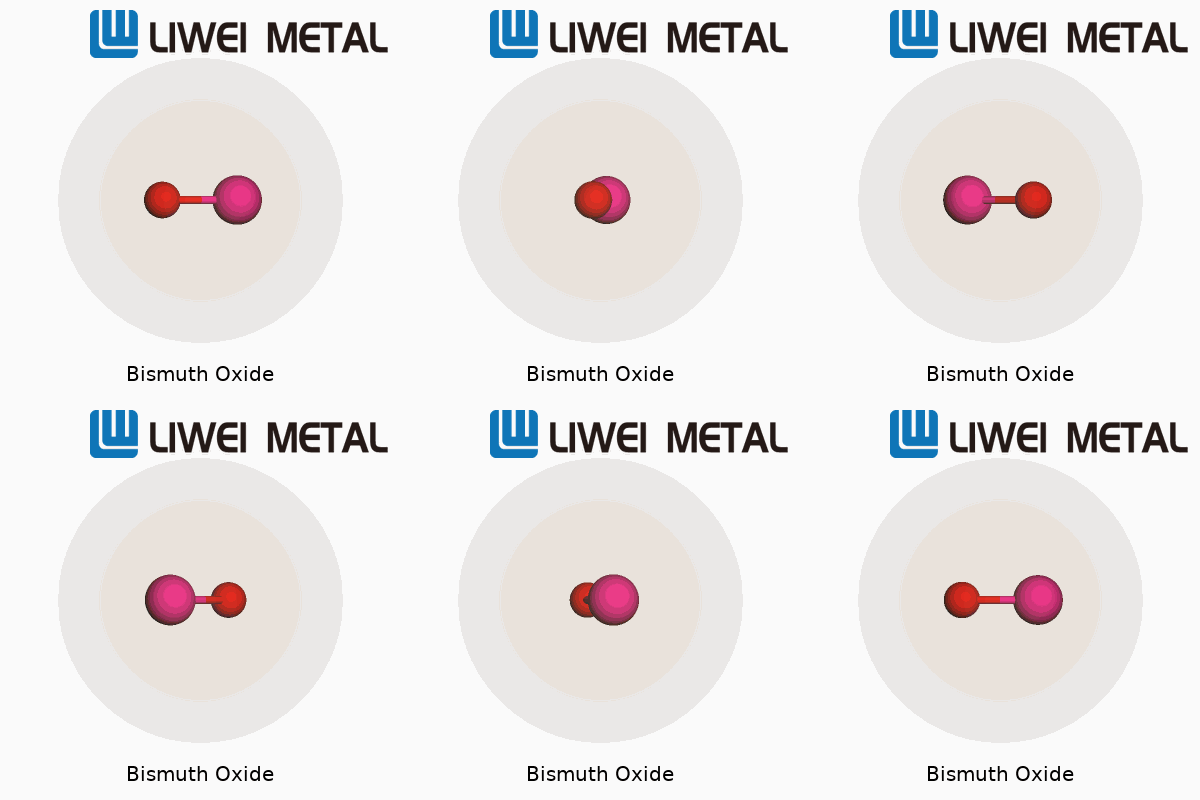
| Names | |
| Preferred IUPAC name | Bismuth trioxide |
| Other names |
Bismuth trioxide
Bismuth(III) oxide Bismuth sesquioxide Bismuth oxide yellow |
| Pronunciation | /ˈbɪzməθ ˈɒksaɪd/ |
| Identifiers | |
| CAS Number | 1304-76-3 |
| Beilstein Reference | 353873 |
| ChEBI | CHEBI:30418 |
| ChEMBL | CHEMBL1201641 |
| ChemSpider | 85542 |
| DrugBank | DB11157 |
| ECHA InfoCard | 100.027.836 |
| EC Number | 215-134-5 |
| Gmelin Reference | 8771 |
| KEGG | C14537 |
| MeSH | D001822 |
| PubChem CID | 14791 |
| RTECS number | CG0450000 |
| UNII | BQN1B9PV99 |
| UN number | UN3312 |
| Properties | |
| Chemical formula | Bi2O3 |
| Molar mass | 465.96 g/mol |
| Appearance | Yellow powder |
| Odor | Odorless |
| Density | 8.9 g/cm³ |
| Solubility in water | Insoluble |
| log P | -2.15 |
| Vapor pressure | Negligible |
| Magnetic susceptibility (χ) | -1.67×10⁻⁴ |
| Refractive index (nD) | 2.38 |
| Dipole moment | 0 D |
| Thermochemistry | |
| Std molar entropy (S⦵298) | 121.9 J·mol⁻¹·K⁻¹ |
| Std enthalpy of formation (ΔfH⦵298) | -578 kJ/mol |
| Std enthalpy of combustion (ΔcH⦵298) | -578 kJ/mol |
| Pharmacology | |
| ATC code | A02AB06 |
| Hazards | |
| Main hazards | Harmful if swallowed, causes eye and skin irritation, may cause respiratory irritation. |
| GHS labelling | GHS07, GHS09 |
| Pictograms | GHS07, GHS09 |
| Signal word | Warning |
| Hazard statements | H315: Causes skin irritation. H319: Causes serious eye irritation. H335: May cause respiratory irritation. |
| Precautionary statements | P260, P261, P264, P271, P272, P280, P302+P352, P304+P340, P305+P351+P338, P312, P321, P362+P364, P403+P233, P405, P501 |
| Explosive limits | Non-explosive |
| Lethal dose or concentration | LD50 (oral, rat): > 5,000 mg/kg |
| LD50 (median dose) | LD50 (median dose): Oral rat LD50 > 5,000 mg/kg |
| NIOSH | NT0600000 |
| PEL (Permissible) | PEL (Permissible Exposure Limit) for Bismuth Oxide: 10 mg/m³ (as Bi) |
| REL (Recommended) | 100 mg/m3 |
| IDLH (Immediate danger) | Not listed |
| Related compounds | |
| Related compounds |
Bismuth(III) chloride
Bismuth(III) nitrate Bismuth subgallate Bismuth subsalicylate |


